

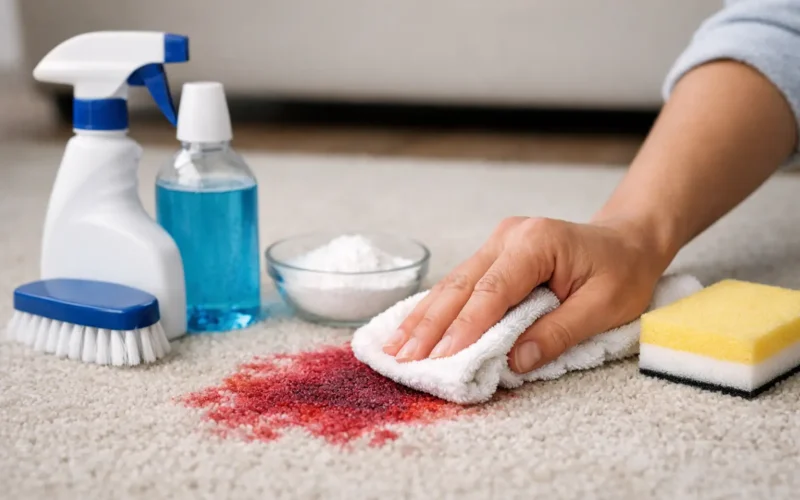
A fresh spill on carpet rarely stays small for long. One dropped coffee, muddy paw print or splash of red wine can turn into a stubborn mark if it is treated the wrong way. If you are wondering how to remove carpet stains without spreading them further or damaging the fibres, the method matters just as much as the cleaning product.
Carpet stain removal is not one-size-fits-all. The right approach depends on what caused the stain, how long it has been there, and what type of carpet you have. Wool, synthetic blends and loop pile carpets can all respond differently, so a careful first step will usually save time and help avoid permanent damage.
How to remove carpet stains without making them worse
The biggest mistake people make is scrubbing hard and fast. That often pushes the stain deeper into the pile, roughs up the fibres and can leave the area looking worse even if the spill fades. A better approach is to blot gently with a clean white cloth or paper towel, working from the outside of the stain towards the centre.
Use cold or lukewarm water first unless you know the stain responds better to another treatment. Hot water can set some stains, especially protein-based ones such as blood, dairy or vomit. Keep your pressure light and steady. The goal is to lift the spill, not grind it into the carpet.
It also helps to test any cleaning solution on a small hidden section first. Some spot cleaners can affect dye, texture or backing, particularly on delicate or natural fibre carpets. If the carpet changes colour, feels rough, or leaves residue after drying, stop there.
Start with the type of stain
The fastest way to improve results is to identify what you are dealing with. Food and drink spills usually respond well to mild detergent solutions. Greasy marks need a different treatment because water alone will not break them down. Pet accidents need attention beyond the visible mark because odours and bacteria can remain in the underlay.
Fresh stains are always easier than old ones. If the spill is still wet, absorb as much as possible before adding anything. If it has dried, you may need to loosen the residue carefully before blotting again.
Food and drink stains
Tea, coffee, juice, soft drink and wine are common in homes and offices, and they can leave both colour and sticky residue behind. After blotting the excess, apply a small amount of mild dishwashing liquid mixed with water using a clean cloth. Blot, do not scrub, then rinse the area with a little clean water and blot dry again.
If sugar has been left behind, the patch may attract dirt later and turn dark again. That is why rinsing matters. Too much detergent can create its own problem, so keep the solution light and use only enough to treat the affected area.
Pet stains and odours
Pet accidents need a more thorough response than many people expect. Blot up the moisture first, then use a carpet-safe treatment designed to break down organic matter. If the stain has soaked through to the underlay, surface cleaning may improve the appearance while the smell returns later, especially in warm weather.
This is where DIY treatment can reach its limit. Repeated spot cleaning may over-wet the area or leave strong chemical residue, while the source remains underneath. In homes with pets, professional cleaning can be the better option when odour keeps returning or the stain has spread.
Mud and dirt
Mud is easier to remove once it dries. Trying to wipe wet mud often smears it deeper into the fibres. Let it dry fully, vacuum the loose soil, then blot any remaining mark with a mild detergent solution.
If the area still looks dull after cleaning, the issue may be embedded grit rather than a true stain. In that case, a deeper clean is usually needed to restore the carpet evenly.
Grease, makeup and oily residue
Greasy stains from food, cosmetics or workshop traffic can be tricky because they cling to fibres and attract more dirt over time. Start by lifting any solid residue with a spoon or blunt edge. Then use a small amount of carpet-safe spot treatment suitable for oil-based marks.
Less is more here. Over-applying product can leave a ring or sticky patch that becomes obvious once the carpet dries. After treatment, blot thoroughly and dry the area as much as possible.
Household products – what works and what to avoid
There is no shortage of home remedies for carpet stains, but not all of them are safe. Mild dishwashing liquid, water and clean white cloths are often enough for fresh everyday spills. That simple method is usually safer than reaching for strong chemicals straight away.
Vinegar can help in some cases, but it is not a fix for everything. On certain carpets, especially wool, acidic solutions can do more harm than good if used too often or mixed incorrectly. Bicarbonate of soda is popular for odours, but it will not remove every stain and can be difficult to extract fully from dense carpet.
Bleach, ammonia and harsh supermarket cleaners are best avoided unless the carpet manufacturer clearly allows them. These products can strip colour, weaken fibres and create permanent patchiness. If you are unsure, caution is the better call.
When a stain keeps coming back
A stain that disappears, then reappears after drying, is usually a sign that residue remains deep in the carpet. This is common with coffee, soft drink, pet urine and detergent-heavy DIY cleaning. As moisture moves upward during drying, it can bring the remaining stain back to the surface.
Wicking like this is frustrating because the carpet looks clean at first. The fix is not more scrubbing. It usually means the affected area needs proper extraction to remove what is sitting below the visible pile.
Knowing when to stop and call a professional
Some stains can be handled at home. Others are better treated with professional equipment and training, especially when the carpet is valuable, the stain is old, or the spill involves bodily fluids, heavy soiling or water damage.
Wool carpets need particular care. The wrong chemical or too much moisture can cause shrinkage, browning or fibre distortion. Commercial carpet tiles and high-traffic office areas may also need a different method to avoid patchy results. In these cases, professional cleaning is not only about appearance. It helps protect the life of the carpet and reduce hygiene issues that surface cleaning can miss.
For households and workplaces across Sydney, this is often where an experienced operator makes the difference. Sydneywide Carpet Cleaning deals with both routine stain removal and more complex carpet issues using trained technicians and up-to-date equipment, which is especially useful when spot cleaning has already been tried without success.
How to remove carpet stains and prevent them setting
Fast action gives you the best chance of full removal, but prevention still matters. Use mats at entries to reduce tracked-in dirt. Clean up spills as soon as they happen. Vacuum regularly so loose soil does not settle deep into the pile and combine with moisture to form stains.
Fabric and carpet protection can also help in some homes and commercial spaces, particularly where there are children, pets or frequent foot traffic. It will not make carpet stain-proof, but it can buy valuable time when accidents happen.
Regular professional maintenance also plays a part. Stains are more likely to bond to carpet that is already holding soil, oils and residue. A clean carpet is easier to maintain, looks better for longer and supports a healthier indoor environment.
The key with stain removal is to stay measured. Blot first, treat carefully, and do not assume every mark needs a stronger product. A calm response protects the carpet, and when a stain goes beyond basic spot cleaning, getting the right help early can save the floor covering underneath your feet.