

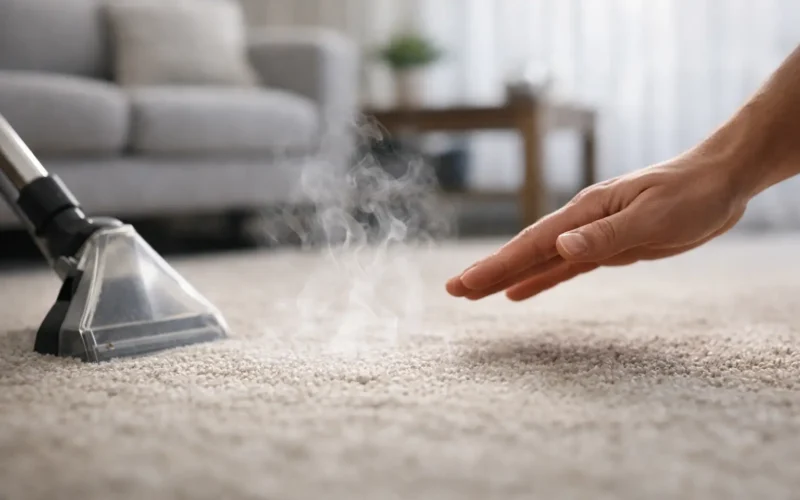
You have just had your carpets cleaned, the room looks fresher, and then an odd smell starts to linger. If you are asking why does carpet smell after cleaning, the short answer is that moisture, trapped soil, bacteria, or old stains are usually involved. The smell does not always mean the carpet was cleaned badly, but it does mean something in the fibres, underlay, or drying process needs attention.
A clean carpet should not stay unpleasant for long. In many cases, a mild damp smell fades as the carpet dries. When the odour is strong, musty, sour, or similar to wet dog, there is usually a specific reason behind it.
Why does carpet smell after cleaning?
The most common cause is slow drying. Carpet holds moisture deep in the pile, backing, and sometimes the underlay. If that moisture does not dry quickly enough, it can create a damp, musty smell as bacteria and mildew begin to develop.
This is especially common in humid weather, poorly ventilated rooms, or properties where windows stay shut and air movement is limited. Thick carpet, dense underlay, and heavily soiled areas also take longer to dry. The carpet may feel only slightly damp on the surface while still holding moisture underneath.
Another common reason is that cleaning has brought old contamination to the surface. Carpets trap pet accidents, food spills, tracked-in dirt, body oils, and general organic matter over time. Once those residues are disturbed by hot water extraction or other deep cleaning methods, hidden odours can become more noticeable before they fully flush out.
In some homes, the smell is not from the carpet fibres at all. It can come from the underlay, subfloor, or previous water damage. Cleaning can reactivate these existing issues by adding moisture to an area that already has trapped contamination.
The type of smell often tells you the cause
A musty smell usually points to dampness and slow drying. This is the most common post-cleaning odour and often improves once airflow and drying conditions are corrected.
A sour or stale smell can suggest bacteria in the carpet or underlay, especially if spills or pet accidents were never fully removed in earlier cleans. If the carpet has had repeated wetting over time, the odour may be deeper than a surface treatment can fix.
A wet dog smell is often linked to natural fibres such as wool. Wool carpets can release a stronger odour while damp, especially if they were heavily soiled before cleaning. This does not necessarily mean there is a fault with the cleaning process, but it does mean proper drying matters.
A strong chemical smell can come from cleaning products, deodorisers, or spot treatments. In a professional clean, this should usually be mild and temporary. If it is overpowering or persistent, there may have been too much product left behind or the wrong treatment used for the carpet type.
When the problem is residue, not dirt
One overlooked issue is detergent residue. If too much product is applied, or if the carpet is not rinsed thoroughly, leftover residue can trap soil and hold odours. In some cases, the carpet smells worse a day or two later because the residue stays damp and starts attracting airborne dust and contaminants.
This is one reason professional equipment and correct technique matter. A carpet may look clean after a low-grade service, but if the extraction is weak or the chemical mix is too strong, the result can be a sticky feel, rapid resoiling, and lingering smell.
There is also a trade-off here. A very dirty carpet often needs stronger treatment than a lightly soiled one, but that treatment must still be balanced with proper rinsing and drying. More chemical is not better if it is not matched with the right process.
Pet odours can return after cleaning
Homes with pets often have a more stubborn version of this problem. Urine can soak through the carpet backing into the underlay and even the subfloor. Surface cleaning may improve the smell at first, but once the carpet becomes damp during cleaning, the old urine salts can reactivate and release odour again.
That is why a carpet can smell worse after cleaning even though it looked fine beforehand. The cleaning has not created the odour. It has exposed contamination that was already there.
In these cases, standard cleaning alone may not be enough. The affected area may need specialised odour treatment, sub-surface extraction, or in severe cases, attention to the underlay. This is particularly relevant in rental properties, family homes, and offices where accidents may have gone untreated for some time.
Why does carpet smell after cleaning in some rooms but not others?
If only one room smells, the issue is usually localised. There may be a hidden spill, pet accident, moisture problem, or poor airflow in that space. Bedrooms with closed windows, south-facing rooms, or areas with heavy furniture often dry more slowly than open living areas.
Traffic patterns also matter. Hallways, lounges, and office walkways collect more body oils and ground-in soil than less-used rooms. Even after cleaning, these zones may need longer drying time and more targeted treatment.
If the whole house smells, it is more likely to be a drying or ventilation issue. It can also point to a broader problem such as high humidity or a carpet that was cleaned too late after years of heavy buildup.
What to do if your carpet smells after cleaning
Start with drying. Open windows if conditions allow, turn on ceiling fans, use portable fans, and run air conditioning to remove moisture from the air. Good airflow is one of the fastest ways to improve carpet odour after cleaning.
Avoid walking on the carpet more than necessary while it is still damp. Extra foot traffic pushes moisture and residue deeper into the pile and can slow the drying process. If furniture has been placed back too soon, it may also be trapping dampness underneath.
If the smell remains after the carpet is fully dry, the next step is to identify whether it is coming from residue, pet contamination, or an issue below the carpet surface. Sprinkling supermarket deodorisers over the area can mask the smell for a short time, but it rarely fixes the cause and can sometimes add more residue.
If there has been previous flooding, repeated spills, or known pet accidents, it is worth having the carpet assessed properly. In those cases, the source may sit below the visible surface and require more than a standard reclean.
How professionals help prevent post-cleaning odours
A proper cleaning service does more than wash the carpet. It assesses fibre type, level of soiling, stain history, and drying conditions before choosing the method. That matters because wool, synthetic carpets, heavily used family rooms, and commercial spaces do not all respond the same way.
Certified technicians are also trained to avoid overwetting. With the right equipment, they can remove more soil and moisture in the same pass, which helps carpets dry faster and smell cleaner. This is one of the practical differences between a quick surface clean and a professional service designed around long-term results.
In some situations, odour treatment should be part of the cleaning plan from the start. That is especially true for pet households, water-damaged areas, and older carpets with a history of spills. At Sydneywide Carpet Cleaning, this is why correct assessment and standards-based methods matter just as much as the cleaning itself.
How to reduce the risk next time
Regular maintenance helps. Carpets cleaned on schedule tend to respond better than carpets left until soil, oils, and stains are deeply embedded. The longer contamination sits, the greater the chance that odours will return when moisture is introduced.
Ventilation on the day of cleaning also makes a difference. If possible, keep air moving through the property and allow enough drying time before returning furniture and normal foot traffic. In humid conditions, indoor climate control can help more than open windows alone.
It also helps to mention any known issues before the clean starts. Old pet accidents, previous leaks, or recurring odours are useful clues. The more information a technician has, the better they can tailor the treatment and set realistic expectations.
A carpet that smells after cleaning is usually telling you something practical, not mysterious. Most of the time, it is moisture that needs to leave, residue that needs proper removal, or contamination that was deeper than it first appeared. Deal with the cause early, and the carpet has a much better chance of drying fresh, staying hygienic, and lasting well.