

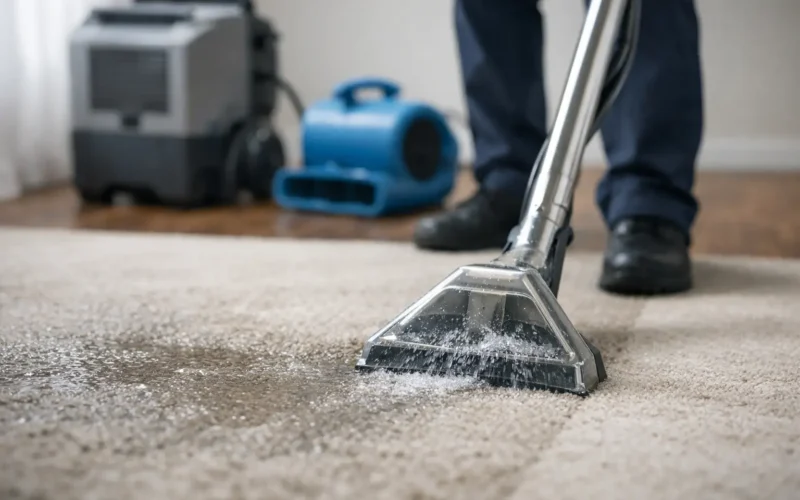
A wet carpet can go from nuisance to serious damage faster than most people expect. If you are searching for how to dry wet carpet, the key is speed, airflow and knowing when the water is safe to handle yourself and when it is not.
A small spill from a knocked-over drink is one thing. A soaked room after heavy rain, a burst pipe or an overflowing appliance is another. The amount of water, how long it has been sitting, and where it came from all affect what you should do next.
How to dry wet carpet without making it worse
The first step is to stop the source of the water if you can do so safely. Turn off the appliance, isolate the leak, or move items away from the affected area. If there is any chance the water has come into contact with electricity, do not enter the area until it is safe.
Next, work out what kind of water you are dealing with. Clean water from a fresh pipe leak is less risky than water from an overflowing toilet, stormwater entry or long-standing flooding. Contaminated water is a health issue, not just a drying problem. In that situation, professional flooded carpet restoration is the safer option.
If the water is clean and the affected area is limited, start removing as much water as possible straight away. The more moisture you extract in the first few hours, the better the result is likely to be. Waiting too long can lead to odours, staining, backing damage and mould growth in both the carpet and underlay.
Remove the water first
Drying starts with extraction, not heat. If you try to dry a soaked carpet without removing the bulk of the water, you are only slowing the process down.
Use towels for small patches and press firmly to absorb moisture. For larger wet areas, a wet and dry vacuum is far more effective. Make several slow passes over the carpet and do not rush it. You are trying to pull water from the pile and, where possible, from the backing as well.
If the carpet squelches underfoot or feels heavily saturated, the underlay is probably wet too. This is where many DIY attempts fall short. A carpet surface may start to feel drier, while moisture remains trapped underneath. That hidden moisture often causes the musty smell people notice a few days later.
Lift airflow, not just temperature
Once you have removed as much water as possible, focus on airflow. Open windows and doors if the weather allows and the outdoor air is not too humid. Set up fans so they move air across the carpet rather than straight down into one spot.
Air movers are ideal because they create strong, directed airflow across the surface and help moisture evaporate faster. Standard pedestal or box fans can still help, especially in smaller rooms. If you have air conditioning, running it can also assist by reducing indoor humidity.
A dehumidifier is one of the most useful tools in this process. It pulls moisture from the air, which supports faster evaporation from the carpet and underlay. Without humidity control, especially in enclosed rooms, water can linger much longer than expected.
Heat can help, but only in a controlled way. Blasting the area with high heat is not always the answer. Too much heat can set certain stains, affect carpet adhesives and create uneven drying. Steady airflow and moisture removal usually matter more than raw temperature.
Check the underlay and subfloor
This is the part many people miss when learning how to dry wet carpet properly. The visible carpet is only one layer. Underneath it, the underlay acts like a sponge, and the subfloor can also hold moisture.
If only a small section is lightly damp from a clean spill, you may be able to dry it successfully without lifting the carpet. If a larger area is soaked, or water has been present for more than several hours, the carpet may need to be lifted so the underlay and subfloor can dry properly.
In many cases, underlay that has been heavily saturated will not dry well in place. It can compress, break down or hold odours even after the surface seems dry. Timber subfloors also need careful attention because trapped moisture can affect both the flooring structure and indoor air quality.
This is where professional equipment makes a real difference. Moisture meters, water extraction systems and drying equipment help identify where water has travelled and whether the job is actually finished.
Move furniture and protect the room
Wet carpet under furniture dries more slowly and can lead to transfer marks, rust stains or timber staining. Remove lightweight items from the room as soon as possible. For heavier furniture, place protective foil or blocks under the legs if you cannot move it straight away.
Also remove rugs, baskets, soft furnishings and anything else holding moisture in the room. The less clutter there is, the better the airflow. If curtains are touching the wet area, keep them clear as well.
It is worth checking nearby skirting boards, wardrobes and adjoining rooms. Water does not always stay where you first see it. It can spread under walls and into neighbouring areas, especially after a significant leak or overflow.
Watch for mould and odours
A damp carpet does not need to stay wet for days before problems start. In the right conditions, mould can begin developing within 24 to 48 hours. That risk increases with humidity, poor ventilation and moisture trapped in underlay or subfloor materials.
A musty smell is one of the earliest warning signs that drying is incomplete. Discolouration, persistent dampness and worsening indoor air quality are also signs the moisture has not been dealt with fully. For families, tenants, workplaces and anyone with allergies or asthma, this is more than a cosmetic issue.
If the carpet has been wet for longer than a day, or if you are already noticing odours, it is sensible to treat it as a restoration matter rather than a simple drying job.
When DIY is fine and when to call a professional
Some situations are manageable on your own. A fresh, small clean-water spill in a well-ventilated room can often be dried with prompt extraction, fans and careful monitoring. The carpet should be checked over the next day or two to make sure no damp smell develops.
Other situations need a trained response. That includes flooding, stormwater entry, sewer-related water, widespread saturation, repeated leaks, water that has travelled under walls, or any carpet that has stayed wet for too long. Commercial spaces also tend to need quicker, more structured drying because downtime, safety and hygiene all matter.
Professional restoration is not only about drying speed. It is also about identifying hidden moisture, reducing contamination risk and helping protect the carpet, underlay and surrounding materials from avoidable damage. For larger water events in Sydney homes or businesses, a local team with flooded carpet restoration equipment can usually get better results than household fans alone.
Signs the carpet is actually dry
A carpet that feels dry on top is not always dry underneath. Check several areas, especially corners, edges and spots near walls. Press down firmly with a dry towel and see whether any moisture transfers. Pay attention to smell as much as touch.
The room should no longer feel humid, and there should be no cool, clammy patches underfoot. If the carpet still has a damp odour, or if it becomes musty after the windows are closed, more drying is needed.
For valuable carpets, larger affected areas or any insurance-related water loss, proper moisture testing is the most reliable way to confirm drying is complete.
A few mistakes to avoid
One of the biggest mistakes is waiting to see if the carpet will dry on its own. Another is shampooing a wet carpet before the water issue has been resolved. That adds more moisture to an already saturated area.
It is also common for people to rely on one fan in the doorway and assume that is enough. It rarely is. Effective drying takes extraction, airflow, humidity control and, in some cases, lifting the carpet to reach the layers below.
If you are unsure whether the water is clean, whether the underlay is affected or whether the carpet has dried fully, caution is the better call. Acting early usually means a cleaner, healthier result and less chance of long-term damage.
When carpet gets wet, quick action matters, but so does doing the job properly. Dry the surface, yes, but pay equal attention to what is happening underneath. That is usually where the real problem sits.