

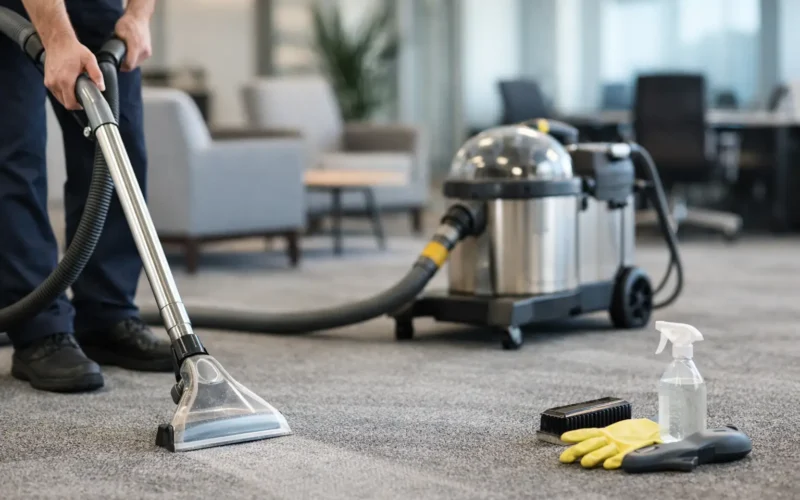
A carpet can look acceptable at 9 am and carry a day’s worth of grit, moisture and tracked-in contaminants by closing time. The best commercial carpet care schedule is not a single annual clean. It is a practical maintenance plan that reflects how people use your premises, where they walk, and what your workplace needs to look and feel like every day.
For offices, retail spaces, strata common areas, medical settings and hospitality venues, regular carpet care protects a significant asset while supporting a cleaner, healthier environment. The right schedule also prevents dirt from being ground deep into carpet fibres, where it becomes harder to remove and can shorten the carpet’s working life.
Start With How Your Premises Are Used
Commercial carpets do not wear evenly. Entry points, lift lobbies, corridors, reception areas, kitchens and workstations near shared printers often receive far more traffic than boardrooms or private offices. A schedule that treats every area the same can leave high-use zones looking tired well before the rest of the floor.
Begin by dividing the premises into low, medium and high-traffic areas. Consider the number of daily visitors, wet-weather exposure, food and drink, outdoor access, pets in pet-friendly workplaces, and whether staff wear shoes throughout the building. Sydney weather can also affect the plan. Rainy periods increase moisture and soil being tracked inside, particularly around entrances and car parks.
A professional inspection is useful where carpet condition is already uneven. It helps identify traffic lanes, recurring stains, fibre wear and areas where a more frequent service will deliver a better result than a whole-site clean alone.
The Best Commercial Carpet Care Schedule by Frequency
The most effective programme combines daily attention with periodic professional cleaning. Vacuuming alone is essential, but it cannot remove all embedded soil, residues or spills that settle below the surface.
Daily: Remove Dry Soil Before It Settles
High-traffic carpet should be vacuumed daily, preferably using commercial-grade equipment with effective filtration and maintained brushes. Entrances, walkways, reception spaces and food service areas may need a second pass later in the day.
Prompt spot cleaning is equally important. Attend to spills as soon as they occur, using the correct method for the substance and carpet type. Rubbing can spread a stain or damage fibres, so blotting is generally the safer approach. Keep a clear reporting process so staff know who to contact when coffee, food, ink or other spills happen.
Entrance mats should be cleaned regularly too. They are the first line of defence against grit and moisture. When mats are overloaded with soil, they stop protecting the carpet behind them.
Weekly: Focus on High-Use Zones
Once a week, give traffic lanes and visible spots extra attention. This may include detailed vacuuming around furniture, cleaning edges and corners, checking for stains, and reviewing entrance mat condition.
For busy retail, hospitality or public-facing premises, weekly interim cleaning of selected areas may be warranted. The aim is not to replace deep cleaning, but to prevent soil from building up between scheduled professional services.
Monthly or Quarterly: Plan Professional Maintenance
Many standard offices benefit from professional carpet cleaning every six to 12 months, supported by consistent vacuuming and spill response. However, a monthly or quarterly maintenance visit may be more appropriate for high-traffic commercial settings, especially entrances, shared corridors, call centres, childcare facilities, medical practices, hospitality venues and busy retail spaces.
Regular professional cleaning removes embedded grit that vacuuming cannot reach. This matters because abrasive particles can wear carpet fibres as people walk across them. Maintenance cleaning also improves appearance, helps manage odours and supports a more hygienic workplace.
The exact interval depends on the condition of the carpet and the way the building operates. Cleaning too infrequently allows soil to become entrenched. Cleaning high-risk areas more often, while treating quieter spaces on a longer cycle, is usually the sensible balance.
Every 6 to 12 Months: Deep Clean the Full Carpeted Area
A full professional clean is the reset point in a commercial carpet care schedule. It targets accumulated soil across the entire carpeted area, including spaces that may not look dirty at first glance.
For a low-traffic professional office with effective entry matting and a reliable daily cleaning routine, an annual deep clean may be suitable. For medium-traffic offices and shared commercial buildings, a six-month cycle is often more appropriate. High-traffic sites may need whole-area deep cleaning quarterly, alongside targeted interim work.
A qualified technician should assess the carpet fibre, backing, installation method, existing staining and drying requirements before selecting a cleaning approach. Correct equipment, solution selection and moisture control are particularly important in commercial environments where downtime needs to be managed carefully.
Match the Plan to Your Type of Business
A one-size-fits-all schedule can be convenient on paper but ineffective in practice. The following guide provides a sensible starting point.
- Low-traffic offices: Daily vacuuming in common areas, prompt spot treatment, targeted professional cleaning every six to 12 months and a full annual clean.
- Medium-traffic offices and strata common areas: Daily vacuuming, weekly attention to traffic lanes, professional maintenance every three to six months and a full clean at least twice yearly.
- Retail, hospitality and public-facing premises: Daily or more frequent vacuuming, immediate spill response, regular interim cleaning of entrances and walkways, and professional cleaning every one to three months as required.
- Healthcare, childcare and high-hygiene environments: Daily maintenance, immediate treatment of spills and body-fluid incidents according to site procedures, plus professional cleaning on a frequent, documented cycle that suits operational and hygiene requirements.
These intervals should be adjusted after reviewing actual soil levels. If carpets look dull soon after cleaning, stains keep returning, or walkways are visibly darker than surrounding areas, the maintenance cycle is probably too long.
Do Not Let Stains Dictate the Entire Schedule
Stain removal is part of carpet care, but waiting until stains become obvious is a reactive approach. By the time a traffic lane looks dark or a spill has set, soil may already be embedded in the fibres.
Build prevention into the routine. Use appropriate entry matting, place protective mats near beverage stations where suitable, and make sure cleaners can access high-use areas around desks and furniture. If occupants regularly eat at workstations, establish a simple process for reporting spills immediately rather than leaving them for the overnight clean.
It is also worth reviewing recurring stain locations. A persistent mark near a kitchenette may indicate a leaking appliance, while marks at an entrance may show that matting is too small or no longer effective. Treating the cause is more reliable than repeatedly cleaning the symptom.
Protect Carpet Life Between Professional Cleans
The daily routine has a major effect on how long commercial carpet lasts. Vacuum slowly enough for the machine to lift dry particulate soil, rather than making a quick pass over the surface. Empty or replace filters and bags as needed, and keep vacuum heads in good condition.
Avoid using unsuitable supermarket chemicals or excessive water on commercial carpet. Incorrect products can leave sticky residues that attract more soil, alter carpet colour or create drying issues. Harsh brushing can also damage pile and leave a worn appearance.
Furniture movement should be managed carefully. Use protective pads where appropriate, and arrange periodic detailed cleaning beneath movable furniture so hidden soil does not accumulate. For tenancies preparing for an inspection, relocation or lease handover, schedule the full clean early enough to allow proper drying and follow-up attention if required.
Measure Results and Adjust the Schedule
A commercial carpet care plan should improve over time. Keep a simple record of professional cleaning dates, stain incidents, high-traffic problem areas and any water intrusion. This creates useful evidence for facility managers, property managers and business owners when deciding whether the current frequency is working.
Look beyond whether the carpet appears clean immediately after service. Assess how it holds up after several weeks, whether odours return, whether stains reappear, and whether entrance areas remain presentable during wet weather. These observations will tell you more than a fixed calendar date.
Sydneywide Carpet Cleaning provides professional commercial carpet care across Sydney, with trained technicians and modern equipment suited to routine maintenance, detailed restorative cleaning and urgent flooded carpet response. A site-specific assessment can help set cleaning intervals that support your workplace rather than interrupt it.
The best plan is the one your team can maintain consistently: daily soil control, fast spill response and professional cleaning before dirt becomes permanent. That approach keeps carpets looking professional for longer and makes a better impression on everyone who walks through the door.