

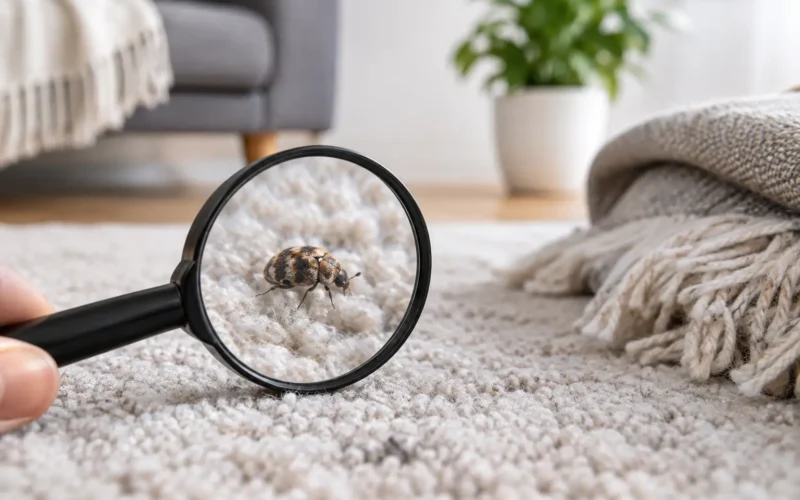
Carpet beetles are easy to overlook until you find thinning patches in a rug, small holes in stored clothing or shed larval skins along a skirting board. The adult beetles are usually harmless nuisance visitors. It is their larvae that cause the damage, feeding on natural fibres, pet hair, lint, feathers and food crumbs trapped in quiet areas.
The best solutions for carpet beetles combine thorough cleaning with careful inspection and, where activity continues, professional pest treatment. One quick vacuum may collect visible debris, but it will not always remove larvae, eggs and the materials attracting them. A systematic approach gives you the best chance of protecting carpets, rugs, upholstery and stored textiles.
Start by finding the source
Carpet beetle larvae prefer dark, undisturbed places where natural fibres and organic debris collect. Check the edges of carpeted rooms, under furniture, inside wardrobes, around pet bedding, behind curtains and in storage boxes. Rugs with wool, silk or other natural fibres deserve particular attention, as do blankets, doonas, felt, fur-trimmed items and taxidermy.
Look for small, bristly brown larvae, pale cast skins, tiny beetles near windows, or irregular damage to fabric. The damage is often concentrated on areas that are rarely moved or cleaned. A wardrobe may appear tidy while lint, hair and larvae are active beneath stored garments or along the carpet edge.
Do not assume every damaged textile is a carpet beetle issue. Clothes moths, silverfish, rodents and ordinary wear can create similar signs. Correct identification matters because the most effective treatment depends on the pest and the extent of the infestation.
The best solutions for carpet beetles begin with deep cleaning
Cleaning removes the food sources that help larvae survive. It also physically removes many eggs, larvae, shed skins and adult beetles before they can spread further through the property.
Vacuum slowly and thoroughly
Use a vacuum with strong suction and a crevice tool. Move slowly over carpets and rugs, paying close attention to perimeter edges, joins, under beds, behind lounges, wardrobes and upholstered furniture. Vacuum mattresses, fabric bed bases and pet bedding where appropriate, especially if pets regularly rest there.
Empty the vacuum outside into a sealed rubbish bag as soon as you finish, then place the bag in an outdoor bin. If your vacuum uses a reusable canister, wash it carefully after emptying it. This simple step helps prevent collected insects from returning to the home.
A single thorough vacuum is useful, but repeat vacuuming is more effective during an active problem. Weekly cleaning of vulnerable areas for several weeks can interrupt the larvae’s feeding cycle and makes it easier to monitor whether activity is continuing.
Wash, heat-treat or dry clean affected fabrics
Wash washable clothing, linen, cushion covers and pet bedding on the warmest setting allowed by the care label. Heat can kill carpet beetle life stages, but fabric care instructions still come first. Delicate wool, silk, leather and structured garments may need professional dry cleaning or specialist advice rather than home washing.
For items that cannot be washed, thorough dry cleaning, controlled freezing or heat treatment may be suitable. These methods need to be performed correctly to be dependable. Avoid relying on a short period in a household freezer, particularly for bulky items, as the centre may not reach a sufficiently low temperature for long enough.
Arrange professional carpet and upholstery cleaning
Professional cleaning is particularly valuable where larvae may be feeding deep in carpet pile, beneath heavy furniture or in upholstered pieces. A trained technician can clean embedded soil, pet hair, skin flakes and other organic matter that routine vacuuming leaves behind.
For Sydney homes with wool carpets, delicate rugs or heavily used family areas, the right cleaning method matters. Cleaning should be matched to the fibre, construction and condition of the item. Professional carpet and upholstery cleaning does not replace licensed pest control where an infestation is established, but it is an effective part of removing the conditions carpet beetles favour.
Treat the infestation safely and realistically
If you continue to find live larvae after a detailed clean, or damage is appearing in several rooms, contact a licensed pest management professional. They can confirm the pest, assess likely harbourage areas and apply an appropriate treatment where needed.
Over-the-counter sprays can be tempting, but broad spraying often misses hidden larvae and may not be suitable around children, pets, food preparation areas or sensitive fabrics. Never apply insecticide directly to clothing, bedding, mattresses, carpets or upholstery unless the product label specifically permits it. More product does not mean better control.
Pest treatment works best after cleaning and decluttering. Insecticides cannot reliably penetrate sealed storage containers, thick debris or deep piles of neglected textiles. Removing the larvae’s food source first also makes reinfestation less likely.
Protect carpets, rugs and stored textiles
Once the active issue is under control, prevention comes down to regular maintenance and better storage. Carpet beetles are not a sign that a home is unclean. They can enter through open windows, fly in from gardens, or arrive on second-hand furniture, flowers and textiles. However, accumulated lint and undisturbed natural fibres give larvae more opportunity to settle in.
Store clean seasonal clothing, blankets and valuable textiles in sealed plastic tubs or garment bags. Before putting items away, make sure they are fully clean and dry. Food stains, body oils and pet hair can attract larvae even when the fabric itself is synthetic.
Make a habit of moving furniture enough to vacuum underneath and along the walls. Rotate rugs periodically, clean pet bedding frequently and inspect seldom-used rooms, spare wardrobes and storage areas. If birds nest near roof spaces, vents or eaves, consider having the area checked, as nests can support carpet beetles and other insects.
Fabric protection can also help with day-to-day maintenance of selected carpets and upholstery by making spills and soil easier to remove. It is not an insect treatment, and it will not stop carpet beetles on its own, but a cleaner fibre surface is less likely to retain the organic debris larvae feed on.
When professional help is the sensible next step
Call in support when damage is widespread, larvae keep returning after repeated cleaning, or affected materials include expensive rugs, upholstery or delicate natural-fibre garments. Properties with pets, large wardrobes, underfloor storage or long-vacant rooms can have more hidden harbourage points than expected.
A coordinated response is often the most practical option: pest management addresses the insects, while specialist cleaning removes embedded debris from the soft furnishings they target. Sydneywide Carpet Cleaning can assist with professional carpet, rug and upholstery cleaning as part of a broader plan to restore a cleaner, healthier home environment.
Do not wait for visible damage to become extensive. A careful inspection this weekend, followed by targeted cleaning of neglected edges, storage areas and soft furnishings, can stop a small carpet beetle problem from becoming a costly one.