

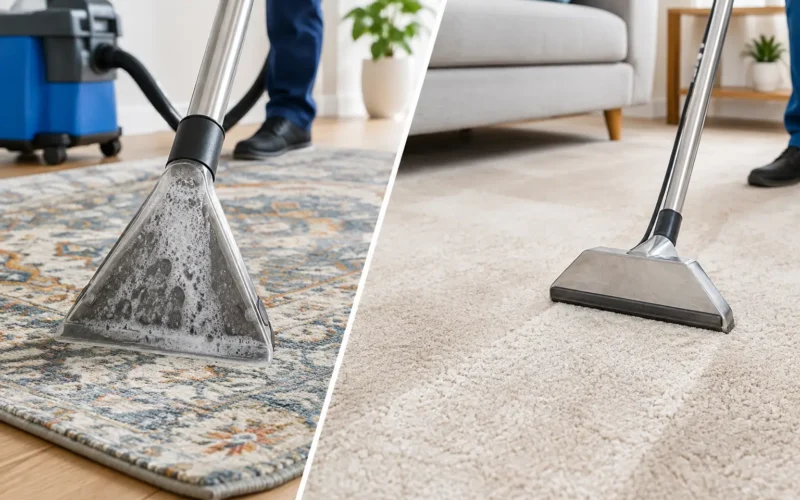
A red wine spill on a wool rug and the same spill on a fitted synthetic carpet may look similar at first. The right response is not always the same. Rug cleaning vs carpet cleaning comes down to how the material is made, how it is installed, what sits beneath it, and how much moisture it can safely handle.
Both surfaces collect soil, allergens, pet hair and everyday marks. However, treating a rug like wall-to-wall carpet can cause colour bleeding, shrinkage, fibre distortion or damage to the backing. Professional cleaning starts with identifying the item, not simply choosing the nearest machine.
Rug cleaning vs carpet cleaning: the main difference
Carpet is usually fixed to the floor and cleaned on site. Rugs are separate textiles that may be machine-made, hand-knotted, hand-tufted, flatwoven or constructed from natural fibres such as wool, cotton, silk, jute or sisal. Their dyes, foundations and edges can all react differently to water, cleaning solutions and agitation.
A fitted carpet is generally more uniform. Even so, its fibre type, pile construction, backing and condition still guide the cleaning method. Professional carpet cleaning commonly involves hot water extraction, low-moisture cleaning or another method suited to the carpet and the level of soiling.
A rug requires closer inspection before cleaning begins. The cleaner needs to assess fibre content, dye stability, construction, pre-existing damage, odours and the condition of the backing. Some rugs can be cleaned safely in the home, while others need specialist off-site treatment where controlled washing and drying are possible.
Why rugs need individual assessment
Many rugs are designed as decorative pieces rather than hard-wearing floor coverings. A delicate Persian-style rug, an antique wool rug and a modern polypropylene rug may all be placed in the same living room, but they should not receive the same treatment.
Wool is durable when cleaned correctly, yet it can retain moisture and may brown, shrink or lose its shape if overwet. Cotton can be prone to colour movement and shrinkage. Viscose and silk require particularly careful handling because their fibres can weaken or develop texture changes when wet. Natural plant fibres, including jute and sisal, can stain easily and are often poorly suited to wet cleaning.
Fringing also needs attention. Fringe is often cotton, even when the rug pile is wool or synthetic. Excessive agitation can tangle, tear or distort it. A trained technician will test colours and identify risk areas before selecting a suitable process.
How carpet cleaning is planned
Carpet cleaning begins with a pre-inspection of the rooms and traffic patterns. Entryways, hallways, lounge areas and spaces around dining tables usually hold more embedded soil than low-use areas. Pet accidents, food spills, make-up, ink and oily marks may need targeted treatment before the main clean.
The carpet fibre matters. Synthetic carpets often respond well to hot water extraction, which flushes out suspended soil and residues. Wool carpet needs lower moisture, suitable solutions and careful drying management. The goal is to improve cleanliness without leaving the backing saturated or the pile overworked.
Professional equipment provides stronger soil removal and moisture recovery than most hire machines. Good extraction is not only about appearance. It helps reduce drying time and limits the chance of musty odours developing in the carpet or underlay.
Underlay and subfloor change the job
Because fitted carpet sits over underlay and a subfloor, moisture management is a major part of carpet cleaning. A small surface spill may only affect the carpet pile. A large pet accident, plumbing leak or flood can travel through the carpet, underlay and into the floor below.
Routine cleaning and water damage restoration are different jobs. Flooded carpet requires prompt assessment, water extraction, airflow and, where necessary, lifting of carpet to inspect the underlay and subfloor. Waiting for a wet carpet to dry on its own can allow odours and microbial growth to develop.
Cleaning methods are not interchangeable
Hot water extraction is often effective for fitted carpet because it applies solution, loosens soil and extracts it in the same process. It can also be appropriate for some durable rugs, provided their fibres, dyes and backing have been assessed first.
Low-moisture methods may suit certain carpets where quicker drying is needed, such as busy offices or commercial spaces. For rugs, a low-moisture approach can sometimes reduce risk, but it will not be the right option for every heavily soiled item. Surface cleaning cannot always remove soil that has settled deep into a rug’s foundation.
Dry cleaning compounds and specialised spot treatments have their place, especially for sensitive materials or specific stains. They are not a shortcut around proper assessment. The safest method is the one matched to the item’s condition, not the one that is fastest to apply.
Stain removal depends on the surface and the stain
The age and source of a mark are just as relevant as whether it is on a rug or carpet. Fresh spills are usually easier to treat than stains that have dried, oxidised or been treated repeatedly with household products.
For either surface, blot liquid spills with a clean white towel rather than rubbing them into the fibres. Avoid saturating the area, particularly on wool rugs and natural-fibre rugs. Strong supermarket stain removers, bleach and dishwashing liquids can leave residue, strip colour or make professional removal harder later.
Pet urine deserves early attention. What appears to be a small mark can spread through carpet backing and underlay, or through the pile and foundation of a rug. Removing the visible stain does not necessarily remove the source of the odour. Effective treatment needs to address contamination at the depth it has reached.
Drying is part of the cleaning result
A clean surface that stays damp too long is not a good result. Carpets should dry efficiently with adequate ventilation and airflow. Homeowners can assist by opening windows when conditions allow, running fans and keeping children and pets off the area until it is dry.
Rugs can be more demanding. They need to dry evenly to prevent odours, dye migration and shape changes. Thick wool rugs, rugs with dense foundations and items exposed to significant spills may need a more controlled drying environment than an average lounge room can provide.
This is one reason a professional may recommend off-site rug cleaning rather than treating a rug in place. It is not about making the job more complicated. It is about protecting an item that may be difficult or impossible to replace.
When professional cleaning makes sense
Regular vacuuming remains essential for both rugs and carpets, but it does not remove all fine soil, oils and allergens held below the surface. Professional cleaning is particularly worthwhile after a tenancy, before putting a property on the market, following a spill, after renovation dust, or when odours persist despite regular care.
Homes with children, pets or allergy concerns often benefit from more frequent maintenance. Commercial carpet also needs a planned cleaning schedule because repeated foot traffic can grind abrasive soil into the pile and shorten its service life.
Choose a provider that can explain what they have identified, the method they recommend and any realistic limitations. Some permanent stains, sun fading, worn traffic lanes and fibre damage cannot be cleaned away. Straight answers before work begins are a sign of professional care.
Choosing the right service for your floor covering
If the item is fixed to the floor, carpet cleaning is usually the starting point. If it can be lifted, has fringe, unusual dyes, a delicate feel or sentimental value, request a rug-specific assessment. A professional should also ask about past spills, pets, water exposure and previous cleaning attempts.
Sydneywide Carpet Cleaning applies trained, method-led care to carpets and rugs across Sydney, with the equipment and experience to assess routine cleaning needs as well as urgent water-related problems. The most useful next step is simple: treat the surface in front of you for what it is, rather than assuming every textile floor covering needs the same clean.