

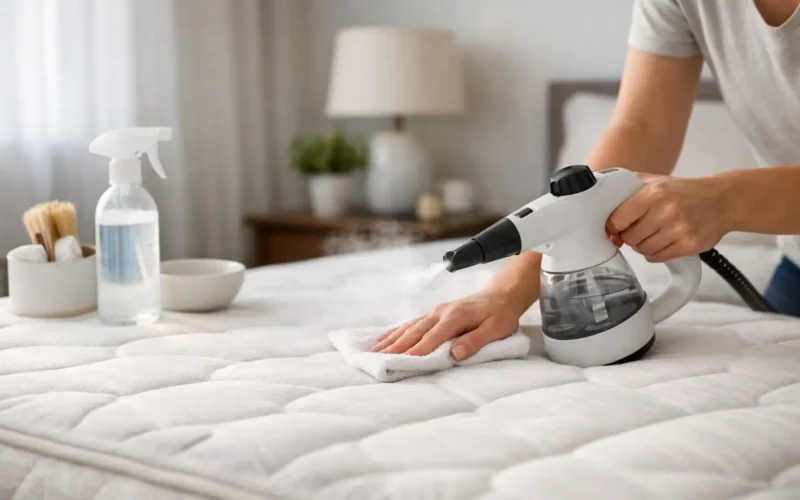
A mattress can look clean while holding sweat, skin cells, body oils, dust and the occasional spill beneath the sheets. Knowing how to sanitise a mattress properly helps create a healthier sleeping surface without soaking the filling, damaging the fabric or leaving behind a musty smell.
For most households, regular vacuuming and prompt stain treatment go a long way. Deep mattress cleaning is different: it targets the build-up that ordinary linen changes cannot reach. The right approach depends on the mattress type, the cause of the problem and whether it is fully dry before the bed is remade.
What sanitising a mattress can and cannot do
Sanitising is not simply spraying a fragrance over the bed. It means reducing germs and removing the organic material that can feed odours and allergens. A good process also lifts surface dust, treats stains appropriately and dries the mattress thoroughly.
At home, you can manage routine freshness, light odours and many small spills. However, a mattress with widespread urine staining, mould, floodwater exposure, heavy odours or persistent allergy concerns may need professional treatment. Home remedies are not always enough, and excessive moisture can create a bigger problem inside the mattress.
It also pays to check the care label before using any product. Memory foam, latex, pillow-top and hybrid mattresses can react differently to moisture and cleaning agents. If the manufacturer says not to use steam or liquid cleaners, follow that advice.
How to sanitise a mattress step by step
Start on a dry, low-humidity day if possible. Good ventilation makes a significant difference to drying time, especially in Sydney’s wetter periods. Strip the bed completely and wash sheets, pillowcases, mattress protectors and blankets according to their care labels. There is little benefit in cleaning the mattress only to put unwashed linen back on it.
Vacuum the whole surface carefully
Use the upholstery attachment on your vacuum cleaner and work slowly across the top, sides, seams and edging. Pay extra attention to quilted sections and crevices where dust and skin flakes settle. Vacuuming does not sanitise on its own, but it removes dry debris before you apply any cleaning solution.
If someone in the household has allergies, vacuuming the mattress every few months is a sensible maintenance habit. A mattress protector can also reduce the amount of dust and moisture reaching the surface in the first place.
Treat stains before deodorising
Identify the stain if you can. Fresh stains are easier to manage than old, set-in marks. Blot liquids immediately with a clean white cloth or paper towel. Do not scrub, as this can spread the stain and push moisture deeper into the padding.
For a light, general stain, use a small amount of mild detergent mixed with water. Dampen a cloth rather than applying liquid directly to the mattress, then blot the affected area from the outside towards the centre. Follow with a second clean, slightly damp cloth to remove detergent residue.
Urine, blood and other protein-based stains usually respond better to an enzyme-based cleaner suitable for upholstery or mattresses. Always test a hidden area first and use only as directed. Avoid relying on strong bleach, harsh disinfectants or heavily perfumed sprays. These products can discolour fabric, irritate sensitive skin and leave residues where you sleep.
Deodorise with bicarbonate of soda
Once any stain treatment has dried, sprinkle a light, even layer of bicarbonate of soda across the mattress surface. It can help absorb lingering odours and surface moisture. Leave it for several hours, or longer if the room is dry and well ventilated.
Then vacuum it thoroughly using the upholstery attachment. Take your time here. Any powder left in seams or fabric folds can transfer to bedding later.
Bicarbonate of soda is useful for mild odours, but it will not fix a mattress that smells strongly of mildew, smoke, pet urine or dampness. Persistent odours usually indicate contamination deeper in the layers, where surface treatments have limited effect.
Apply a suitable sanitising treatment sparingly
If you are using a mattress-safe sanitising spray, choose one specifically intended for soft furnishings and follow the label directions exactly. A fine mist is enough. The aim is to treat the surface, not saturate the mattress.
Never mix cleaning products. In particular, do not combine vinegar, bleach, disinfectant or other chemical cleaners. Mixing products can produce irritating fumes, and stronger is not necessarily safer or more effective.
Steam cleaning may be appropriate for some mattress materials, but it is not a universal solution. High heat and moisture can affect foam, adhesives and natural fillings, while insufficient drying can encourage mould growth. Unless your mattress care instructions clearly allow steam, professional low-moisture cleaning is often the safer option for a deeper hygienic clean.
Dry the mattress completely
Drying is the step people most often rush. Leave the mattress uncovered in a ventilated room, open windows where practical and use a fan to keep air moving. Avoid remaking the bed until the mattress is completely dry to the touch, including around treated spots.
Direct sunlight can help freshen a mattress for a short time, but prolonged intense sun may affect some fabrics and foam. If moving the mattress outdoors is not practical, airflow indoors is usually enough. Do not use a hairdryer on high heat or place a heater directly against the mattress, as concentrated heat can damage materials and create a fire risk.
Common mistakes that make mattress cleaning harder
The most common mistake is using too much water. A mattress is far thicker than a sheet or cushion, so moisture can remain trapped well below the surface. This may lead to sour smells, mould and deterioration of the internal materials.
Another mistake is treating every stain with the same product. A detergent solution may help with a food spill but can be ineffective on urine or blood. Likewise, applying strong disinfectant to a delicate mattress cover can leave discolouration without resolving the underlying stain.
Finally, do not flip a mattress automatically. Many modern mattresses are one-sided and designed to be rotated rather than turned over. Check the manufacturer’s instructions. Rotating the mattress every few months, if recommended, can support more even wear and extend its useful life.
When a professional mattress clean is the better choice
A professional clean is worthwhile when the problem goes beyond light surface maintenance. This includes recurring odours, significant stains, pet accidents, dust mite concerns, mould suspicion, a mattress used after illness, or a mattress affected by water damage.
Trained technicians use appropriate equipment and controlled cleaning methods to lift contaminants while managing moisture levels. This matters with mattresses because the internal layers are difficult to access and even harder to dry safely with household equipment. For rental properties, guest accommodation and family homes, a professional service can also provide a more reliable reset between occupants or after a specific hygiene issue.
Sydneywide Carpet Cleaning provides specialist mattress cleaning across metropolitan Sydney, with trained staff and modern equipment suited to soft furnishing care. The aim is not to mask a problem, but to improve the cleanliness, freshness and usable life of the mattress.
How often should you sanitise your mattress?
For most homes, vacuuming the mattress every three to six months and using a washable mattress protector is practical routine care. A deeper clean is commonly recommended every six to twelve months, depending on household conditions.
You may need to clean more often if there are pets on the bed, young children, allergy sufferers, frequent sweating, spills or a humid bedroom. After an accident or illness, address the affected area promptly rather than waiting for the next scheduled clean.
A clean mattress starts with simple habits: wash bedding regularly, use a quality protector, air the bed after waking and avoid letting spills sit. When the mattress needs more than a surface freshen-up, careful treatment and complete drying will protect both your sleep environment and the bed underneath you.