

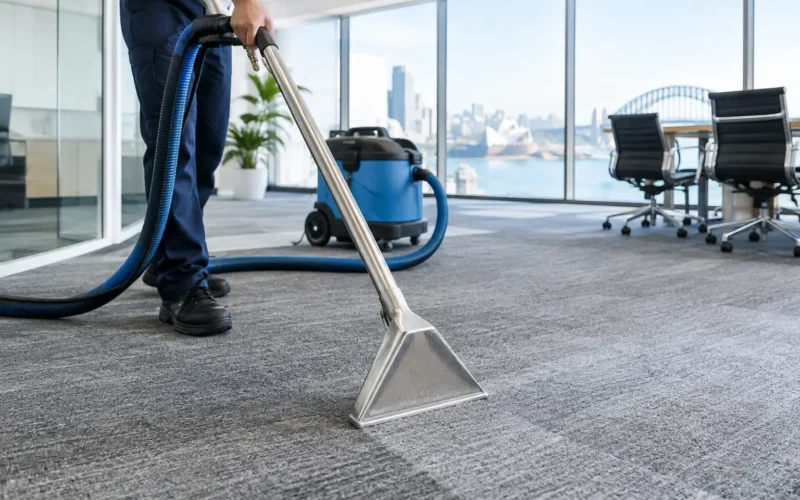
A reception carpet can look presentable at 9 am and still hold days of tracked-in soil, food spills, moisture and allergens below the surface. For workplaces with regular foot traffic, commercial carpet cleaning Sydney: a guide for businesses begins with recognising that vacuuming alone cannot manage the build-up that affects appearance, hygiene and carpet life.
Commercial carpet care is not simply about removing visible marks before an inspection or client visit. A well-planned professional cleaning program helps businesses maintain a cleaner environment for staff and visitors while protecting a significant interior asset. The right approach depends on your premises, the type of carpet, how the space is used and the level of traffic it receives.
Why commercial carpet cleaning matters
Carpet acts like a filter. It traps dry soil, dust, fibres and contaminants brought in on shoes, wheels and bags. In busy offices, retail spaces, medical practices, strata common areas and education facilities, that material can build up quickly.
Fine grit is particularly damaging because it works down into the pile and creates friction as people walk over it. Over time, this can flatten fibres, dull the carpet’s colour and leave traffic lanes looking worn well before the carpet should need replacing. Regular professional cleaning removes embedded soil that routine vacuuming may leave behind.
There is also a health and presentation benefit. Clean carpets support a fresher indoor environment, especially where staff spend long hours indoors or customers visit throughout the day. For businesses, a clean entry, meeting room or waiting area sends a practical message: the premises are cared for and professionally managed.
Commercial carpet cleaning in Sydney: matching the method to the site
There is no single cleaning method that suits every commercial carpet. The best result comes from inspecting the fibre type, construction, soil level, existing stains and moisture conditions before work begins. Certified technicians should also consider manufacturer recommendations and appropriate Australian Standards practices.
Hot water extraction for deep soil removal
Hot water extraction is commonly used for carpets with substantial embedded soil, spills and general traffic build-up. After suitable pre-treatment, heated water and cleaning solution are applied and extracted along with loosened dirt. This method can deliver a thorough clean and is often appropriate for periodic restorative cleaning.
The trade-off is drying time. With correct equipment, extraction technique and ventilation, carpets can dry efficiently, but businesses should plan the work around occupancy, airflow and access. Evening, weekend or low-traffic cleaning can be a sensible option for many sites.
Low-moisture cleaning for quicker return to use
Low-moisture methods can suit commercial environments where carpets need to be back in use sooner. Depending on the carpet and cleaning system, the process may use encapsulation products or absorbent compounds to lift soil with less water.
This approach is useful for regular maintenance, but it is not automatically the best choice for every heavily soiled carpet or water-damaged area. A professional assessment helps determine whether a low-moisture clean, hot water extraction or a combination of methods will achieve the required result.
Spot treatment is not an afterthought
Coffee, ink, food, make-up, grease and drink spills all respond differently. Using the wrong product can set a stain, spread it or damage carpet fibres. Prompt action matters: blot the spill with a clean white cloth, avoid rubbing, and arrange professional treatment where needed.
Some stains may leave permanent colour change or have already been treated with unsuitable chemicals. A qualified technician can explain what is achievable before treatment rather than making unrealistic promises.
How often should a business clean its carpets?
Cleaning frequency should reflect traffic, not just the calendar. A quiet professional office may benefit from a scheduled deep clean once or twice a year, supported by regular vacuuming and spot care. A busy lobby, childcare centre, retail store, hospitality venue or strata entrance may need more frequent professional maintenance.
Consider the areas that receive the greatest wear. Entryways, corridors, workstations, lifts, lunchrooms and meeting rooms often need attention before the rest of the floor. Targeting these zones between full cleans can help keep the entire site looking consistent.
Businesses should also bring cleaning forward after wet weather, construction work, a major event, an office move or an increase in staff numbers. Sydney’s rain can mean more moisture and soil carried indoors, particularly in entry areas without effective matting.
What a practical maintenance plan looks like
A reliable carpet maintenance plan combines daily habits with periodic professional care. Vacuuming is the foundation. High-traffic areas may require daily vacuuming, while less-used rooms can be maintained less often. Vacuum slowly enough to lift dry soil from the pile rather than making a quick pass over the surface.
Entry mats are equally important. They reduce the amount of grit and moisture reaching the carpet, but only if they are large enough for several steps and cleaned regularly themselves. Worn or saturated mats can transfer soil rather than stop it.
For larger premises, keep a simple record of spills, stains, cleaning dates and areas of repeated concern. This gives your cleaning provider useful information and helps identify underlying issues, such as a leaking appliance, inadequate entry matting or a high-traffic route that needs more frequent service.
Choosing a commercial carpet cleaning provider
Commercial cleaning requires more than domestic equipment brought into a larger room. Your provider should have trained staff, suitable machinery and a clear process for working safely around your people, furniture and operations.
Ask how they assess carpet fibres and stains, how they manage drying, and whether they can work around your operating hours. For multi-site businesses or property managers, consistency matters too. You need confidence that each location will receive the same level of care and reporting.
It is also worth checking whether the provider can assist beyond carpet cleaning when required. Upholstered office chairs, fabric partitions, rugs, curtains and mattresses in accommodation settings can hold similar dust and soil. Coordinating these services can make maintenance easier and support a more complete cleaning outcome.
Sydneywide Carpet Cleaning brings more than 20 years of industry experience to commercial sites across metropolitan Sydney. With trained technicians and up-to-date equipment, the team can provide planned maintenance cleaning as well as responsive assistance when unexpected issues arise.
Responding quickly to water and flood damage
A burst pipe, roof leak or overflowing appliance can turn a carpet problem into an urgent restoration job. Water left in carpet and underlay may lead to odours, staining, mould growth and damage to flooring or nearby furnishings.
Do not assume a wet carpet will dry properly on its own. Fast extraction, moisture assessment and drying equipment are often needed to reduce the risk of ongoing damage. Move loose items away from the affected area where safe to do so, avoid walking water into unaffected rooms, and arrange professional flooded carpet restoration promptly.
The required response depends on the source and extent of the water. Clean water from a supply line is managed differently from contaminated water, and some carpets or underlays may not be suitable for restoration. A professional inspection provides a clear recommendation based on the condition of the materials and the health considerations for the site.
Protecting your carpet between professional cleans
Small decisions make a noticeable difference to carpet condition. Attend to spills promptly, use suitable entry matting, place chair mats where appropriate and avoid harsh supermarket chemicals that can leave sticky residue or bleach fibres. If furniture is moved regularly, use protective pads to reduce indentations and friction.
For businesses with pets on site, food service areas or frequent public access, cleaning intervals may need to be shorter. The aim is not to wait until the carpet looks visibly dirty. By that stage, soil may already be affecting the fibres and making restoration more difficult.
A clean commercial carpet supports the way your workplace operates and the impression it leaves. With regular maintenance, the right cleaning method and prompt attention to spills or water damage, your carpets can stay healthier, presentable and serviceable for longer.