

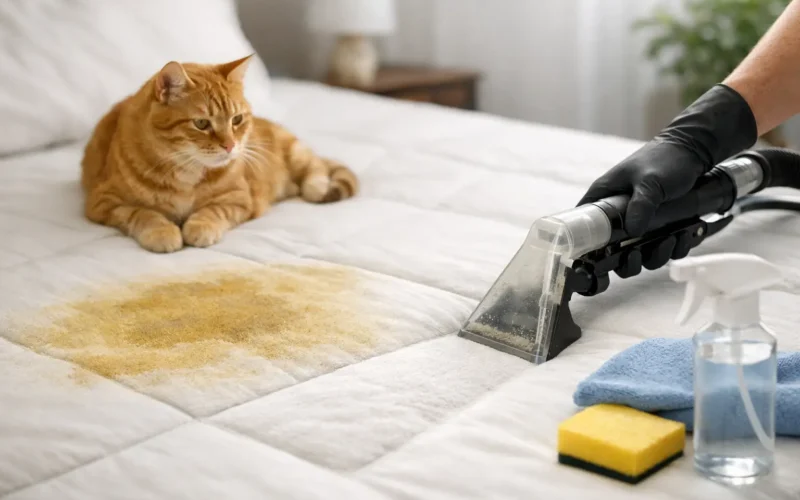
A pet accident on the mattress is more than an unpleasant surface mark. Pet urine mattress cleaning needs to address the liquid that has travelled into the fabric, quilting and foam beneath it. If only the visible stain is treated, lingering residue can continue to smell, particularly on humid days or when the mattress becomes warm.
A quick, careful response gives you the best chance of protecting the mattress. However, older stains, repeat accidents and strong odours often need professional treatment to remove the source rather than simply cover it up.
Why pet urine is difficult to remove from a mattress
Urine does not stay neatly on the surface of a mattress. Once it passes through the cover, it can be absorbed by padding and foam, where it is harder to rinse and dry. As the moisture evaporates, urine salts and other residue remain behind. These residues can reactivate when exposed to humidity or fresh moisture, causing the odour to return.
This is why fragranced sprays rarely solve the problem. They may make the room smell better for a short time, but they do not remove the deposits causing the odour. A mattress can also look clean while still holding contamination below the top fabric.
The right approach depends on the mattress construction, how much urine was absorbed, how long it has been there and whether the area has already been treated with other products. Memory foam, pillow-top and heavily quilted mattresses require particular care because excessive water can be difficult to extract and can lengthen drying times.
What to do as soon as you find the accident
Start by stripping the bed and washing sheets, protectors and blankets according to their care labels. Do not pile damp bedding into a laundry basket, as this can allow odour to transfer or set further into the fabric.
For the mattress itself, press clean, dry white towels firmly over the affected area to absorb as much liquid as possible. Replace the towels as they become damp. Blot rather than scrub. Scrubbing can push urine further into the filling, spread the affected area and damage delicate mattress fibres.
Once you have absorbed the excess moisture, use a pet-safe enzyme cleaner that is suitable for mattresses and follow the product directions exactly. Enzyme formulations are designed to break down organic residue, but more product is not necessarily better. Saturating a mattress can create a second problem: moisture trapped deep in the foam.
Allow plenty of airflow while the mattress dries. Open windows when weather permits, use a fan and avoid remaking the bed until the area is completely dry. Sleeping on a damp mattress can trap moisture and make odours more noticeable.
Test products before treating a large area
Even a suitable cleaning product should be tested first on a small, inconspicuous section. Mattress fabrics vary widely, and some dyes or finishes can react to cleaning agents. This is especially relevant for coloured covers, natural fibres and older mattresses.
Avoid using bleach, strong disinfectants or heavily perfumed products. Bleach can discolour fabric and may react poorly with urine residue. Strong chemicals can also leave their own odour or residue in a surface that is used every night.
Common mistakes that make the problem worse
The most common mistake is adding too much water. It is understandable to want to rinse the urine away, but household cleaning usually cannot extract water from deep inside a mattress. A soaked mattress may take days to dry and can develop musty odours.
Steam cleaning is another risky shortcut. Heat can set some stains and may cause urine odours to become stronger temporarily. It is not a reliable answer for a urine-affected mattress unless the cleaning process is carefully selected for the mattress and the contamination.
Vinegar and bicarbonate of soda are frequently suggested as home remedies. They can sometimes reduce a mild, fresh smell on a surface, but they are not a complete solution for urine that has reached the padding. Bicarbonate can also leave powdery residue behind, while vinegar may not be appropriate for every fabric or filling.
Finally, do not assume that a dry mattress is a clean mattress. If an odour returns after a few days, or becomes noticeable when the room is humid, the residue has probably not been fully removed.
When pet urine mattress cleaning needs a professional
Professional help is worthwhile when the accident has soaked through, the stain is old, the odour persists after careful spot treatment or your pet has used the same area more than once. It is also a sensible option for expensive mattresses, mattresses with thick pillow tops, and homes where someone is sensitive to odours or allergens.
A trained technician assesses the fabric, filling and level of contamination before choosing an appropriate treatment. The aim is to treat the source of the odour, rinse and extract residues where suitable, and manage drying without over-wetting the mattress. This requires equipment designed to remove moisture effectively, not simply apply it.
At Sydneywide Carpet Cleaning, trained technicians use up-to-date cleaning equipment and methods selected for the condition and material of the mattress. The work is focused on practical hygiene, odour reduction and protecting the life of the mattress. Results can depend on age, previous treatments and how deeply the urine has penetrated, so an honest assessment matters.
Do not hide the affected area
When arranging professional cleaning, let the technician know whether the stain is fresh or old, if it has been treated already and what products have been used. If there have been repeat accidents, mention that too. This information helps determine the most effective treatment and avoids combining products that may leave unwanted residues.
If you can identify the location, point it out on arrival. Some old urine deposits are not obvious once dry, even though the smell remains. A thorough inspection is more reliable than treating the whole mattress blindly.
Preventing another accident on the mattress
A quality waterproof mattress protector is one of the simplest ways to protect the mattress from future accidents. Choose one designed to be breathable and washable, then wash it promptly after any incident. A protector is far easier and more economical to replace than a mattress.
It also helps to consider why the accident happened. Young pets may need more frequent toilet breaks, while an older pet may be dealing with discomfort, anxiety or a health concern. Sudden changes in toileting habits are worth discussing with a veterinarian.
Keep bedroom doors closed if your pet is not yet reliably toilet trained, and clean any accident thoroughly. Pets can be drawn back to areas where they can still detect urine odour, even when people cannot smell it. Removing the residue properly helps break that cycle.
A cleaner mattress starts with the right response
Treat fresh urine quickly, blot carefully and avoid soaking the mattress with household products. If the smell remains, the area has been repeatedly soiled or the mattress is valuable, professional treatment is the safer path. Acting early protects the comfort, hygiene and usable life of a mattress that should be a clean place to rest.