

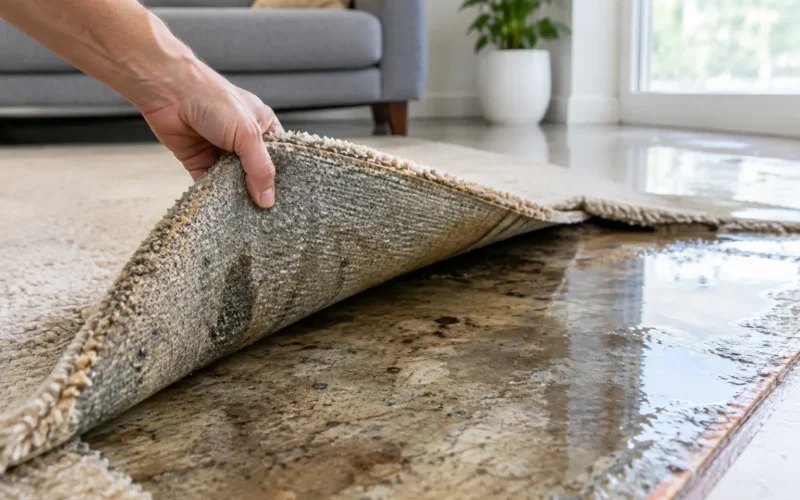
Floodwater can disappear from the carpet surface surprisingly fast, while moisture and contamination remain trapped underneath. So, can floodwater damage carpet underlay? In most cases, yes. Underlay is absorbent by design, and once floodwater reaches it, the material can hold water, bacteria, soil and odours long after the carpet feels dry underfoot.
That is why a flooded carpet should never be judged by appearance alone. A prompt, professional assessment gives you the best chance of protecting the carpet, the subfloor and the health of everyone using the room.
Why floodwater damages carpet underlay
Carpet underlay provides cushioning, insulation and support. Many common underlays are made from foam, rubber, felt or fibre materials with tiny spaces that retain moisture. This makes them effective under normal conditions, but it also means they can act like a sponge after a flood.
Floodwater is different from a minor clean-water spill. It may carry soil, organic matter, pollutants, sewage, chemicals and microorganisms from outside drains, gardens, roads or overflowing stormwater systems. As that water moves through carpet fibres, it settles into the underlay and can reach the subfloor beneath.
Even when the water looks reasonably clean, the source matters. Rainwater entering through a roof leak may sometimes be treated differently from water that has travelled across external ground, backed up from a drain or entered from a sewer. The longer water remains in the carpet system, the greater the risk of microbial growth, staining, odours and permanent material breakdown.
Can floodwater damage carpet underlay beyond repair?
Often, yes. Whether underlay can be saved depends on the water source, how deeply it has been saturated, the type of underlay, the affected area and how quickly drying begins.
Underlay affected by contaminated floodwater will generally need to be removed and replaced. Cleaning the carpet alone does not remove contaminants held in the underlay. Keeping it in place can allow odours and hygiene issues to return, even after the surface has been professionally cleaned.
Foam underlay is particularly vulnerable because it can absorb and retain a large volume of water. It may compress, lose its shape or begin to break down after saturation. Fibre and felt underlays can also hold moisture and contamination deeply within their structure. Rubber underlay may resist water better in some situations, but that does not make it safe to retain when the floodwater source is contaminated.
There can be exceptions following a small, recent clean-water event that is addressed immediately. In those cases, a restoration technician may assess whether controlled extraction and structural drying can return the carpet system to a suitable condition. Floodwater, however, should be treated cautiously. Replacement is frequently the safer and more reliable result.
The carpet may be recoverable even if the underlay is not
Removing damaged underlay does not automatically mean the carpet must be discarded. A carpet can sometimes be lifted, cleaned, sanitised where appropriate and dried before being reinstalled with new underlay. This depends on its construction, age, condition and the type of contamination involved.
Synthetic carpets can often tolerate water better than natural fibres, but they are not immune to flood contamination. Wool carpet requires particular care because it can shrink, brown, distort or suffer permanent damage when exposed to excessive moisture. A professional inspection helps determine whether restoration is realistic or whether replacement is the better long-term option.
Signs moisture is still trapped beneath the carpet
A carpet can feel dry on top while the underlay and subfloor remain wet. This is one of the main reasons household fans and open windows are not always enough after flooding. Moisture below the surface can continue to affect the room for days or weeks.
Watch for a musty smell, dampness around carpet edges, a squelching feeling underfoot, darker patches, rippling or lifting carpet, and unexplained humidity in the room. Mould may not be visible straight away. By the time it appears on the carpet surface or skirting boards, moisture may already have affected the underlay and subfloor.
The subfloor also needs attention. Timber can swell or cup, while some particleboard materials can lose strength once wet. Concrete can retain moisture and release it slowly, making proper drying verification essential before carpet and new underlay are installed.
What to do as soon as floodwater enters a carpeted area
The first priority is safety. Do not walk through water where electrical hazards may be present, and avoid handling wet electrical equipment. If floodwater may contain sewage or other contamination, keep children and pets away from the affected area.
If it is safe to do so, move furniture and loose items away from the wet carpet. Avoid placing furniture directly onto damp flooring or carpet, as dyes, rust and timber stains can transfer. Do not use a standard household vacuum on wet carpet, and do not rely on deodoriser powders or steam cleaning to solve flood contamination.
The most effective response is rapid water extraction followed by controlled drying. Restoration equipment removes as much water as possible, then uses air movement, dehumidification and moisture monitoring to dry the carpet system and surrounding structure. Where contaminated underlay is present, technicians can lift the carpet, remove affected materials and inspect the subfloor rather than leaving hidden moisture behind.
Time matters because mould growth can begin quickly in damp conditions. Acting early also reduces the chance of stains setting, odours becoming embedded and flooring materials suffering avoidable damage.
Why professional flood restoration makes a difference
Flood recovery is more than making carpet look clean. It requires an assessment of the water category, the affected materials and the risk to the property. The correct process may involve extraction, carpet lifting, disposal of underlay, cleaning, targeted antimicrobial treatment where suitable, drying of the subfloor and moisture testing before reinstatement.
A trained technician can also identify when a carpet cannot be restored safely. This is useful for homeowners, renters, landlords and property managers who need clear advice on the condition of the affected area and practical next steps.
Sydneywide Carpet Cleaning uses up-to-date extraction and drying equipment to respond to flooded carpet situations across Sydney. With experienced, trained technicians, the focus is on removing water thoroughly, addressing hygiene concerns and helping prevent further damage to your soft furnishings and flooring.
Preventing lingering odours and mould after a flood
Odours after flooding are usually a warning that moisture or contamination remains somewhere in the carpet system. Covering the smell with fragrance will not fix the cause. The affected area must be cleaned appropriately and dried to a verified standard.
Keep the room well ventilated once it is safe, but remember that humid Sydney weather can slow natural drying. Air conditioning may help reduce moisture in some circumstances, yet professional dehumidification is often needed for saturated carpets and enclosed rooms. Do not reinstall furniture, rugs or stored items until the flooring is confirmed dry.
If you are replacing underlay, make sure the carpet and subfloor are dry first. Installing fresh material over residual moisture can create the same mould and odour problem all over again.
Floodwater beneath carpet is easy to underestimate because much of the damage is hidden. A fast inspection after the event can establish whether the underlay needs replacement, whether the carpet can be saved and what is required to return the space to a clean, healthy condition.