

A carpet that still feels damp by dinner is more than an inconvenience. It can hold odours, attract more soil, and leave homes or workplaces feeling unsettled long after the cleaning is done. That is why same day carpet drying Sydney customers ask for is not just about speed. It is about getting the job done properly, so the carpet is clean, usable, and drying as quickly as conditions allow.
The reality is that no reputable cleaner should promise a single drying time for every property. Drying depends on carpet fibre, underlay, airflow, humidity, room temperature, and how soiled the carpet was before cleaning. What a professional service can do is use the right cleaning method, extract as much moisture as possible, and set up the best conditions for faster drying on the same day.
What same day carpet drying in Sydney really means
Same day drying does not mean every carpet will be completely dry within a fixed number of hours. It means the cleaning process is designed to minimise moisture and reduce downtime, with the aim of having carpets dry later that day rather than lingering damp into the next.
That matters in busy households, rental properties, offices and commercial spaces where rooms need to be back in use quickly. Families do not want children or pets walking across wet carpet all evening. Property managers do not want delays between tenant changeovers. Offices need walkways and work areas ready without extended disruption.
A professional cleaner will focus on controlled moisture rather than simply using more water and hoping it evaporates. Good drying starts during cleaning, not after it.
Why some carpets dry quickly and others do not
There is no single answer because carpets behave differently from one property to the next. A low-pile synthetic carpet in a well-ventilated room will usually dry faster than a dense wool carpet in a shaded area with little airflow.
The underlay also plays a part. If moisture sits deeper below the surface, drying can take longer even when the top layer feels almost ready. Weather can make a difference too. On humid days, evaporation slows down. In cooler rooms or tightly closed apartments, moisture has fewer ways to escape.
Previous cleaning methods matter as well. Overwetting is a common reason carpets stay damp for too long. If too much solution is applied, or extraction is not strong enough, drying times can stretch out well beyond what most people expect.
How professionals improve same day carpet drying Sydney homes and businesses need
Faster drying is usually the result of several steps done well rather than one magic piece of equipment. First, the technician needs to assess the carpet properly. The fibre type, level of soiling and overall condition all influence the cleaning approach.
Hot water extraction remains one of the most effective methods for deep carpet cleaning, but it has to be performed correctly. Professional equipment with strong suction removes far more moisture than basic hire machines or smaller domestic units. That difference is often what separates a carpet that dries later the same day from one that still feels wet the next morning.
Pre-treatment is also important. When soils and spots are treated properly before the main clean, the technician does not need to overwork the carpet with repeated passes or excessive water. Efficient cleaning helps efficient drying.
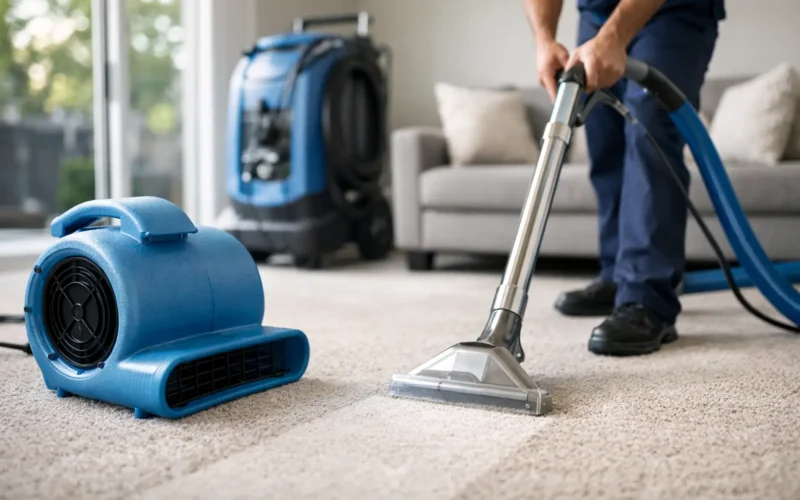
Air movement is another key factor. In some situations, professional air movers can be used to accelerate evaporation, especially in rooms with poor natural ventilation. Opening windows where conditions suit, using ceiling fans or air conditioning, and improving cross-flow ventilation can all help once the clean is complete.
The difference between routine cleaning and water damage drying
This is where many people get caught out. Standard carpet cleaning and flooded carpet restoration are not the same service.
After routine cleaning, the carpet should be damp, not soaked. The moisture is controlled, and the drying process is part of normal post-clean care. In contrast, flood-affected carpet involves excess water penetrating carpet, underlay and sometimes subfloor materials. That requires a different response, different equipment and a much more urgent assessment.
If a carpet has been affected by stormwater, burst pipes, overflow incidents or significant internal leaks, the focus is not just drying the surface quickly. It is also about hygiene, contamination risk, odour prevention and limiting further damage. In those cases, proper restoration procedures matter far more than a simple promise of fast drying.
What you can do to help carpets dry faster
Once the clean is complete, small actions can make a noticeable difference. Keep foot traffic light until the carpet is dry enough for normal use. If the technician has advised that shoes should stay off for a period, follow that advice. Bare feet or clean socks are often better than bringing outside soil straight back onto damp fibres.
If weather and security allow, open windows to improve airflow. Run fans, ceiling fans or air conditioning where practical. Air movement helps lift moisture from the carpet surface and carry it away.
Try not to replace furniture too soon, especially heavier items that can trap moisture underneath. If furniture has been moved during the clean, ask when it is safe to return everything to place. This is particularly important for timber furniture, metal legs and delicate finishes.
The biggest mistake is assuming damp means dirty or that the cleaner has used too much water. Sometimes the carpet simply needs the right conditions and a bit of time. The better question is whether the carpet feels appropriately damp for its type and whether the cleaner has taken proper steps to support drying.
Choosing a service for same day carpet drying Sydney properties can rely on
If drying time matters, experience matters just as much. A qualified technician should be able to explain what is realistic for your carpet, not give vague assurances. That includes identifying factors that may slow drying and recommending the best approach for your home or workplace.
Look for a provider with professional training, up-to-date equipment and experience across both residential and commercial work. Carpet in a family home, a strata common area and an office fit-out can all behave differently. The cleaning method should suit the setting.
It also helps to choose a business that understands more than one type of soft furnishing care. Carpets do not exist in isolation. Upholstery, rugs, mattresses and curtains all affect indoor hygiene, and in some cases cleaning them together can make more sense from a maintenance point of view.
For customers across metropolitan Sydney, local knowledge can be useful too. Different building styles, apartment layouts, ventilation conditions and weather patterns all influence how a carpet dries after cleaning. A team that works across homes and businesses throughout the region will usually have a clearer idea of what to expect on site.
When fast drying should never come at the expense of a proper clean
There is always a balance to strike. The fastest possible clean is not automatically the best clean. Some carpets need a more thorough process because of heavy soiling, pet-related contamination, tracked-in dirt or neglected maintenance.
If a cleaner cuts corners just to reduce moisture, the result may be quicker drying but poorer soil removal. On the other hand, if they overwet the carpet in the name of deep cleaning, the carpet may stay damp too long. Professional work sits in the middle – effective cleaning with controlled moisture and strong extraction.
That balance is especially important in homes with pets, children or allergy concerns. A clean carpet should not only look better. It should also support a healthier indoor environment and a more comfortable space to live or work in.
A practical way to think about drying time
Instead of asking for a guaranteed number of hours, ask what steps will be taken to help the carpet dry on the same day. Ask whether the equipment is designed for strong extraction, whether airflow recommendations will be provided, and whether your carpet type is likely to need extra time.
That gives you a more useful answer than a blanket promise. It also tells you a lot about how the provider works. Experienced operators tend to be clear, realistic and focused on results.
Sydneywide Carpet Cleaning approaches drying the same way it approaches the clean itself – with trained technicians, suitable equipment and methods that are designed to deliver a high standard of care without unnecessary downtime.
When carpets are cleaned properly, drying should feel like the final stage of a well-managed job, not a long wait that leaves the room out of action. If you need the carpet cleaned and back in use as soon as possible, the right service will set realistic expectations, minimise moisture from the start, and leave you with a cleaner, fresher space by the end of the day.