

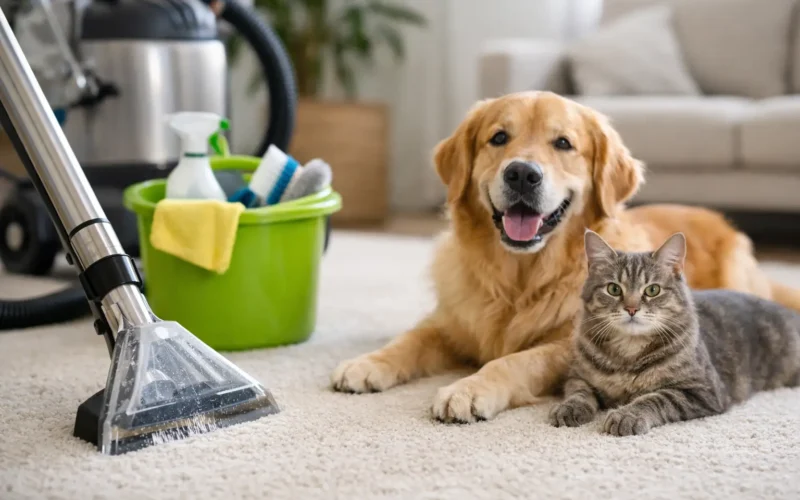
Pets make a home feel lived in, but muddy paws, shed hair, accidents and that familiar wet-dog smell can settle deep into carpet fibres. Effective pet friendly carpet cleaning solutions do more than freshen the surface. They remove the soil, bacteria, residues and odour sources that regular vacuuming cannot reach, while keeping the wellbeing of your pets and family front of mind.
For Sydney households, the right approach depends on the carpet type, the age of the stain, the source of the odour and whether the affected area is still damp. Quick action helps, but professional cleaning is often the most reliable way to restore both appearance and hygiene without risking damage to the carpet.
What makes carpet cleaning safe for pets?
A pet-safe result is not simply about choosing a product labelled “natural” or “non-toxic”. It comes down to using the correct cleaning method, applying solutions at an appropriate dilution, thoroughly extracting residues and allowing the carpet to dry properly before pets return to the room.
Carpets can hold fine pet hair, skin flakes, saliva, outdoor soil and urine deposits below the pile. If a cleaner only treats the visible mark, the underlying contamination can remain. This is why odours sometimes return after a carpet seems clean. Moisture or humidity can reactivate residues in the backing or underlay, making the smell noticeable again.
Professional technicians assess the fibre, condition and contamination before selecting a method. Wool, for example, needs different care from synthetic carpet. Strong spot treatments that may be suitable for one fibre can cause colour loss, texture change or excess wetting in another. A measured process protects the carpet as well as the people and animals using the space.
The main pet-related carpet problems
Urine stains and lingering odours
Pet urine is one of the most difficult carpet issues because it can travel beyond the visible stain. It may soak through the carpet backing and into the underlay, particularly when an accident is not discovered straight away. Surface sprays can mask the smell temporarily, but they rarely remove the full source.
Effective treatment usually involves locating the affected area, treating the contamination with an appropriate odour-control process and extracting it thoroughly. In more established cases, the underlay or subfloor may also need attention. The correct solution depends on the extent of penetration, so there is no single treatment that suits every accident.
Avoid saturating the carpet with large amounts of water or household cleaner. Excess moisture can spread the contamination, encourage mould growth or leave a water mark. Blot fresh accidents with clean white towels, working from the outside towards the centre, and arrange professional help if the odour persists.
Mud, dirt and oily paw marks
Sydney’s wet periods, beach walks and backyard play can quickly leave tracks through hallways and living areas. Dry soil can be vacuumed once it has fully dried, but oily dirt and fine grit often cling to the fibres. Rubbing at a wet mark tends to push it deeper into the pile.
Vacuum first, then blot rather than scrub. For a larger affected area, hot water extraction can lift embedded soil while removing the residues that make carpet feel stiff or dull. Regular deep cleaning is especially worthwhile in entryways, family rooms and the routes pets use most often.
Pet hair, dander and allergens
Vacuuming remains essential, but even a quality vacuum may leave fine hair and dander caught in dense carpet fibres. This can affect indoor comfort, particularly for family members with allergies or asthma. Upholstered furniture, rugs and mattresses may also collect pet-related allergens over time.
A thorough professional clean removes built-up particulate matter from areas a standard routine may miss. It is not a substitute for veterinary care or medical advice, but it can contribute to a cleaner, more comfortable home environment.
Choosing pet friendly carpet cleaning solutions
The best cleaning solution is the one suited to the problem and used correctly. For routine soil and light odours, professional hot water extraction is often a practical choice. It flushes suspended soil and cleaning solution from the carpet, leaving less residue behind than methods that rely heavily on surface shampoo.
For urine contamination, specialist treatments may be required to address odour at its source. These treatments need sufficient contact time and correct application. A pleasant fragrance alone is not evidence that the problem has been resolved.
Low-moisture cleaning can suit some maintenance situations, particularly where faster drying is needed. However, it may not be the right answer for deep urine contamination or heavily soiled carpet. The key is matching the method to the carpet and the condition, rather than treating every pet stain the same way.
When discussing a clean, let the technician know about pets in the home, their usual access to rooms and any known accidents. This helps with product selection, treatment planning and practical advice on drying time. Keep pets away from the work area during cleaning and until the carpet is dry. Even safe cleaning processes work best when animals are not walking across damp carpet or licking freshly treated areas.
A practical cleaning routine for homes with pets
The most effective results come from regular maintenance rather than waiting until the carpet looks heavily soiled. Vacuum high-traffic areas several times a week, using slow passes so the vacuum has time to lift hair and grit. Pay attention to lounges, doorways, pet beds and the edges of rooms, where fur tends to collect.
Wipe paws after wet walks and place washable mats at entrances to reduce tracked-in soil. Grooming pets regularly can also reduce loose hair across carpet and upholstery. If an accident occurs, blot it promptly and avoid using heat, bleach or harsh chemical products. Heat can set some stains, while unsuitable chemicals may damage fibres or interfere with later professional treatment.
Most pet-owning households benefit from professional carpet cleaning more frequently than homes without animals. The ideal schedule varies with the number of pets, the carpet type, shedding, indoor-outdoor access and whether there are allergies in the household. A family with two active dogs may need attention sooner than a single-cat household with low foot traffic.
Why drying matters after carpet cleaning
A clean carpet should not stay wet for an extended period. Proper extraction and airflow are crucial to a healthy outcome. Damp carpet can feel uncomfortable underfoot, attract new soil and create conditions where musty odours develop.
After professional cleaning, increase ventilation where practical, use fans or air conditioning to support airflow, and avoid placing furniture back on damp carpet without protective tabs. Keep pets out of the area until it is dry to the touch. This protects the freshly cleaned fibres and prevents paw marks from transferring soil back onto the carpet.
Drying times vary based on weather, humidity, ventilation, pile depth and the cleaning method used. On humid Sydney days, drying may take longer than expected. A trained technician can provide realistic guidance based on the condition of your carpet and the conditions in your home.
When professional treatment is the better option
DIY care has a place for immediate blotting and routine upkeep, but recurring odours, old stains and widespread pet traffic need a more thorough response. Professional equipment provides stronger soil removal and controlled extraction, while trained technicians can identify fibre risks before treatment begins.
This is particularly valuable for rental properties, end-of-lease preparation, households preparing for a new baby, or homes where a pet has been unwell or toilet training has been difficult. It can also help landlords and property managers maintain carpet condition between tenancies and address odour concerns before they become a larger problem.
Sydneywide Carpet Cleaning applies trained, standards-focused care to carpets, upholstery and rugs across Sydney homes and businesses. The goal is not to cover pet odours with perfume, but to treat the source, remove embedded soil and leave soft furnishings cleaner, fresher and ready for everyday life.
A pet-friendly home does not need perfect carpets at all times. It needs a practical routine, prompt care after accidents and professional support when dirt or odour has moved beyond the surface.