

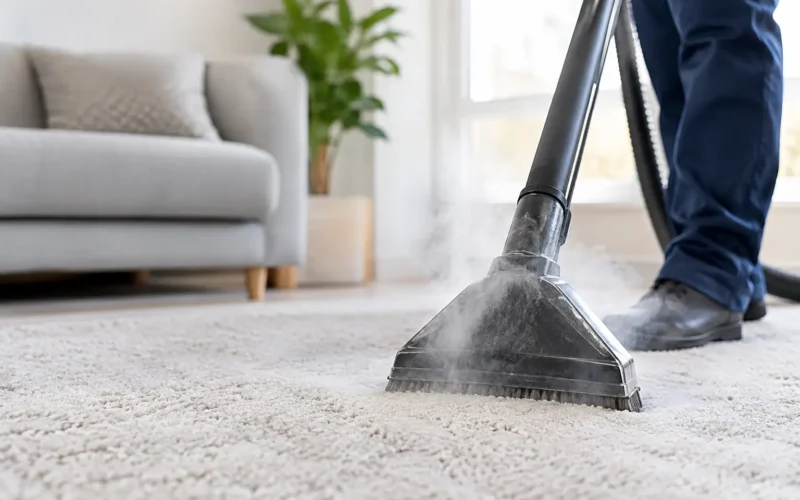
A carpet can look clean from the doorway while holding weeks of fine dust, pet dander and pollen deep between its fibres. Steam cleaning allergens is often discussed as a way to improve indoor hygiene, but the real benefit depends on the surface, the cleaning method and whether loosened particles are properly removed.
For Sydney homes and workplaces, this matters most where soft furnishings get regular use: lounge rooms, bedrooms, rental properties, offices and homes with pets. Professional cleaning can reduce the build-up that ordinary vacuuming leaves behind, helping create a fresher and more comfortable environment.
What allergens collect in soft furnishings?
Allergens are substances that may trigger symptoms in sensitive people. They are not always visible, and they do not disappear simply because a carpet has been deodorised or a sofa looks tidy.
Carpets, rugs, upholstered furniture, mattresses and curtains can collect a mix of fine particles over time. Common examples include dust mite allergens, pet dander, pollen tracked indoors on shoes and clothing, mould spores, skin flakes and outdoor dust. Cooking residue and general soil can also make fibres sticky, allowing fine particles to cling more readily.
Dust mites are particularly relevant in bedrooms, lounges and other warm, regularly used areas. The mites themselves are microscopic, while the proteins in their waste are a common trigger for people with allergies. Pets add another layer, as dander settles into carpet pile, fabric lounges and bedding even when animals are kept well groomed.
A good vacuum routine is essential, especially with a machine fitted with effective filtration. However, vacuuming mainly addresses loose material near the surface. Embedded soil, oils and fine particles can remain lower in the pile or within upholstery padding.
How steam cleaning allergens works in practice
The phrase “steam cleaning” is widely used for professional carpet cleaning, though methods vary. In many cases, carpet cleaners use hot water extraction rather than dry steam. This process applies a controlled cleaning solution and hot water to the fibres, agitates or flushes out soil, then extracts the dirty moisture with powerful vacuum equipment.
That extraction step is the key. Heat can help loosen oils, dirt and residue that bind particles to fabric. The equipment then removes much of that suspended material from the carpet or upholstery instead of simply moving it around the room.
For hard surfaces, true steam cleaning uses very hot vapour with little water. It can be useful on suitable sealed surfaces and in tight areas, but it is not automatically the best option for every material. Carpets, mattresses and fabric upholstery need a method that is appropriate for their construction, dyes and drying requirements.
Professional cleaners assess the fibre type, level of soiling and condition of the item before choosing a process. Wool carpet, delicate upholstery and certain rugs can be damaged by excessive heat, moisture or unsuitable chemicals. A careful approach protects the item while delivering a more thorough clean.
Does heat kill dust mites?
High temperatures can kill dust mites under the right conditions, but that is only part of the issue. Dead mites and allergen proteins may still remain in the fibres unless they are physically removed. This is why a cleaning process with strong extraction is generally more useful than relying on heat alone.
The same principle applies to pet dander and pollen. Cleaning can remove a significant amount of the material held in soft surfaces, but no single treatment can prevent new particles entering the home. Ongoing vacuuming, ventilation and regular professional maintenance all play a role.
Where professional cleaning makes the biggest difference
Carpets are often the first priority because they cover a large surface area and act like a filter for household dust. In busy households, soil can be carried in from the footpath, garage, garden or shared building corridors. Once it settles into the carpet, walking across the area can disturb some particles back into the air.
Upholstery deserves equal attention. Fabric lounges, dining chairs and armchairs collect dust and dander where people sit, rest and often bring pets. The fabric may appear clean because the soil is dispersed, yet the material can still hold oils and fine particles beneath the surface.
Mattress cleaning can also be worthwhile for people managing allergy concerns. Mattresses accumulate skin flakes, dust and moisture over time, particularly when protectors are not washed regularly. The right professional method can refresh the sleep surface without over-wetting the mattress.
Curtains, blinds and rugs are sometimes overlooked, but they can hold dust in areas that are rarely vacuumed. In commercial spaces, fabric partitions, reception seating and office carpets can build up particles quickly due to higher foot traffic and shared use.
What cleaning can and cannot do
Professional hot water extraction or suitable steam-based cleaning can remove built-up soil, reduce dust and allergen residue, improve the appearance of fibres and help manage odours linked to pets or spills. It is a practical part of a healthier cleaning routine, particularly in homes where allergies, asthma or pets are a concern.
It is not a medical treatment and cannot guarantee that a home will be allergen-free. Allergens can return through open windows, shoes, clothing, visitors and pets. People with severe allergies should continue following advice from their healthcare professional and use cleaning as one part of their broader management plan.
Drying is another consideration. A carpet or lounge that stays damp for too long can create conditions that are not ideal for indoor hygiene. Proper extraction, airflow and appropriate drying times matter. Avoid using a room heavily until the cleaned surface is dry, and ensure the area is ventilated where possible.
A practical cleaning routine for allergy-conscious homes
The most reliable results come from regular habits rather than waiting until a carpet looks visibly dirty. Vacuum high-traffic areas at least weekly, and more often in homes with pets, young children or allergy sufferers. Use slow passes rather than rushing across the room, giving the vacuum time to lift fine material from the pile.
Wash bedding and washable cushion covers regularly, and clean spills promptly so they do not become sticky residue that attracts soil. Grooming pets and wiping paws after outdoor time can also reduce what reaches carpet and upholstery.
Professional cleaning frequency depends on how the space is used. A quiet household may need periodic maintenance, while pet homes, busy family areas, rental properties and commercial premises may benefit from more frequent attention. After water damage, carpets should be assessed quickly, as delayed drying can lead to far more serious hygiene and restoration issues.
Choosing the right cleaning provider
The safest option is a trained cleaner who can identify fibre types, use suitable equipment and explain the process clearly. Ask whether the method includes effective soil extraction, how the item will be dried and whether the technician has experience with materials such as wool, delicate upholstery or mattresses.
For homes and businesses across Sydney, Sydneywide Carpet Cleaning provides trained, on-site care for carpets, upholstery, mattresses, rugs and other soft furnishings. The aim is not simply a better-looking room, but a properly cleaned surface that supports a cleaner, more comfortable place to live or work.
If dust, pet hair or stale odours seem to return soon after vacuuming, the issue may be deeper in the fibres than a surface clean can reach. A professional assessment can help you choose the right treatment and keep your soft furnishings in better condition between visits.