

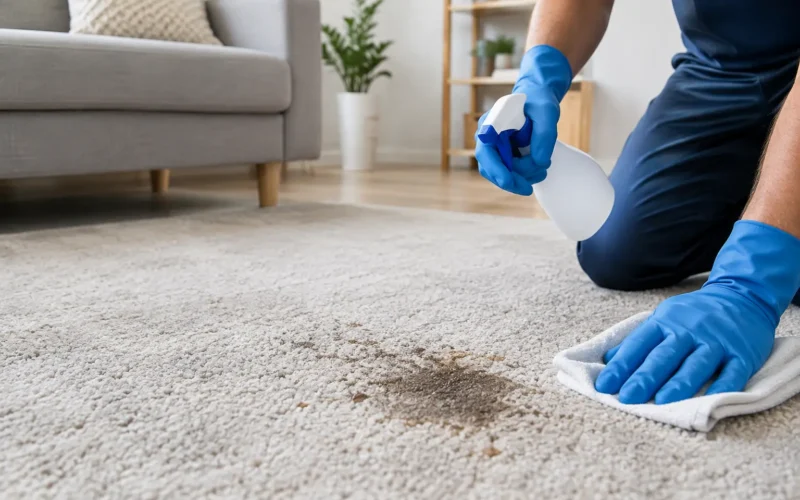
A spill can look completely gone after cleaning, only to reappear as a dull mark a day or two later. When carpet stains return, it is usually not because the carpet was cleaned incorrectly. More often, the visible spot was removed from the surface while residue, moisture or soil remained deeper in the carpet.
This is a common frustration for Sydney households, particularly in busy rooms, rental properties and homes with children or pets. The right response depends on what caused the stain, how far it travelled into the carpet and whether previous cleaning products have been used. Treating the surface repeatedly without addressing the source can make the problem harder to solve.
Why carpet stains return after cleaning
Carpet is made up of more than the fibres you can see. Beneath the pile are the backing, underlay and sometimes the subfloor. Liquids can travel through these layers quickly, especially if a spill has been left to sit or the carpet is heavily soiled.
As a damp carpet dries, moisture moves upwards through the fibres. It can carry dissolved soil, drink residue or cleaning product back to the surface. This is known as wicking. The stain may seem to vanish immediately after treatment, then reappear around the edges or in the same area once the carpet is dry.
Wicking is especially likely with larger spills, dark drinks, pet accidents, muddy water and stains that have soaked well below the carpet pile. It may also occur after a water incident where drying has not been completed thoroughly.
Residue left in the carpet attracts new soil
A sticky residue can be just as noticeable as the original stain. Soft drink, juice, cordial, wine and many food spills contain sugars or oils. If some of that material remains behind, it catches dust and foot traffic soil, making the area look marked again.
The same can happen with household spot cleaners. Using too much product, failing to rinse it out or applying a detergent not suited to the fibre can leave the carpet feeling slightly stiff or tacky. The spot may initially look clean, but it darkens again as everyday dirt adheres to the residue.
This is why more product is not always better. A cleaning solution needs to be matched to the stain and removed properly after treatment.
The stain may have changed the fibre
Some marks are not simply dirt sitting on carpet fibres. Coffee, red wine, turmeric, hair dye, ink, bleach and some medications can alter the colour of the fibre itself. In these cases, the mark may lighten with cleaning but not disappear fully because it has become a dye stain or caused colour loss.
Repeated scrubbing is rarely the answer. It can fray the pile, spread the stain and create a rough patch that catches the light differently from the surrounding carpet. Professional stain treatment can improve many difficult marks, but results depend on the fibre type, the age of the stain and what has already been applied to it.
Common causes of recurring carpet marks
Pet urine requires particular care. Urine can move into the backing and underlay, leaving salts and odour-causing bacteria behind. Damp weather, steam from nearby cleaning or high humidity can reactivate the smell and bring the mark back to the surface. Surface deodorising may mask the issue temporarily, but it will not remove contamination from deeper layers.
Food and drink spills are another regular cause. Milk-based drinks, gravy, sauces and oily foods can leave a combination of protein, fat and colour. Each component responds differently, so a single general-purpose cleaner may not remove the whole stain.
Old water damage can also leave browning or tide marks. If a carpet has been affected by a leaking appliance, overflowing bathroom, burst pipe or flooding, the priority is controlled extraction and drying. Delayed drying can allow contaminants to migrate through the carpet and can create hygiene concerns beneath the surface.
In commercial settings, recurring marks often develop in walkways, entry areas and around workstations. These may look like isolated stains, but they are commonly a build-up of fine grit, oil from foot traffic and cleaning residue. A planned maintenance clean is more effective than repeatedly spot-cleaning the same patch.
What to do when a stain reappears
Start by allowing the area to dry completely. A damp patch can look darker than it will once dry, and applying more product too soon can overload the carpet with moisture. Keep foot traffic away from the area where possible and improve airflow with open windows or fans.
Then gently blot the spot with a clean white towel. Do not rub, as rubbing pushes soil further into the pile and can damage the fibres. If colour transfers to the towel, there may still be residue lifting from below.
Avoid mixing cleaners or using strong household products without knowing the carpet fibre and stain type. Bleach, dishwashing liquid, laundry detergent and heavily fragranced products can cause colour change, sticky residue or delayed damage. Wool carpets need particular caution, as unsuitable chemicals and excess moisture can affect their appearance and texture.
If the stain has returned more than once, is larger after drying, has an odour or involves pet urine, it is time for a professional assessment. Trained technicians can identify the fibre, test the affected area and use appropriate extraction methods to remove material from deeper in the carpet rather than only improving the surface.
How professional cleaning addresses returning stains
Effective stain removal is not only about applying a solution. It involves identifying the source, treating it with the right chemistry and thoroughly extracting the loosened soil and moisture. For deeper contamination, the process may include targeted treatment, controlled rinsing and additional drying measures.
Professional equipment provides stronger extraction than most domestic machines. This matters when residue is trapped in the backing or when excess moisture needs to be removed without overwetting the carpet. Proper extraction helps reduce the likelihood of wicking and leaves less cleaning solution behind to attract new dirt.
For pet-related problems, treatment may need to reach beyond the visible carpet fibres. The aim is to deal with the source of the odour and staining, not simply cover it with fragrance. Where underlay or subfloor contamination is extensive, the most suitable solution will depend on the condition of the materials and the extent of penetration.
Sydneywide Carpet Cleaning uses trained technicians and current equipment to assess recurring stains across residential and commercial carpets. This is particularly valuable when a mark has been treated several times, when the carpet is delicate, or when water damage has affected a larger area.
Preventing stains from coming back
Fast action makes a real difference. Blot spills as soon as possible, working from the outside of the spill towards the centre so it does not spread. Use a clean white cloth to avoid transferring colour onto the carpet, and avoid saturating the area with water.
Regular professional maintenance also helps prevent recurring marks. General soil settles into carpet over time, particularly near doors, lounges, dining areas and hallways. Removing that build-up reduces the chance that a small spill will bind with existing dirt and become a stubborn stain.
For homes with pets or young children, more frequent cleaning is often worthwhile for both appearance and hygiene. In offices, shops and managed properties, routine cleaning can protect high-traffic areas before they become permanently dull or heavily marked.
If a stain keeps returning, take it as a sign that the source is still below the surface. A careful inspection and the right treatment can protect the look, cleanliness and life of the carpet before a small spot becomes a more difficult restoration job.