

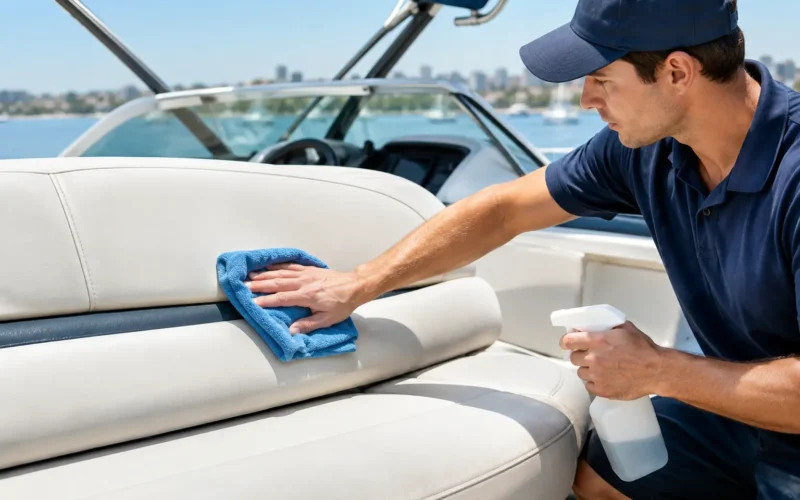
Salt spray settles quietly on boat seating. Wet swimmers leave moisture in cushions. Sunscreen, bait, food and harbour grime build up over a season until vinyl feels tacky, fabric looks tired and the cabin carries a stale smell. A professional boat upholstery cleaning service addresses the contamination that ordinary wiping leaves behind, helping keep your vessel clean, comfortable and ready for its next outing.
For Sydney boat owners, regular upholstery care is not simply about appearance. Marine seating and soft furnishings work hard in conditions that are far harsher than a lounge room. UV exposure, humidity, salt air and frequent dampness can shorten the life of materials when dirt and residues are allowed to remain.
Why marine upholstery needs specialist care
Boat upholstery may look similar to household furniture, but it has different cleaning requirements. Many vessels combine marine vinyl, fabric-covered cushions, canvas, foam inserts, carpet and leather details in a compact space. Each surface responds differently to moisture, heat and cleaning products.
Salt is one of the main concerns. When salty residue dries, it can attract moisture from the air and leave surfaces feeling damp or sticky. Over time, this contributes to grime build-up and can affect the finish of vinyl and fittings. Sunscreen and body oils add another layer of residue that discolours light-coloured seating and creates stubborn marks around headrests and seat edges.
Mould and mildew are also common issues, particularly in enclosed cabins, under-seat storage and cushions that have not dried properly. Surface mould may be visible as spotting, but odours can develop before clear marks appear. Treating the visible area alone is rarely enough if moisture or contamination has travelled into seams, fabric backing or foam.
The right method depends on the upholstery material, its condition and the source of the staining. Aggressive scrubbing, overly strong chemicals or excessive water can damage stitching, dull protective coatings, create water marks or leave cushions slow to dry. Professional assessment matters because a clean result should not come at the expense of the material.
What a boat upholstery cleaning service should address
A thorough service begins with inspecting the seating, cushions and surrounding soft surfaces. This helps identify the material type, areas of heavy use, salt residue, mould concerns, odours and pre-existing wear. Stain removal is never guaranteed, especially where marks have set in or UV exposure has permanently changed the material, but a proper assessment sets realistic expectations before cleaning starts.
Professional cleaning generally focuses on lifting embedded soil while controlling moisture. The process may include targeted pre-treatment for body oils, food spills, drink marks or mildew staining, followed by suitable agitation and extraction or low-moisture cleaning. The aim is to remove contaminants from the upholstery rather than spread them across the surface.
For marine vinyl, cleaning needs to preserve the finish rather than leave it dry, slippery or prone to cracking. Fabric cushions often require deeper extraction to remove dirt and odours held below the surface. Leather trim needs its own carefully selected approach, as excess water and incorrect products can affect its natural finish.
Where appropriate, fabric protection can provide an added barrier against future spills and soiling. It will not make upholstery stain-proof, and saltwater, sunscreen and bait should still be cleaned up promptly. However, it can make routine maintenance easier and give spills more time to be attended to before they set.
The difference between cleaning and a quick wipe-down
Wiping seats after a day on the water is good practice. It removes fresh salt spray and reduces the chance of new stains setting. But it does not remove oils, fine grit and contaminants that have worked into textured vinyl, fabric fibres, seams and cushion edges.
A quick wipe-down also cannot reliably deal with odours caused by damp foam, food residue or mould growth. Air fresheners may mask the smell temporarily, but they do not remove its source. If a cabin has a persistent musty odour, the upholstery, carpet and hidden storage areas may all need inspection.
There is a place for both approaches. Routine owner care protects the boat between professional visits, while scheduled deep cleaning restores the surfaces that daily maintenance cannot fully reach. This is particularly valuable before a busy summer period, after a long season of use or when preparing a vessel for sale.
When to book professional marine upholstery cleaning
The right frequency depends on how the boat is used and stored. A vessel used most weekends, carrying children, pets or fishing gear, will need more frequent attention than a boat used occasionally and kept under cover. Open boats are exposed to more salt spray and UV, while enclosed boats can be more prone to trapped humidity and cabin odours.
It is worth arranging a professional clean when upholstery begins to look dull, feel sticky or develop an odour. Do not wait until stains are heavily set or mould has spread. Early treatment is usually gentler on materials and helps avoid a more extensive restoration job.
A cleaning service is also useful after a specific incident, such as a drink spill, wet cushions after heavy rain, a bait or fish odour, or water entering the cabin. Fast action is especially important after water intrusion. The priority is to remove moisture, clean affected surfaces and support proper drying before mould has time to establish.
Practical care between professional visits
Simple habits make a noticeable difference to marine upholstery. After each trip, wipe down vinyl seating with a material-appropriate cleaner and fresh water as recommended by the manufacturer. Dry it with a clean cloth rather than allowing saltwater to evaporate on the surface.
Remove wet towels, life jackets and swimmers from seating as soon as possible. Ventilate cabins and storage compartments after use, particularly if the boat has been closed up in humid weather. If removable cushions are wet, stand them where air can circulate around both sides before returning them to the boat.
Avoid using household bleach, harsh degreasers, stiff brushes or random cleaning products from the garage. These can strip finishes, weaken stitching and make some vinyl surfaces more likely to crack. Test any cleaner in an inconspicuous area first, and follow the upholstery manufacturer’s care instructions where available.
For persistent marks, mould spotting or odours, avoid repeated scrubbing. This can drive the issue further into the material or damage the surface without solving the cause. A trained technician can select a suitable method based on the upholstery and the condition of the boat.
Choosing a reliable marine cleaning team
Marine upholstery cleaning calls for more than general cleaning equipment. Look for a team with experience across soft furnishings, trained technicians and equipment suited to controlled cleaning and efficient moisture removal. This is particularly important for fitted seating and enclosed areas where drying conditions are limited.
Ask whether the cleaner can assess different materials on board rather than applying a single method to every surface. Clear communication is also a good sign. You should understand what can reasonably be improved, how the upholstery will be treated and what steps will help it dry and stay clean afterwards.
Sydneywide Carpet Cleaning brings more than 15 years of soft furnishing care experience to marine and auto cleaning, with trained technicians focused on practical, high-standard results. Whether your boat needs seasonal maintenance, stain treatment or attention after unwanted water exposure, professional care can help protect the comfort and presentation of the vessel.
A clean boat interior makes every trip more enjoyable, but the real value is in preventing salt, moisture and grime from taking hold. Address upholstery issues early, keep up simple after-use care, and give marine seating the specialist attention it needs to stay in service for longer.