

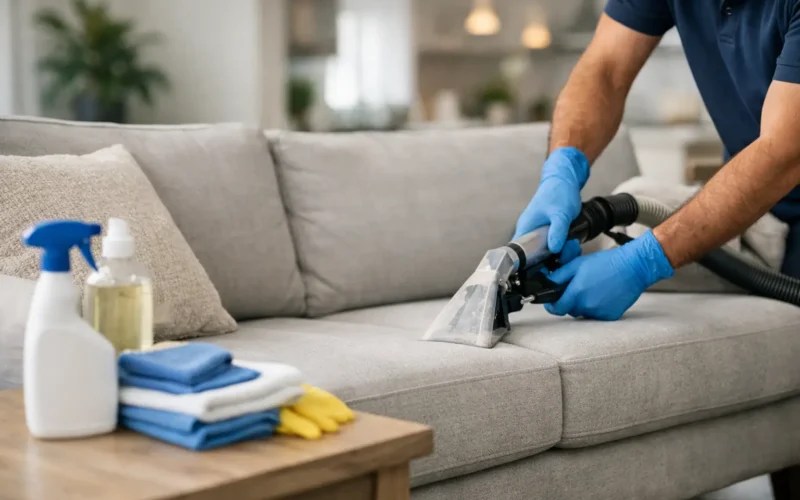
A pale sofa can show one coffee splash for years. A dark lounge may hide stains better, but it can still hold body oils, pet hair, dust and odours deep in the fibres. Knowing how to protect fabric furniture is less about reacting to accidents and more about building simple habits that keep upholstery clean, healthy and presentable between professional cleans.
The right approach depends on the fabric, how often the furniture is used, and who uses it. A formal armchair needs different care from a family sectional that handles children, pets and daily meals. The goal is not to make fabric furniture untouchable. It is to reduce avoidable wear and deal with problems before they become permanent.
Start with the fabric care label
Before applying any cleaning product or fabric protector, find the manufacturer’s care label. Upholstery fabrics can react very differently to water, solvents and heat. Using the wrong method can leave water rings, fading, pile distortion or colour transfer.
Common codes include W for water-based cleaning, S for solvent-based cleaning, WS or SW for either method, and X for vacuuming or professional cleaning only. These codes are useful, but they do not explain every variable. Dye stability, previous treatments, age and wear can all affect the result.
If the label is missing or unclear, test any product on a small concealed area first. Let it dry fully before judging the result. A patch that looks fine while damp may dry with a mark or a change in texture.
Use fabric protection before stains become a problem
A professionally applied fabric protector creates a protective barrier around individual fibres. It helps liquid spills sit closer to the surface for longer, giving you more time to blot them before they soak in. It can also reduce the way dry soil grips to upholstery, making routine vacuuming more effective.
Protection does not make a sofa stain-proof. Red wine, curry, ink, pet accidents and oily food can still cause damage if left untreated. Its value is in buying time and improving cleanability, particularly on dining chairs, lounges, fabric bedheads and other high-use pieces.
For the best result, fabric protection should be applied to clean, fully dry upholstery. Applying it over built-up soil can trap grime beneath the treatment and limit its performance. A trained upholstery technician can assess the fibre type, cleaning requirements and suitability of the protector before application.
How long protection lasts depends on use. Furniture in a busy family room or commercial waiting area may need more regular reapplication than an occasional-use chair. Frequent vacuuming, wet cleaning and abrasion will gradually reduce the treatment’s effectiveness.
Keep surface soil out of the fibres
Dust and crumbs may seem harmless, but they become abrasive when worked into upholstery through daily use. Fine grit can dull the fabric, flatten the pile and contribute to premature wear on seat cushions and armrests.
Vacuum upholstered furniture weekly with a clean upholstery attachment, paying attention to seams, piping, buttons and the gaps beneath cushions. Use low suction on delicate or loosely woven fabrics so the attachment does not pull threads. For homes with pets, more frequent vacuuming is often worthwhile because fur, dander and tracked-in dirt build up quickly.
Rotate reversible cushions regularly. This spreads body weight and sunlight exposure more evenly, helping cushions retain their shape and keeping one side from fading faster than the other. Plump feather or fibre-filled cushions as needed, following the manufacturer’s guidance.
Act quickly when spills happen
The first few minutes after a spill matter most. Resist the urge to scrub. Scrubbing pushes liquid further into the upholstery, spreads the affected area and can damage the fabric texture.
Instead, remove solids carefully with a spoon or blunt edge, then blot the spill with a clean white absorbent cloth or plain paper towel. Work from the outer edge towards the centre to limit spreading. Keep replacing the cloth as it absorbs moisture.
Avoid soaking the area, especially on cushions with foam inserts. Excess moisture can migrate through the fabric, create water marks, encourage odours and take a long time to dry. Do not use coloured cloths, harsh spot cleaners, dishwashing liquid, bleach or random online remedies without checking the fabric code first.
For an oily spill, blot first rather than adding water. Oil-based marks often need a method specifically suited to the fibre and stain type. If you are unsure, it is safer to stop after blotting and arrange professional advice than to set the stain with the wrong product.
Reduce sunlight, heat and everyday friction
Sydney sunlight can fade fabric quickly, especially on furniture positioned near large windows or glass doors. UV exposure is not always obvious at first. Over time, the side facing the window may become noticeably lighter than the protected side.
Position furniture away from direct sun where practical, or use blinds, curtains or UV-filtering window coverings during the brightest parts of the day. Rearranging cushions and occasional furniture can also help distribute exposure. This is particularly useful for natural fibres and richly coloured upholstery.
Keep fabric lounges clear of heaters, fireplaces and intense heat sources. Heat can dry out fibres, affect adhesives and contribute to discolouration. Friction deserves attention too. Rough denim seams, metal clothing details, shoes on cushions and pets repeatedly jumping onto the same spot can all cause localised wear.
Throws can help protect favourite seats or pet areas, but choose washable materials and wash them regularly. A throw that holds dust, oils and pet odours will simply transfer them back to the lounge.
Manage pets, food and high-use zones
You do not need to ban pets from the sofa to maintain it, but clear boundaries make a noticeable difference. Use a dedicated washable cover for pet areas, keep claws trimmed, and vacuum fur before it becomes embedded. Attend to urine, vomit and muddy paw marks promptly, as organic contamination can leave both staining and lingering odours.
For households with young children, creating a separate snack area can protect upholstered dining chairs and lounges from frequent food spills. Where eating on the couch is part of everyday life, fabric protection and a quick spill response routine are especially valuable.
In offices, reception areas and rental properties, armrests and front edges of seats receive the most contact. These zones collect skin oils and soil faster than the rest of the piece. Regular maintenance cleaning is often more effective than waiting until the whole suite looks visibly dirty.
Schedule professional upholstery cleaning
Vacuuming and spot treatment are essential, but they cannot remove all embedded soil, allergens, oils and residues. Professional upholstery cleaning uses methods selected for the fabric type and condition, with controlled moisture and suitable cleaning solutions. This supports a healthier indoor environment while helping fabric furniture look better and last longer.
The ideal frequency depends on use. A lightly used formal lounge may need professional attention less often than a family sofa used every day by children and pets. Dining chairs, commercial seating and rental-property upholstery can also benefit from more regular care because spills and body oils accumulate quickly.
Professional cleaning is particularly worthwhile before applying a fabric protector, after a significant spill, when odours persist, or when visible traffic marks develop on seat cushions and arms. Sydneywide Carpet Cleaning provides trained upholstery care for homes and businesses across Sydney, using up-to-date equipment and cleaning methods suited to soft furnishings.
How to protect fabric furniture without overcleaning it
There is a balance between neglect and over-treatment. Repeatedly wetting fabric, using strong products or aggressively scrubbing small marks can cause more harm than the original spill. Protectors work best alongside gentle maintenance, not as permission to use furniture without care.
Keep a small cleaning record if you manage a rental, office or large household. Note when upholstery was professionally cleaned, whether protection was applied, and any recurring problem areas. This makes it easier to plan maintenance before the fabric becomes heavily soiled.
A well-maintained sofa should still look lived in. The difference is that it stays comfortable, hygienic and presentable because spills are handled calmly, dust is removed regularly, and professional care is brought in before everyday use turns into permanent damage.