

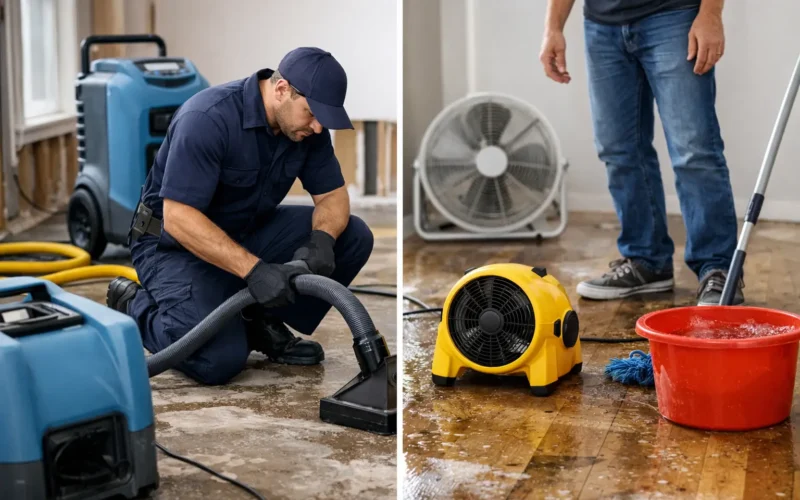
A wet carpet can look manageable in the first hour, then become a much larger problem by the next morning. When weighing professional versus DIY flood drying, the right choice depends on the source of the water, how far it has travelled, how long it has been sitting and what materials are affected. Fast action matters in every case, but household fans and towels cannot always deliver the controlled drying needed to protect carpet, underlay, subfloors and indoor air quality.
For Sydney homes and businesses, a burst pipe, overflowing appliance, roof leak or stormwater entry can quickly affect more than the visible wet patch. Water can move beneath carpet, into walls, under skirting boards and through adjoining rooms. The aim is not simply to make the surface feel dry. It is to remove moisture thoroughly enough to reduce the chance of mould, odours, staining and avoidable material damage.
When DIY flood drying can be enough
DIY drying may be suitable for a very small, clean-water spill that is dealt with immediately. For example, if a small amount of water from a clean source is contained on a hard floor or only dampens a small edge of carpet, prompt extraction and ventilation may prevent further issues.
The key is to be realistic about the scale of the incident. A carpet that feels damp underfoot is rarely dry only on the surface. Its backing and underlay can retain significant moisture, particularly in thick carpet, bedrooms with limited airflow or rooms closed for much of the day.
If the water is clean and the affected area is genuinely minor, take these practical steps straight away:
- Stop the source of water, where it is safe to do so.
- Remove movable furniture, rugs and items that could trap moisture or transfer colour.
- Blot or extract as much water as possible using suitable equipment.
- Increase airflow with open windows where weather permits, fans and air conditioning.
- Check the area repeatedly, including carpet edges and nearby walls, over the next 24 to 48 hours.
Do not use excessive heat in an attempt to speed up the process. High heat can set stains, affect some materials and create an uneven result where the carpet surface feels dry while moisture remains below.
Professional versus DIY flood drying: the practical difference
The main difference is not simply the size of the machine being used. Professional flood restoration is a measured process. It starts with identifying the category of water, the extent of migration and the materials involved. Technicians then extract water, manage airflow and humidity, and monitor drying progress until the affected structure reaches an appropriate condition.
DIY methods generally focus on what can be seen. A wet vacuum may remove some surface water, and household fans can help evaporation, but they may not have the extraction power or dehumidification capacity needed for saturated carpet and underlay. Without moisture testing, it is difficult to know whether drying is actually progressing or whether water is sitting beneath the floor covering.
Professional equipment is designed to work as a drying system. High-powered extraction reduces the moisture load first. Air movers encourage evaporation from wet materials, while dehumidifiers remove that moisture from the air rather than allowing it to settle elsewhere in the room. Moisture meters and thermal inspection tools help assess areas that may not look wet, including wall bases, carpet edges and cavities around the original water source.
This approach is especially useful in Sydney’s humid or wet periods, when opening windows alone may introduce more moisture rather than help drying.
Water source changes the decision
Not all floodwater should be handled as a simple drying job. Clean water from a supply line or a recently overflowing bath may be recoverable if addressed promptly. Even then, it can become more difficult to manage as time passes or if it enters underlay, timber, cabinetry or wall linings.
Water from a washing machine, dishwasher or overflowing sink can contain contaminants. Stormwater may carry soil, pollutants and organic matter. Water from sewage, toilets or drains requires a much more cautious response because of the health risks involved. In these cases, DIY cleaning and drying can spread contamination through the home or workplace and leave soft furnishings unsafe to use.
A professional assessment helps determine whether carpet and underlay can be restored, whether particular materials need to be removed, and what cleaning and sanitising steps are appropriate. The goal is to make decisions based on the actual water category and contamination risk, not on appearance alone.
The hidden risk beneath carpet
Carpet acts like a sponge, while underlay can hold water long after the pile has started to feel dry. Water may also wick up walls, causing swelling, paint damage or deterioration around skirting boards. Timber floors and cabinetry can absorb moisture and change shape if drying is delayed.
This is why lifting and relaying carpet is sometimes necessary. It gives access to the underlay and subfloor so water can be extracted and air can circulate where it is needed. In some situations, underlay can be dried and retained. In others, particularly where contamination is present or saturation is extensive, replacement may be the safer outcome.
Trying to avoid disruption by leaving everything in place can be tempting. However, a carpet that is dried only from the top may later develop a musty odour, staining at the edges or mould growth below the surface. By then, the original incident may be harder to resolve.
When to call a flood drying professional immediately
Professional help is the sensible option when water has reached multiple rooms, soaked through to underlay, come from an unclean source or been present for more than a few hours. It is also advisable when water has affected a commercial premises, strata property, rental home, office, nursery, bedroom or any area where people may be exposed to damp materials.
Call promptly if you notice water coming from walls, bubbling paint, swollen skirting boards, strong odours, visible mould or carpet that remains damp despite fans and extraction. These signs suggest the moisture has moved beyond the area that can be easily managed with household equipment.
For landlords, property managers and business operators, a documented professional assessment can also provide clarity on the condition of affected materials and the steps taken to restore them. This is valuable when several parties need a clear record of the work completed.
What a professional drying visit should achieve
A reliable flood restoration service should first identify the extent of the water damage rather than begin cleaning blindly. The team should explain what has been affected, what can reasonably be restored and which actions are required to dry the area safely.
The process may include extraction, carpet lifting where needed, targeted drying equipment, cleaning or sanitising according to the water source, and moisture monitoring. Drying equipment should remain in place for as long as the materials require, not simply until the room appears dry. At the end, the space should be checked for remaining moisture and practical advice should be provided about returning furniture and monitoring the area.
Sydneywide Carpet Cleaning provides flooded carpet restoration with trained technicians and up-to-date equipment for residential and commercial properties across Sydney. Early attendance can help preserve carpet and soft furnishings where restoration is appropriate, while also reducing the risk of secondary damage.
Make the first hour count
Whether you choose DIY action or professional restoration, do not wait for a wet carpet to dry by itself. Stop the water source, keep people away from electrical hazards, protect belongings and begin removing water immediately where it is safe. Avoid walking through contaminated water or moving contaminated items through clean areas.
The best result often comes from combining sensible first-aid action with an early professional assessment. A small clean spill may only need careful attention and close monitoring. A larger or uncertain event deserves controlled drying before hidden moisture has time to affect the property and the people using it.