

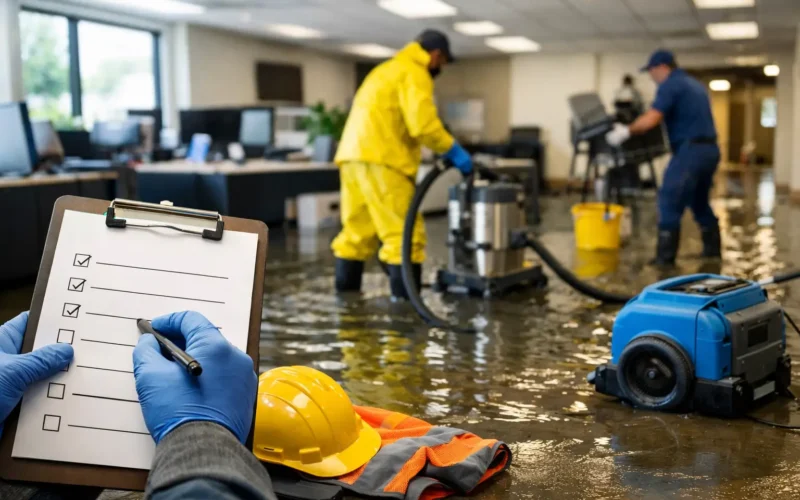
A flooded office, shop, strata common area or commercial premises can deteriorate quickly. Water can spread beneath carpet, into underlay, wall edges and furniture feet long before it is visible on the surface. This commercial flood clean-up checklist helps business owners, facility managers and tenants make safe decisions in the first hours, protect valuable assets and give restoration work the best chance of success.
The right response depends on the water source, how long the area has been wet and the materials affected. Clean water from a burst supply pipe may allow more items to be restored than water from an overflowing drain, sewer or external floodwater. When there is any doubt about contamination, treat the area as unsafe until it has been assessed.
1. Put staff and visitors first
Do not send staff into a wet area simply to move stock or rescue furniture. Isolate the affected space, use clear signage and stop customers or visitors from entering. Wet carpet and hard floors create slip hazards, while hidden water can affect power points, leads and electrical equipment.
If water is near electrical outlets, appliances, switchboards or machinery, do not touch them. Arrange for the relevant electrical safety checks before power is restored or equipment is used. If the water source is sewage, stormwater or unknown, avoid direct contact and keep people away from the area.
For a small, clearly clean-water incident, staff may be able to move light, undamaged items from the affected area once it is safe. For extensive flooding, contaminated water or any structural concern, professional help should be the first call.
2. Stop the source and document what happened
Where it is safe to do so, stop the water at its source. This could mean closing an internal water valve, reporting a leaking roof, switching off a faulty appliance or contacting building management. In a leased property, notify the landlord or strata manager promptly so the cause and responsibility can be addressed.
Take dated photos and short videos before moving items or beginning clean-up. Record the rooms affected, apparent source, water level, visible damage and the time the flooding was discovered. This documentation gives building managers, insurers and restoration professionals a clear starting point.
Avoid waiting for paperwork before arranging urgent water extraction. The first 24 to 48 hours can make a major difference to carpet condition, indoor air quality and the risk of mould growth.
3. Identify the water category before cleaning
Not all floodwater should be handled in the same way. Clean water generally comes from a sanitary supply line, although it can become contaminated if it remains in the building for too long. Grey water may come from appliances, sinks or similar sources and requires greater care. Black water includes sewage, toilet overflows, external floodwater and water with obvious biological contamination.
Carpet, underlay, fabric partitions, upholstered seating and other absorbent materials exposed to black water often cannot be safely restored. They need a professional assessment and controlled removal. Attempting to shampoo or deodorise contaminated carpet does not make it hygienic.
This is one area where speed should never override safety. Use gloves and appropriate protective equipment for minor clean-water tasks, but leave contaminated-water remediation to trained technicians.
4. Remove standing water quickly
Water extraction is the priority once the area is safe and the source is controlled. Surface water should be removed with commercial extraction equipment rather than relying on mops, towels or standard household wet vacs. These methods may remove what is visible but leave substantial moisture in carpet backing, underlay and subfloors.
Move portable furniture, stock and equipment out of the wet area where possible. Place furniture on protective blocks if it must remain nearby, so timber legs and metal feet are not sitting in moisture. Do not drag heavy desks, filing cabinets or display units across wet carpet, as this can damage both the flooring and the item.
For computers, printers, point-of-sale systems and machinery, disconnect power only if safe to do so. Do not turn equipment on to check whether it works. It should be inspected and dried appropriately before being returned to service.
5. Check carpet, underlay and wall edges
Commercial carpet can look dry on top while holding moisture below. Water can travel well beyond the visible wet patch, particularly under carpet tiles, broadloom carpet and along wall edges. A moisture assessment identifies the actual extent of water migration and helps determine whether the carpet can be dried in place or needs to be lifted.
The construction of the flooring matters. Some carpet tiles can be lifted, dried and reinstated if the water is clean and prompt action is taken. Other tiles may delaminate, stain or retain odour. Broadloom carpet may require lifting and specialised drying beneath it, while wet underlay often needs separate consideration because it can hold large volumes of water.
Inspect skirting boards, plasterboard, timber trim and built-in cabinetry as well. Swelling, soft spots, staining and musty odours can indicate hidden moisture. Drying only the carpet surface is not enough if moisture has entered the building fabric.
6. Start controlled drying, not just ventilation
Open windows only when outdoor conditions will assist drying. On a humid Sydney day, open air can add moisture rather than remove it. Domestic fans may provide some airflow, but they are rarely sufficient for a significant commercial water loss.
Effective drying uses measured airflow, dehumidification and regular moisture checks. Professional equipment is positioned to dry carpet, underlay, subfloors and affected materials at the right rate. The goal is not simply to make the room feel dry. It is to return materials to an acceptable moisture condition before mould, odours or secondary damage develop.
Do not place heaters directly on wet carpet or wall surfaces. Excess heat can damage materials, set stains and create uneven drying. It may also mask a moisture problem rather than solve it.
7. Clean and sanitise affected surfaces appropriately
After extraction and during the drying process, affected surfaces may need cleaning or antimicrobial treatment. The correct approach depends on the water category and the material involved. Hard, non-porous surfaces are generally easier to clean than absorbent soft furnishings.
Avoid using heavy fragrances to cover damp smells. A musty odour usually means moisture remains, there is contamination, or materials have not been properly cleaned. The cause needs to be corrected before the area is reopened.
For workplaces with upholstered chairs, rugs, fabric screens or curtains in the affected zone, have each item assessed. Some can be professionally cleaned and dried; others may be unsuitable for restoration depending on water exposure and material condition.
8. Protect records, stock and business continuity
Separate dry items from wet items and label them clearly. Keep damaged stock, documents and furniture available for assessment rather than disposing of them too early. Paper records should be spread carefully where safe, but avoid using strong heat or trying to force pages apart.
Consider what your business needs to operate safely while restoration is underway. You may need to relocate staff, restrict access to part of the premises, secure stock or advise customers of changed arrangements. For a retail or hospitality site, a smaller affected area may allow partial trading. For an office with wet electrical systems or contaminated water, closure may be necessary until the site is safe.
Clear communication helps prevent further loss. Give staff one point of contact, advise building management of progress and keep a record of all actions taken.
9. Confirm the area is dry before reopening
A dry-looking carpet is not proof that restoration is complete. Before returning furniture, equipment and staff to the space, confirm that affected materials have been checked for residual moisture. Look for odours, lifted carpet edges, staining, swelling and any signs that drying equipment was removed too early.
A professional flood restoration service can provide the assessment, extraction, carpet drying and cleaning needed after a commercial water event. Sydneywide Carpet Cleaning works with trained technicians and current equipment to help commercial clients respond quickly and restore affected soft furnishings to a clean, healthy condition where restoration is appropriate.
Keep this checklist with your site emergency procedures, along with after-hours contacts for building management, electricians and restoration specialists. When water enters a commercial property, calm, early action gives your premises the strongest chance of a safe recovery.