

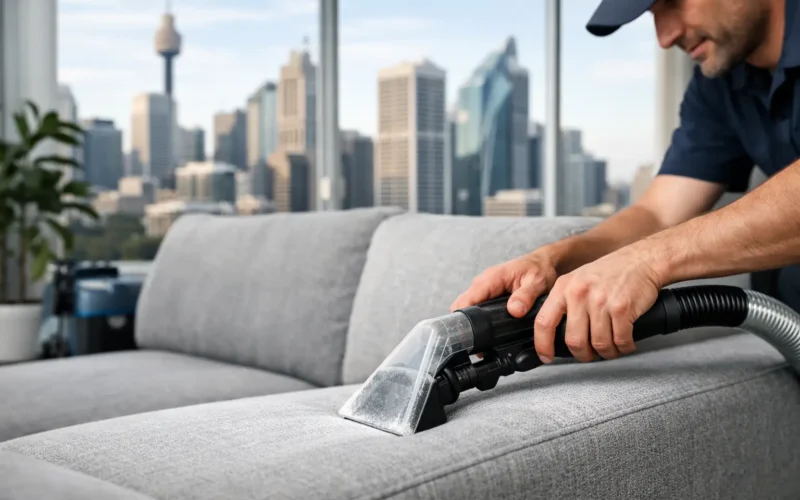
A fabric lounge in a CBD apartment or a bank of chairs in a busy office can look clean long after it has started holding soil, body oils, food residue and airborne dust. Sydney CBD upholstery cleaning gives these high-use furnishings the deeper care that vacuuming alone cannot provide, helping improve their appearance, hygiene and working life.
Soft furnishings are a significant investment, whether they sit in a home, reception area, meeting room, short-stay property or retail space. Regular professional cleaning protects that investment while creating a fresher environment for family members, staff, visitors and tenants.
Why upholstery needs more than a quick vacuum
Vacuuming is an important part of routine care, particularly around seat cushions, arms and crevices. However, it mainly removes loose surface debris. Fine particles work their way into the weave over time, while skin oils and spills bond to fibres. This is why upholstery may begin to look dull, feel stiff or develop an odour even when it is vacuumed regularly.
CBD furniture often experiences concentrated use. Office chairs may be used every business day, waiting-room seating sees a steady rotation of visitors, and apartment lounges are exposed to cooking smells in compact living spaces. On fabric furniture, these everyday pressures can leave visible traffic marks and uneven colouring.
A professional clean targets the contaminants below the surface. The right process can remove embedded soil, treat suitable stains and reduce odours without exposing the fabric to excessive moisture or unsuitable products.
Sydney CBD upholstery cleaning starts with the fabric
There is no single cleaning method that suits every lounge, chair or upholstered bedhead. Cotton, linen, wool, velvet, synthetic microfibre and blended fabrics all respond differently to moisture, heat and cleaning solutions. Leather also requires a separate cleaning and conditioning approach.
Before work begins, trained technicians should inspect the item closely. They assess the fabric type, colourfastness, condition, level of soiling and any areas of concern. Care labels are useful, but they are only one part of the assessment. A fabric may have faded in direct sunlight, weakened through wear or been treated with a product that affects how it cleans.
This inspection determines the safest and most effective method. Low-moisture cleaning may suit delicate or moisture-sensitive upholstery, while hot water extraction can be highly effective for durable, heavily used synthetic fabrics. It depends on the furniture, the soil present and the desired drying timeframe.
What a professional upholstery clean can address
Professional equipment and techniques are designed to lift soil from inside the fibres rather than simply freshening the surface. This can make a noticeable difference to both the appearance and feel of the upholstery.
Common concerns include food and drink spills, general grime on armrests and headrests, pet hair and pet odours, makeup marks, dust, pollen and the dull grey appearance caused by accumulated fine soil. In commercial settings, cleaners also commonly address body oils, marks from bags and clothing, and the build-up that occurs on shared seating.
Not every stain can be fully removed. Some spills permanently alter dyes or fibres, particularly if they have been left untreated, exposed to heat or cleaned with the wrong product. Red wine, ink, bleach, strong dyes and old pet stains can be challenging. An experienced technician will give an honest assessment and work to improve the result without taking unnecessary risks with the fabric.
The cleaning process matters as much as the equipment
Quality results come from matching the process to the item, not from using a powerful machine alone. A typical professional service includes inspection, dry soil removal where needed, pre-treatment of suitable marks, controlled cleaning, extraction or low-moisture soil removal, and grooming of the fabric where appropriate.
Good extraction is especially important. It helps remove suspended soil and cleaning residue, while controlled moisture helps the upholstery dry properly. Over-wetting can create issues such as prolonged drying, watermarking, odours or damage to internal padding. This is one reason professional training and modern equipment make a practical difference.
At Sydneywide Carpet Cleaning, trained technicians use up-to-date equipment and methods selected for the material and condition of each item. The focus is on high-standard workmanship, visible improvement and care for the furniture beneath the surface.
How often should upholstery be professionally cleaned?
For most households, professional upholstery cleaning every 12 to 18 months is a sensible maintenance schedule. Homes with children, pets, allergy concerns or frequent entertaining may benefit from more regular care. If a lounge receives heavy daily use, waiting until it looks visibly dirty usually means more soil has already settled into the fibres.
Commercial upholstery often needs a more planned approach. Reception seating, office chairs, hospitality furniture and strata common-area furnishings may require cleaning every six to 12 months, depending on foot traffic and use. Regular maintenance helps keep shared spaces presentable and can reduce the likelihood of stains becoming permanent.
A clean should also be arranged promptly after significant spills, pet accidents or water exposure. Acting early generally gives the best chance of treating a mark before it sets.
Preparing furniture for the appointment
A little preparation helps make the service efficient. Clear small items, throws and removable cushions from the furniture, and ensure access around the piece where possible. If there are specific stains or odours, point them out before cleaning starts and explain what caused them if known. That information helps determine the most suitable treatment.
Avoid applying supermarket spot cleaners just before the appointment. Some products leave residue, bleach the fabric or set stains when scrubbed into the fibres. For a fresh spill, blot gently with a clean white cloth rather than rubbing. Work from the outside of the mark towards the centre and avoid soaking the area.
After cleaning, allow the upholstery to dry fully before heavy use. Drying times vary with fabric type, cleaning method, ventilation, weather and the density of the cushioning. Opening windows where practical, using air conditioning or running fans can help. Avoid placing cushions against painted walls or sitting on damp upholstery in dark clothing until it is dry.
Keeping upholstery cleaner between services
Simple habits extend the life of a professional clean. Vacuum upholstered furniture weekly using a suitable brush attachment, especially along seams and beneath cushions. Rotate reversible cushions regularly so wear and fading are more even.
Address spills quickly, keep food and drinks away from delicate fabrics where possible, and protect furniture from prolonged direct sunlight. For households with pets, regular grooming and washable throws can reduce hair and surface soil on favourite lounging spots.
Fabric protection may also be worthwhile after cleaning for suitable materials. It creates a barrier that can make spills easier to blot before they absorb. It is not a guarantee against staining and does not replace routine care, but it can be a useful option for high-use lounges, dining chairs and commercial seating.
Choose a service that understands the setting
CBD access, building rules and operating hours can affect how an upholstery cleaning job is planned. Apartment buildings may have lift bookings, loading-zone requirements or limited parking. Offices may need work completed around meetings, staff schedules or after-hours access. A reliable local cleaning team will discuss these practical details before arrival so the work can be completed with minimal disruption.
Look for experienced, trained professionals who can explain the recommended method clearly, assess fabrics before treatment and set realistic expectations for stains and drying. The right service should protect the furniture as carefully as it cleans it.
Well-maintained upholstery makes a practical difference every day. It helps a lounge feel more inviting, gives clients a better first impression and supports a cleaner indoor environment. When your furniture begins to look tired or no longer feels fresh, timely professional care can bring it back into better condition before the wear becomes harder to reverse.