

A carpet can look presentable on the surface while holding tracked-in soil, food spills, pet residue and fine dust deep in the pile. When weighing up hot water versus dry cleaning, the best option is not simply the one that dries fastest. It is the method that matches the carpet fibre, level of soiling, stain type and how soon the area needs to be used again.
For most households and workplaces, professional carpet cleaning is about more than appearance. A well-chosen method can improve hygiene, reduce odours and help protect the life of the carpet. The wrong approach, however, may leave residue behind, fail to reach embedded soil or introduce too much moisture to a carpet that is not suited to it.
Hot water versus dry cleaning: the key difference
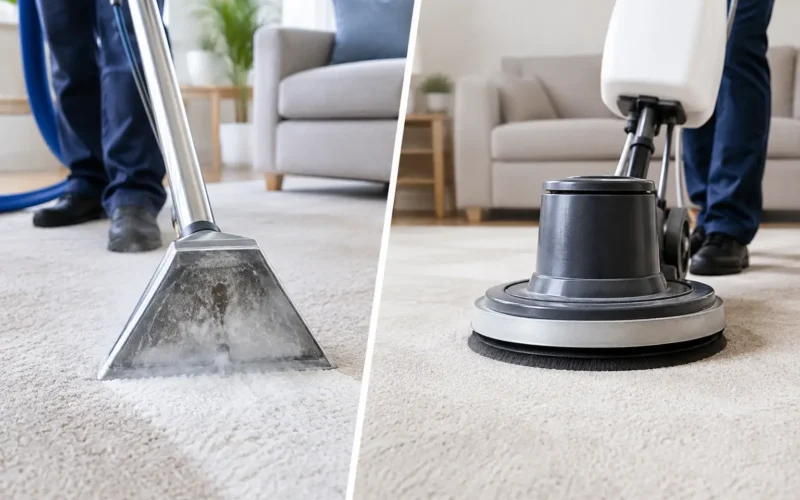
Hot water extraction uses a controlled combination of cleaning solution, hot water and powerful extraction. The solution is applied to loosen soil within the carpet, then the machine recovers the moisture along with suspended dirt and contaminants. Despite being commonly called steam cleaning, professional hot water extraction does not rely on clouds of steam. Its effectiveness comes from heat, agitation, suitable chemistry and strong recovery.
Dry cleaning is a broad term that can mean low-moisture carpet cleaning. Depending on the system, a technician may use an absorbent cleaning compound, encapsulation solution or specialised bonnet machine. These methods use far less water than extraction and are designed for a quicker return to service.
Neither method is automatically better in every situation. The practical question is whether the carpet needs a deep restorative clean or a faster maintenance clean with minimal downtime.
When hot water extraction is the better choice
Hot water extraction is generally the stronger option for heavily soiled carpets, stubborn traffic lanes, pet-related accidents, food spills and carpets that have not been professionally cleaned for some time. It flushes contaminants from deeper in the carpet pile rather than mainly treating the upper fibres.
This makes it particularly useful in family homes, rental properties between tenancies and workplaces where entry areas receive constant foot traffic. It can also be a suitable choice where hygiene is a priority, such as bedrooms, living areas and commercial spaces used by staff or customers.
A professional technician should inspect the carpet before beginning. Fibre type, backing condition, dye stability, previous treatments and moisture levels all affect the right cleaning process. Wool, for example, requires careful product selection and controlled moisture. Some carpets with sensitive backings or pre-existing damage may need a lower-moisture approach.
The main trade-off is drying time. A properly cleaned carpet should not stay wet for days, but it can take several hours to dry fully. Ventilation, weather, humidity, pile thickness and the effectiveness of the extraction equipment all make a difference. Opening windows where practical, running air conditioning or using fans can help the carpet dry sooner.
Where dry cleaning makes sense
Low-moisture dry cleaning is often a practical option when a carpet needs to be back in use quickly. Office corridors, meeting rooms, retail areas and other busy commercial spaces can benefit from reduced drying time. It can also work well as part of a regular maintenance programme, particularly where the carpet is lightly to moderately soiled.
With absorbent compound cleaning, a cleaning compound is worked through the fibres to attract soil before being thoroughly vacuumed away. Encapsulation cleaning uses a low-moisture solution that surrounds dirt particles as it dries, allowing them to be removed through later vacuuming. Bonnet cleaning uses a rotating pad to lift surface soil and refresh the carpet’s appearance.
These methods can produce good results when applied to the right carpet and condition. They are not, however, always the best answer for deeply embedded grime, oily residue or extensive staining. A quick-drying process may improve the visible surface while leaving deeper contamination largely untouched if it is used in place of an overdue restorative clean.
Dry cleaning also relies on proper vacuuming. The carpet needs to be vacuumed before cleaning and, for some systems, again after the treatment has dried. Skipping this step can reduce the result and leave behind loosened particles or cleaning compound.
Stains, odours and pets need a targeted approach
One reason a simple hot water versus dry cleaning comparison can be misleading is that stains are not all alike. A coffee spill, greasy food mark, ink stain and pet accident each respond differently. The age of the stain and any products already used on it matter as well.
Hot water extraction may be highly effective for many water-based spills and general soil, but heat is not suitable for every stain. Certain protein-based marks can set if treated incorrectly. Grease may require a targeted pre-treatment before extraction, while urine contamination often needs treatment beyond the visible spot to address odour at the source.
Low-moisture methods can be useful for light spotting and routine appearance cleaning, but severe odours or contamination that has reached the backing and underlay may require deeper treatment. No professional should promise that every old stain will disappear completely. Honest assessment is part of high-standard cleaning, especially where permanent dye loss, bleaching or fibre damage is involved.
For homes with pets, regular vacuuming and prompt attention to accidents are essential. Professional cleaning can remove accumulated soil and improve freshness, but it works best alongside good day-to-day care.
Carpet type and condition should guide the method
Synthetic carpets, including nylon and polypropylene, are often well suited to hot water extraction when cleaned correctly. They are commonly resilient and respond well to a thorough rinse and recovery process. That does not mean every synthetic carpet should receive the same treatment, particularly if there are concerns about backing, seams or water damage.
Natural fibres such as wool need more caution. Wool holds moisture differently, can be sensitive to high alkalinity and may be affected by overly aggressive cleaning. A trained technician will identify the fibre and select an appropriate method, rather than using a one-size-fits-all process.
Carpet age matters too. Older carpet may have weakened backing, loose edges, previous repair work or stains that have been repeatedly treated. In these cases, a lower-moisture approach may reduce risk, although it may not deliver the same depth of soil removal as extraction. The right choice balances cleaning results with protecting the carpet.
Do not confuse fast drying with better cleaning
Fast drying is valuable, especially in commercial settings and busy homes. It reduces disruption and lowers the chance of marks transferring from shoes or furniture onto damp carpet. But a carpet that is ready to walk on quickly is not necessarily cleaner at a deeper level.
Likewise, more water does not equal a better result. Over-wetting can cause problems including prolonged drying, browning, odours and potential backing damage. Professional hot water extraction uses controlled application and high-powered recovery to avoid leaving unnecessary moisture behind.
The quality of the technician, equipment and preparation has as much influence on the outcome as the method itself. Thorough vacuuming, spot testing, correct chemistry, attention to high-traffic areas and proper extraction all contribute to a carpet that looks better and stays cleaner for longer.
Choosing the right cleaning plan
For a lightly soiled office carpet that must be used later the same day, low-moisture dry cleaning can be a sensible choice. For a family lounge room with pet hair, food spills and visible traffic marks, hot water extraction will often provide a more thorough result. A property manager preparing a rental property may need an assessment of the carpet’s condition before deciding.
In some settings, the most effective plan uses both methods at different times. Regular low-moisture maintenance can help manage appearance between periodic deep extraction cleans. This approach can suit commercial premises that need carpets looking presentable while managing downtime.
Sydneywide Carpet Cleaning assesses the carpet, the level of soiling and the practical needs of the property before recommending a suitable process. Experienced, trained technicians can identify where a deeper clean is needed and where a low-moisture service is the more practical option.
A clean carpet should support a healthier, more comfortable space without creating unnecessary disruption. Rather than choosing based on the name of the method alone, consider what is in the carpet, what the fibre can handle and how the room is used. That decision will lead to a result that looks good now and helps preserve the carpet for the years ahead.