

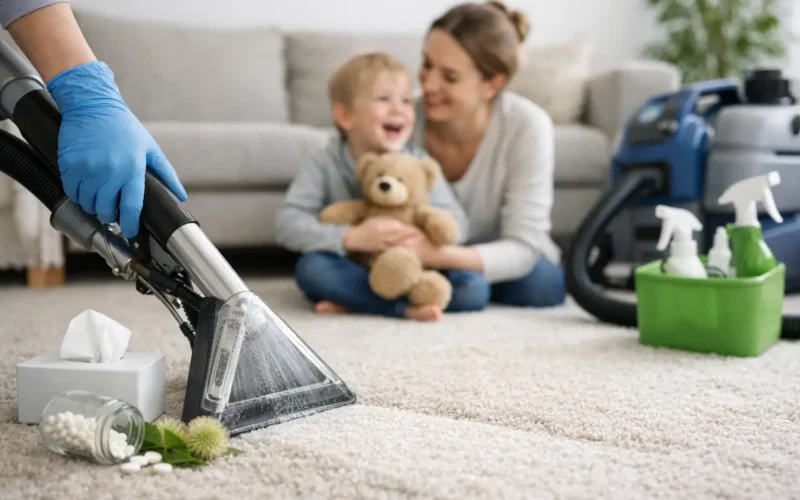
Carpet can make a home feel warmer and quieter, but it also holds onto the particles that trigger allergy symptoms. Allergy safe carpet cleaning is not about making a carpet completely allergen-free. It is about removing the built-up dust, pollen, pet dander and fine debris that ordinary vacuuming can leave behind, while avoiding residues that may irritate sensitive households.
For families dealing with sneezing, itchy eyes, asthma or ongoing congestion, the condition of soft furnishings matters. Carpets, rugs, lounges, mattresses and curtains all collect airborne particles over time. A planned cleaning approach can make these surfaces easier to live with and help maintain a fresher indoor environment.
What Makes Carpet Cleaning Allergy Safe?
The term “allergy safe” can be misleading if it suggests there is one product or treatment that solves every problem. Allergies have different triggers, and no cleaning service can guarantee that symptoms will disappear. The practical goal is to reduce the allergen load in the carpet and remove the soil that gives dust, bacteria and odours somewhere to settle.
A suitable professional process starts with thorough dry soil removal. Fine dust can sit deep in carpet fibres, below the reach of a quick weekly vacuum. Professional equipment is designed to lift embedded soil before or during the main clean, rather than simply freshening the surface.
The cleaning method also matters. A low-residue approach is generally preferable for allergy-conscious homes. If too much detergent remains in the carpet, it can attract new soil and leave the fibre feeling stiff or sticky. Proper rinsing, controlled moisture and effective extraction help leave the carpet clean without unnecessary chemical residue.
Drying time is equally important. Damp carpet for an extended period may create conditions that encourage mould and mildew, particularly in poorly ventilated rooms or after water damage. A professional cleaner should assess the carpet type, level of soiling and airflow in the home, then use the right method to support efficient drying.
Common Allergens Hiding in Carpet
Carpets act like filters. They trap particles that would otherwise circulate through the room, which can be helpful until the carpet becomes overloaded. Walking, children playing on the floor, pets resting on the carpet and opening doors or windows can all add more material to the fibres.
The most common household triggers include dust mite allergens, pet dander, pollen, mould spores and outdoor soil tracked in from footpaths, gardens and shared building areas. Dust mites themselves are microscopic, but their waste particles can be a concern for people with dust mite sensitivity. Pet hair is obvious, but dander is much finer and can remain after visible hair has been removed.
Sydney’s changing weather can add another layer to the problem. Pollen can enter during warmer months, while humid conditions can make moisture management more important. Homes near busy roads may also collect fine outdoor particles faster than expected. The right cleaning frequency depends on the household, not just the appearance of the carpet.
Allergy Safe Carpet Cleaning at Home Between Services
Professional cleaning works best alongside regular maintenance. Waiting until the carpet looks visibly dirty is rarely ideal in an allergy-sensitive home, because much of the relevant debris cannot be seen easily.
Vacuum high-traffic areas at least twice a week using a well-maintained vacuum with effective filtration. Bedrooms, living rooms and areas where pets sleep deserve extra attention. Move slowly, overlap each pass and use the vacuum attachments along skirting boards, under furniture edges and around upholstered seating.
Shoes-off habits can reduce the amount of outdoor debris brought inside. Door mats at entrances help too, although they need regular cleaning themselves. If a pet comes in from the yard or a walk, wiping paws before they cross the carpet can limit dirt, pollen and moisture.
For spills, act promptly. Blot rather than scrub, using a clean white cloth to avoid spreading the stain or transferring colour. Avoid soaking the area with supermarket spot cleaners. Too much product or water can leave residue behind, push the spill deeper into the backing or create a slow-drying patch.
When Professional Cleaning Is Worthwhile
A routine professional carpet clean is useful for most homes, but allergy-prone households often benefit from a more regular schedule. Families with pets, young children or someone with asthma may need cleaning more frequently than a low-traffic household with no animals.
Consider arranging a professional clean when:
- allergy symptoms seem worse indoors or after time spent on the carpet;
- the carpet has a stale smell, visible pet hair or a dull, matted appearance;
- there has been a high-pollen period, renovation dust or heavy foot traffic; or
- a spill, pet accident or water incident has left the carpet damp or contaminated.
A qualified technician should not treat every carpet the same way. Wool, synthetic carpet, loop pile, cut pile and delicate rugs all respond differently to moisture, heat and cleaning solutions. Assessment before cleaning helps protect the fibre while targeting the actual problem.
Sydneywide Carpet Cleaning uses trained technicians and up-to-date equipment to provide deep cleaning suited to residential and commercial environments. For allergy-conscious clients, the focus should be on thorough soil removal, controlled application of cleaning solutions and strong extraction, not just a pleasant fragrance after the job.
Why Steam Cleaning Is Not the Whole Answer
Many people use “steam cleaning” to describe all professional carpet cleaning, but the term can cover different processes. Hot water extraction is widely used because it can flush soil from carpet fibres and recover it with powerful extraction. When performed correctly, it can be highly effective for a heavily used family carpet.
However, it is not automatically the right method for every situation. Some fibres require lower moisture cleaning, and a carpet affected by a flood needs a different response from one with normal household soil. The carpet backing, subfloor, existing stains and ventilation all influence the safest approach.
The main concern for allergy-sensitive homes is not whether a method sounds stronger. It is whether the process removes contaminants thoroughly, leaves minimal residue and allows the carpet to dry properly. A technician who asks about pets, respiratory sensitivities, previous stains and water damage is more likely to choose a method that fits the home.
Do Fragrances and Cleaning Products Matter?
They can. A heavily perfumed product may make a room smell freshly cleaned, but fragrance is not evidence that allergens have been removed. For people sensitive to scents, strong deodorisers and unnecessary chemical applications can be uncomfortable.
Tell the cleaner before the appointment if anyone in the home has asthma, chemical sensitivities, a diagnosed allergy or young children who spend a lot of time on the floor. This allows the cleaning process and products to be considered carefully. It is also sensible to keep children and pets off the carpet until it is fully dry.
This does not mean every cleaning product is harmful or that a completely chemical-free outcome is always realistic. Professional products are selected for specific soil and fibre conditions. The key is using the appropriate amount, applying it correctly and removing it effectively rather than relying on excess product to compensate for poor technique.
Don’t Forget Upholstery, Rugs and Mattresses
Cleaning only the carpet can leave other allergen-holding surfaces untouched. Upholstered lounges collect dander and dust where people sit every day. Rugs can hold grit and pollen, especially near entrances. Mattresses are another common area of concern for dust mite allergens, despite being covered with bedding.
Where symptoms persist, consider the room as a whole. Regular laundering of bedding, vacuuming upholstery where suitable, cleaning rugs correctly and maintaining curtains or blinds can support the benefits of carpet cleaning. For renters and property managers, this broader approach can also help present a cleaner, healthier property between tenancies.
If there has been a leak, overflow or flooding event, act quickly rather than waiting to see whether the carpet dries on its own. Water can travel beneath the carpet and into underlay, creating a more serious hygiene and mould risk. Urgent assessment and extraction are particularly important where allergy or respiratory concerns are already present.
A clean carpet should feel comfortable underfoot, dry evenly and be free from the residue that attracts dirt back too quickly. If your home has persistent dust, pet activity or family members with allergy concerns, treating carpet care as regular maintenance rather than an occasional cosmetic job is a practical place to start.