

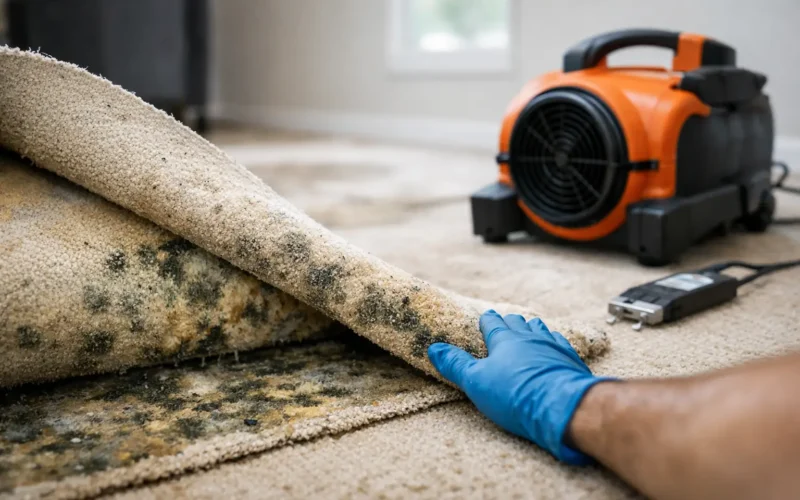
A wet carpet can look harmless after a small spill, a leaking appliance or heavy rain, especially when the surface feels nearly dry. The risk sits underneath. This wet carpet mould prevention guide explains what to do in the first hours, how to dry carpet properly and when professional flood restoration is the safer option.
Carpet is made up of more than the visible pile. Moisture can travel into the backing, underlay, subfloor, skirting boards and nearby furnishings. In Sydney’s humid conditions, that trapped moisture can create an environment where mould develops quickly. Fast action protects indoor air quality, reduces odours and gives your carpet a better chance of being restored.
The first 24 hours matter most
Start by stopping the water source if it is safe to do so. Turn off a leaking washing machine, move a wet pot plant, place a bucket under a roof leak or contact the relevant emergency service if the issue involves plumbing or stormwater. Do not walk repeatedly across the affected carpet, as this pushes water deeper into the fibres and spreads it into dry areas.
Remove lightweight furniture, rugs, boxes and other items from the wet section. Put aluminium foil or plastic tabs beneath furniture legs that cannot be moved straight away, but do not leave timber furniture sitting on damp carpet for long. Timber stains, rust marks and dye transfer can become permanent.
Blot small, clean-water spills with clean white towels, applying firm pressure rather than rubbing. For a larger area, a wet vacuum can remove substantial surface water. A standard household vacuum must never be used on wet carpet. It is not designed for water extraction and creates an electrical safety risk.
Open windows and doors only when the outdoor air is drier than the air inside. This matters on humid or rainy days, when open windows may add moisture rather than remove it. Use fans to move air across the carpet and run air conditioning or a dehumidifier where available. Air movement helps, but it is not a substitute for extraction when the carpet and underlay are saturated.
Identify the water source before drying
The right response depends on where the water came from. Clean water from a recently burst supply line or an overflowing basin may be suitable for restoration if it is addressed promptly. Even then, the carpet must be thoroughly dried beneath the surface.
Water from a washing machine discharge, dishwasher, overflowing toilet, stormwater, sewage or a long-standing leak may contain contaminants. In these cases, avoid handling the carpet without appropriate protection, keep children and pets away, and arrange professional assessment. Contaminated water can affect the carpet, underlay and building materials differently from clean water.
A small spill near the edge of a room may be manageable with prompt extraction and drying. A flooded lounge room, water that has reached underlay, or moisture that has entered walls requires a more controlled restoration process. The visible wet patch rarely shows the full extent of the damage.
How to prevent mould after carpet gets wet
Mould prevention is not about masking a damp smell with fragrance or sprinkling powder over the carpet. It requires removing moisture from every affected layer and confirming that the area is dry.
Extract water before relying on fans
Water extraction is the most effective first step for a saturated carpet. Professional extraction equipment removes far more water than towels, a mop or household wet vacs. The less moisture left in the carpet, the faster drying can begin.
If underlay is wet, it may need to be lifted or removed depending on the water category, the amount of saturation and how long it has been wet. Underlay can hold a surprising amount of water and may remain damp even when the carpet surface feels dry. Leaving wet underlay in place is one of the most common reasons a room develops a musty odour days later.
Dry the carpet, underlay and subfloor
Place air movers so they push air across and beneath the carpet where possible. Dehumidifiers remove moisture from the room air, helping evaporation continue rather than allowing humidity to build up. Heating can assist in some conditions, but excessive heat without adequate ventilation or dehumidification can make a humid room worse.
Professional restoration teams use moisture detection equipment to check the carpet, subfloor and nearby structural materials. This is more reliable than touching the pile with your hand. A carpet can feel dry on top while the backing and underlay remain wet underneath.
Clean affected surfaces where appropriate
Once the water source is addressed, the carpet may need cleaning to remove soil, residues or contaminants brought in by the water. The correct treatment depends on the fibre type and water source. Wool carpet, for example, requires careful handling to avoid shrinkage, colour bleed or texture changes.
Avoid applying bleach, harsh disinfectants or large amounts of household cleaning solution to carpet. These products can damage fibres, leave residues and do little to solve moisture trapped below the surface. If mould is already visible, do not brush or scrub it aggressively, as this can spread spores through the room.
Signs your carpet may still be too damp
Do not assume the problem is resolved because the surface no longer feels wet. Check for a musty smell, cool or clammy patches, darker areas around skirting boards, lifting carpet edges, or condensation on nearby windows. These signs can indicate moisture is still present.
Pay close attention to wardrobes, corners, rooms with limited airflow and areas beneath heavy furniture. These locations dry slowly and are easy to overlook. If the affected room smells damp after two or three days, or the odour becomes stronger when the room is closed, further assessment is sensible.
Mould can also develop behind skirting boards or within wall cavities following a significant leak. If you see discolouration on walls, bubbling paint, swollen timber or mould around the carpet perimeter, treat it as a building moisture issue rather than a carpet-only problem.
When to call a flooded carpet restoration professional
Urgent assistance is recommended when a large area is wet, water has soaked through to the underlay, the source is contaminated, or the water has been present for more than a few hours. It is also worthwhile when the carpet is wool, valuable, recently installed or part of a rental or commercial property where documentation of the restoration process may be needed.
A trained restoration technician can assess the water source, extract moisture, inspect affected materials and set up suitable drying equipment. They can also monitor moisture levels during the drying process rather than relying on appearance alone. This helps prevent hidden dampness from becoming an ongoing mould issue.
For households with young children, older residents, pets or anyone sensitive to poor indoor air quality, a prompt and thorough response is particularly valuable. The goal is not simply to save the carpet. It is to return the room to a clean, dry and healthy condition.
Prevent the next wet-carpet incident
Many carpet floods begin with small maintenance issues. Check washing machine hoses, dishwasher connections, hot-water systems, window seals and roof areas after heavy rain. Keep gutters clear and address slow leaks before they become a ceiling or carpet problem.
Use absorbent mats at external doors during wet weather and place trays beneath indoor plants. In rooms prone to condensation, maintain airflow and avoid placing large furniture flush against cold external walls. Regular professional carpet cleaning can also help identify persistent odours or moisture concerns before they become more difficult to manage.
If carpet becomes wet, act promptly, dry it thoroughly and do not ignore a lingering smell. Sydneywide Carpet Cleaning provides trained flooded carpet restoration for homes and businesses across Sydney, helping affected spaces dry properly and return to use with confidence.