

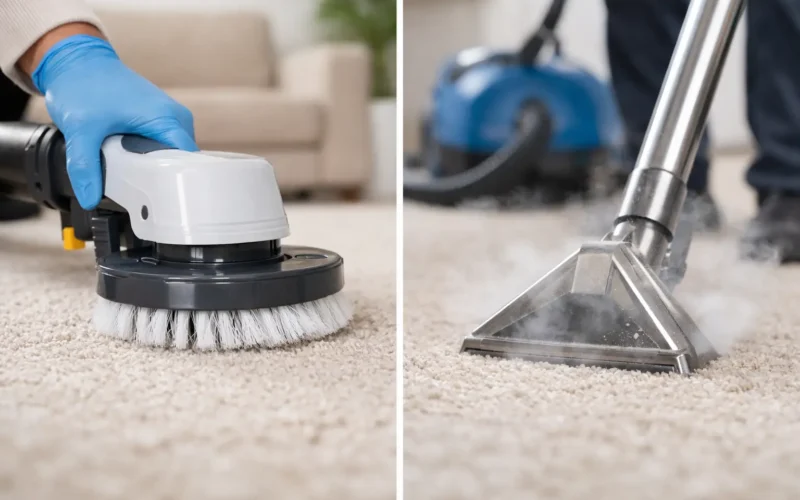
A carpet can look only mildly marked and still be holding dust, oils, allergens and tracked-in grime deep through the pile. That is why the question of carpet dry cleaning versus steam matters more than most people expect. The right method affects not just appearance, but drying time, hygiene, fibre care and how well your carpet stands up over time.
For most homes and workplaces, there is no one-size-fits-all answer. Both methods can be effective when carried out properly with professional equipment and trained operators. The better choice depends on the carpet fibre, the level of soiling, how quickly the area needs to be back in use, and whether the priority is maintenance cleaning or a more intensive restorative clean.
Carpet dry cleaning versus steam – what is the difference?
The term dry cleaning can be a little misleading. Carpet dry cleaning is not completely dry. It usually involves a low-moisture cleaning process where specialised compounds or solutions are applied to the carpet, worked through the fibres, and then removed along with loosened soil. Because moisture use is controlled, carpets are generally ready sooner.
Steam cleaning, more accurately known as hot water extraction, uses hot water and cleaning solutions to flush soil from deep within the carpet. The machine then extracts the water, along with suspended dirt and residues. Despite the common name, this method does not rely on steam alone. It is a deep-cleaning process designed to rinse and extract contamination from the pile and backing more thoroughly.
Both methods have a place in professional carpet care. Problems usually arise when the wrong method is used for the carpet type or the condition of the carpet, or when the work is carried out without proper training.
When dry cleaning makes sense
Dry cleaning is often a practical option where fast turnaround matters. In offices, retail spaces, managed properties or busy family homes, reduced drying time can be a real advantage. If a room needs to be used again quickly, low-moisture cleaning can minimise disruption.
It can also work well as part of routine maintenance. Carpets that are cleaned regularly and have not reached a heavily soiled state may respond well to a dry cleaning process that freshens the fibres and removes surface and moderate embedded soil without saturating the carpet.
Some delicate carpets and certain natural fibre rugs may also benefit from lower moisture methods, although this should always be assessed properly first. Fibre identification matters. A method that is safe for one type of carpet may not be right for another.
That said, dry cleaning has limits. If the carpet is carrying heavy soil load, greasy traffic lanes, pet contamination or a build-up of residues from previous poor cleaning, low-moisture methods may not deliver the same level of flush-through cleaning as hot water extraction.
The main strengths of dry cleaning
The biggest advantage is drying speed. In practical terms, that can make a major difference for commercial spaces, tenanted properties and households with children or pets. There is also less risk associated with overwetting when the process is performed correctly.
Another benefit is convenience. Areas can often return to service sooner, which helps in workplaces and high-traffic zones where downtime is difficult.
When steam cleaning is the better option
Steam cleaning is generally the stronger choice when the carpet needs a true deep clean. It is especially effective for built-up soil, tracked-in grime, odours and contamination sitting well below the surface. In homes with pets, children or allergy concerns, hot water extraction often provides a more thorough result because it removes more from the carpet rather than simply cleaning the upper pile.
This method is also commonly preferred for end of lease cleaning, periodic restorative cleaning and heavily used family areas such as hallways, living rooms and stairs. When carpets have lost their freshness or are showing obvious traffic pattern build-up, hot water extraction is usually the method that gives the carpet the reset it needs.
Professional steam cleaning also helps remove residues left behind by incorrect DIY products or lower-standard cleaning work. Those residues can attract further soil, making carpets become dirty again faster. A proper rinse-and-extract process can improve both feel and appearance.
Why steam cleaning often gets stronger results
The advantage of hot water extraction is depth. By applying heated solution and extracting it powerfully, the technician can remove a higher volume of suspended soil and contaminants from within the fibres. That matters for hygiene, indoor air quality and long-term carpet maintenance.
The trade-off is drying time. Even with strong extraction equipment, steam-cleaned carpets need time to dry. Good airflow, ventilation and correct technique help, but the area will not usually be ready as quickly as a low-moisture cleaned carpet.
It depends on the carpet itself
Not every carpet should be treated the same way. Wool, blends, synthetics, loop pile and cut pile constructions all respond differently to moisture, heat, agitation and chemistry. That is why professional assessment is important before any machine is switched on.
Wool carpets, for example, can be very durable but still require careful handling. Excessive heat, high alkalinity or over-wetting can create problems. Some synthetic carpets are more forgiving, but even then, aggressive cleaning can damage texture or leave the carpet with rapid resoiling if residues remain.
In commercial settings, the answer can vary by area. A low-moisture maintenance program may suit open-plan office zones, while targeted hot water extraction may be needed in entries, walkways and heavily soiled sections. In residential settings, bedrooms may need a lighter approach than lounge rooms or pet zones.
Drying time versus cleaning depth
This is usually the real decision point.
If your priority is getting the carpet back into use quickly, dry cleaning has a clear edge. If your priority is removing as much embedded soil and contamination as possible, steam cleaning generally goes further. Neither priority is wrong. The best method is the one that matches the condition of the carpet and the needs of the property.
For example, a regularly maintained office carpet may not need a full hot water extraction every visit. A low-moisture clean can keep appearance standards up with less interruption. On the other hand, a family home with pets, spills and years of accumulated traffic soil will often benefit more from steam cleaning.
Health, odours and allergy concerns
Where hygiene matters, steam cleaning often has the advantage because it extracts more from deep within the carpet. Dust, allergens, skin flakes, soil and other contaminants can settle far below the visible surface. For households managing allergies or properties with pets, that extra removal can make a noticeable difference.
Odour issues also need realism. No cleaning method can promise miracles if the contamination has reached the underlay or subfloor, particularly with urine or water damage. However, for surface and near-surface odours, hot water extraction is often better placed to flush out the source.
Dry cleaning can still improve freshness and remove soil, but if the concern is deeper contamination rather than appearance alone, steam cleaning is usually the stronger option.
Professional technique matters more than marketing terms
Customers are often told one method is always superior. In practice, results depend heavily on training, equipment and method selection. A poor steam clean can leave overwet carpet, wicking marks or detergent residue. A poor dry clean can leave soil behind and fail to address build-up properly.
A qualified technician should identify the fibre, assess the level of soiling, pre-treat where needed, choose suitable chemistry, and use equipment correctly. That approach matters more than catchy labels.
This is also where experience counts. With more than 15 years in the industry, Sydneywide Carpet Cleaning sees firsthand that the right outcome comes from matching the process to the carpet, not forcing every job into the same method.
So which one should you choose?
If the carpet needs a deeper reset, has visible traffic lane build-up, pet-related issues or overdue maintenance, steam cleaning is often the better choice. If the carpet is in a commercial environment, needs quick drying, or is being maintained regularly with minimal disruption, dry cleaning can be the more practical option.
There are also situations where a mixed approach is appropriate. One area of a property may benefit from low-moisture cleaning, while another needs hot water extraction. That is a normal part of professional assessment.
The most useful question is not which method is better in general. It is which method is right for this carpet, in this condition, at this time. Once you look at it that way, the decision becomes much clearer.
A good carpet cleaning service should be able to explain the trade-offs plainly, recommend the method that fits the job, and carry it out to a professional standard. That is what protects your carpet, supports a healthier indoor environment, and keeps the result looking better for longer.