

A flooded carpet can look manageable in the first few hours, particularly after a burst hose, overflowing washing machine or rain entering under a door. The best flood damage drying steps begin before mouldy smells, stained skirting boards and damaged flooring have time to develop. Fast, safe action protects your property, your indoor air quality and the materials that may still be recoverable.
Water damage is not one-size-fits-all. A small amount of clean water in one room calls for a different response to a sewage backup, stormwater intrusion or water that has travelled through several areas of a building. If there is any doubt about the water source or contamination level, professional assessment is the safest option.
Make the area safe before drying begins
Do not enter a flooded area if water is near power points, electrical equipment or exposed wiring. Turn off power only if it can be done safely from a dry location. Otherwise, contact an electrician or emergency service provider before touching the water.
Keep children, pets and unnecessary foot traffic away from the affected area. Wet carpet and underlay can conceal sharp objects, loose flooring and contaminated water. If the source is still active, such as a leaking appliance or pipe, stop the flow where possible. For a major plumbing failure, arrange urgent repairs first so the drying work is not undone.
Take clear photos and video of the affected rooms before moving furniture or removing materials. This creates a useful record of the incident and helps document the extent of damage.
Identify what type of water has affected the property
The water category has a major bearing on whether carpet, underlay and furnishings can be safely dried and restored. Clean water from a recently burst supply line or appliance may be recoverable if extraction begins quickly. Even clean water, however, can become increasingly contaminated as it sits in carpet, underlay, timber and wall linings.
Grey water may come from washing machines, dishwashers or overflowing sinks. It can contain chemicals and organic matter, so it needs more careful handling. Black water includes sewage, toilet overflows, rising floodwater and water that may contain pathogens. Porous items exposed to black water, including carpet, underlay, rugs and some upholstered furniture, usually require removal rather than drying.
Do not rely on appearance alone. Clear-looking water is not necessarily clean, particularly after storms or an overflow. A trained flood restoration technician can assess the source, the spread of water and the materials affected before deciding on the appropriate restoration plan.
Remove standing water quickly
Extraction is the most effective first drying action. Opening windows and placing household fans in the room may make the surface feel less damp, but they cannot remove the large volume of water held deep in carpet and underlay.
Professional extraction equipment removes significantly more water from saturated soft furnishings than towels, mops or a domestic wet vacuum. The goal is to remove water from the carpet pile, backing and underlying materials as soon as practical. The less water left behind, the shorter the drying process and the lower the risk of mould growth, odours and delamination.
Move lightweight furniture from wet carpet where safe to do so. For heavier items that cannot be moved immediately, place suitable protective blocks beneath legs to reduce staining and prevent timber finishes from marking the carpet. Avoid dragging furniture across wet flooring, as this can damage fibres and spread contamination.
Check beneath the carpet, not just the surface
A carpet may feel nearly dry on top while the underlay remains saturated underneath. This is one of the most common reasons flood damage returns as a musty smell or visible mould weeks later.
In many clean-water events, technicians may lift sections of carpet to inspect the underlay, subfloor and edges near walls. Whether the underlay can stay depends on how much water it has absorbed, how long it has been wet and the nature of the water. In some cases, removing and replacing underlay is the more reliable outcome. It allows the subfloor to dry properly and avoids trapping moisture beneath an apparently dry carpet.
Timber flooring, laminate, vinyl, concrete and particleboard subfloors all respond differently to water. Timber can cup or swell, laminate may separate at joins, and particleboard can expand quickly. Drying needs to be matched to the material rather than treated as a simple carpet-cleaning task.
Set up controlled drying equipment
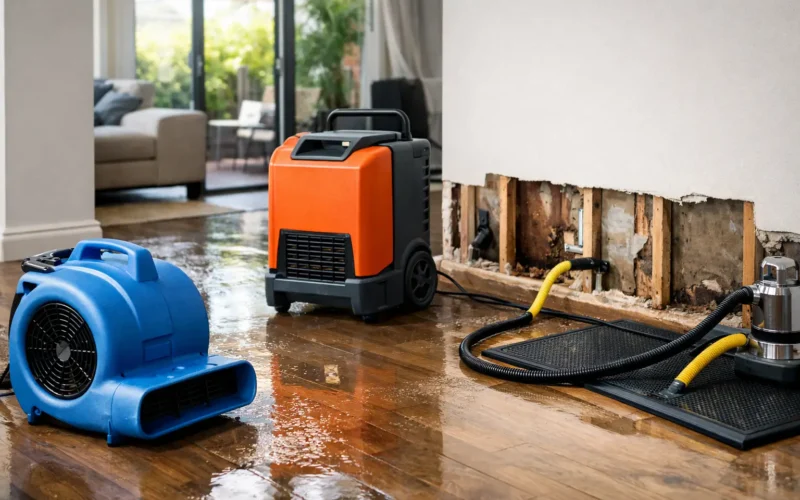
Effective drying is a controlled process, not simply a matter of making the room warmer. Professional air movers create airflow across wet surfaces, while dehumidifiers remove moisture from the air. Used together, they encourage moisture to move out of carpets, underlay, walls and flooring materials.
The room should be monitored throughout the process. If humid outdoor air is entering the property, leaving every window open can slow drying rather than help it. This is particularly relevant during wet Sydney weather, when outside humidity may already be high. In these conditions, a more controlled indoor environment is often more effective.
Heating can assist in some situations, but excessive heat may cause damage to timber, adhesives, vinyl or delicate fabrics. The right equipment layout depends on the size of the affected area, the building materials and moisture readings taken during restoration.
Clean and treat affected soft furnishings
Once the immediate extraction and drying plan is underway, affected carpets and upholstery may need professional cleaning. Water can carry soil, residues and bacteria into fibres even when it originated from a clean source. Cleaning also helps remove marks left by furniture, soil tracked through the room or contaminants drawn up from the subfloor.
Flooded rugs and upholstered furniture require individual assessment. Their construction, dyes, filling materials and the water category all affect whether they can be restored. A valuable rug may need specialist off-site treatment, while a heavily saturated fabric lounge may require controlled drying before cleaning can begin.
Do not apply strong disinfectants, bleach or fragranced products to carpet in an attempt to mask odours. These products can affect colour, leave residues and fail to address moisture below the surface. Odour control only works when the source of the odour, usually trapped moisture or contamination, has been properly removed.
Monitor moisture until materials are dry
Drying should not be judged by touch alone. Carpet fibres can feel dry while moisture remains in the backing, underlay, skirting boards or wall cavities. Restoration professionals use moisture detection tools to compare affected materials with dry areas of the property and confirm when drying goals have been reached.
This monitoring matters because mould can begin growing where moisture remains hidden. Watch for a stale or earthy smell, darker patches around walls, lifting carpet edges, swollen skirting boards or condensation in the room. These signs do not always mean major damage, but they do warrant a prompt inspection.
If floodwater reached walls, built-in cupboards or insulation, drying may take more than surface extraction. Some materials need targeted airflow, while others may need to be removed to prevent ongoing moisture issues. The correct approach depends on the extent of water migration, not just the size of the visible wet patch.
Know when to call a flood restoration specialist
Professional help is recommended when water has soaked through carpet and underlay, affected more than one room, come from a contaminated source, or remained present for more than a short period. It is also sensible to arrange an inspection if you notice persistent odours, mould, warped flooring or water marks on walls.
Sydneywide Carpet Cleaning provides flooded carpet restoration using modern extraction and drying equipment, supported by experienced, trained technicians. A prompt assessment can identify what can be dried, what should be removed and how to protect the rest of the property from moisture migration.
Avoid turning on ceiling fans if there is any concern about electrical safety, and do not reinstall furniture until the carpet and floor beneath have been properly dried. Taking the right action in the first day can make a meaningful difference to the condition of your home or workplace in the weeks that follow.
When water enters a property, focus on safety first, extraction second and verified drying after that. A calm, measured response gives carpets, flooring and furnishings the best chance of being restored properly.