

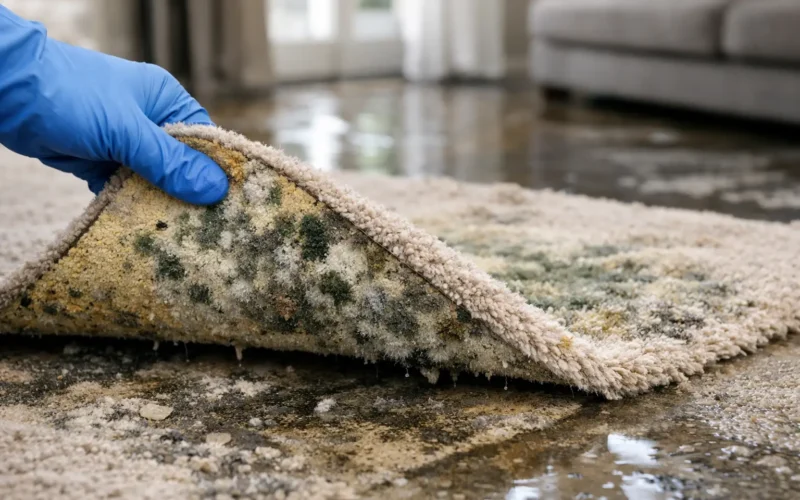
Floodwater does not need to sit for long to create a mould risk. Carpet mould signs after flooding can develop out of sight in the backing, underlay and subfloor, even where the carpet surface feels nearly dry. Acting quickly protects the health of people using the space and gives the carpet the best possible chance of being restored.
For Sydney homes, rentals and commercial premises, the right response depends on the source of the water, how long materials remained wet and whether the carpet and underlay can be properly dried. A musty smell or a visible mark should never be dismissed as a minor cosmetic issue after a flood.
1. A musty odour that does not clear
A stale, earthy or musty smell is often one of the earliest carpet mould signs after flooding. Mould releases compounds as it grows, and those odours can remain trapped in carpet fibres, backing and underlay. Air fresheners may mask the smell briefly, but they do not remove the cause.
The odour may be strongest when the room is closed up, after rain, or when heating and cooling are running. If the smell returns after the room has aired, moisture is likely still present somewhere within the flooring system.
2. Discoloured patches or speckled growth
Visible mould can look different from one carpet to another. Look for grey, green, black, white or yellowish spots, particularly near skirting boards, beneath furniture and around the edges of rooms. It may first appear as faint uneven discolouration rather than obvious fuzzy growth.
Do not assume every stain is mould. Floodwater can leave soil marks, tannin stains or dye transfer. However, new spots that spread, appear raised or sit alongside a persistent odour need prompt assessment. Disturbing suspected mould with vigorous brushing or household chemicals can spread spores and push contamination further into the fibres.
3. Carpet that feels damp, cold or unusually heavy
A carpet can hold a surprising amount of water below the surface. Press your hand firmly into affected areas, especially at joins, along walls and under furniture. A cold, clammy feel, darkened pile or water transferring to a clean towel are clear signs that drying is incomplete.
Heavy carpet or rippling can also indicate that the backing and underlay have absorbed moisture. In some cases, the top surface dries before the layers below do. This is why simply opening windows or running a household fan is not always enough after significant water intrusion.
4. Lifting edges, ripples and changes in texture
Water can weaken adhesives, cause carpet backing to distort and leave the pile feeling stiff or matted. You may notice curled edges near doorways, bubbles across the room or sections that no longer sit flat. These changes do not confirm mould on their own, but they show the carpet has been affected by moisture and needs attention.
Underlay is particularly vulnerable. Once it has stayed wet for too long, it can retain moisture and provide a protected environment for microbial growth. Re-stretching carpet without addressing the moisture underneath only hides the problem.
5. Marks along skirting boards and walls
Check the lower sections of walls, skirting boards, wardrobe interiors and furniture legs. Water lines, swelling, peeling paint or dark patches may show how high the water reached. These areas matter because mould can grow behind the visible face of the wall or beneath the carpet edge.
If wall linings, insulation or timber skirting have been wet, the job may extend beyond carpet cleaning. A professional restoration assessment helps identify whether the affected materials can be dried or whether they need further building repair.
6. Allergy-like symptoms in the affected room
A damp, mould-affected room may trigger or worsen coughing, sneezing, watery eyes, headaches or throat irritation for some people. These symptoms have many possible causes, so they should not be used as the only test for mould. Still, if symptoms improve away from the room and return when you spend time there, treat it as a useful warning sign.
Take extra care where infants, older people, people with asthma or anyone with a weakened immune system uses the property. Keep them away from visibly mouldy or water-damaged areas until the source of moisture has been resolved and the space has been properly cleaned and dried.
7. Moisture returning after the carpet seems dry
The most misleading sign is a carpet that appears fine for a day or two, then develops odour, dampness or new staining. This can happen when moisture was left in the underlay, subfloor or wall cavity. Sydney’s humid periods can slow evaporation and make this problem more apparent.
A proper moisture check considers more than the carpet pile. Professionals use suitable extraction and drying equipment, then assess whether the underlying materials have reached an acceptable dry condition. The aim is not merely to make the carpet look dry, but to remove the conditions mould needs to grow.
What to do as soon as you find water damage
First, stop the water source if it is safe to do so. Move furniture, rugs, boxes and other items off the wet carpet where possible, as trapped moisture beneath heavy items causes further damage. Avoid walking through floodwater from outside, toilets or drains and then across unaffected areas.
If the water came from a clean source, such as a burst supply pipe, fast extraction and controlled drying may allow some carpet to be restored. Time is still critical. Remove surface water promptly, increase airflow only when conditions allow and keep the area ventilated.
The situation changes if the water came from a sewage overflow, stormwater, a drain, river water or any unknown source. This water can contain contaminants. Do not attempt to save carpet or underlay by shampooing it yourself. Keep people and pets out of the area, avoid handling affected materials unnecessarily and arrange qualified flood restoration advice.
Never rely on a deodoriser, steam clean or supermarket mould product as the complete solution for a flooded carpet. These approaches may improve the immediate appearance, but they do not confirm that the underlay and subfloor are dry. Bleach is also unsuitable for many carpet fibres and can cause permanent colour loss.
When a carpet can be restored and when replacement is safer
There is no single answer for every flooded carpet. Restoration may be possible when the water was clean, the area was treated quickly, contamination is absent and moisture can be extracted from the carpet, underlay and structure before mould takes hold. The carpet’s age, construction and condition before the incident also matter.
Replacement is often the safer outcome where contaminated water has entered the carpet, mould growth is widespread, the underlay remains wet or the carpet backing has delaminated. In commercial premises, the decision should also account for staff safety, downtime and the ability to document a clean, dry result.
Trying to preserve every affected material can be a false economy if odours and moisture return later. A clear assessment upfront helps property owners, tenants and managers make an informed decision based on hygiene and long-term condition, not surface appearance alone.
Prevent mould from returning after restoration
Once the area has been dried and cleaned, keep an eye on it over the following weeks. Check for returning odours, edge staining and dampness after closed-up periods or wet weather. Address leaks, blocked drains, roof issues and poor drainage promptly so the same area is not repeatedly exposed to moisture.
Regular professional carpet maintenance also helps identify developing issues before they become embedded. For urgent flood response across Sydney, Sydneywide Carpet Cleaning can assess affected soft furnishings and use professional extraction and drying methods suited to the water event.
The most useful rule after a flood is simple: if a carpet smells musty, feels damp or shows new changes, act before mould becomes visible. Early, thorough drying is the step that protects both the carpet and the people who rely on the space.