

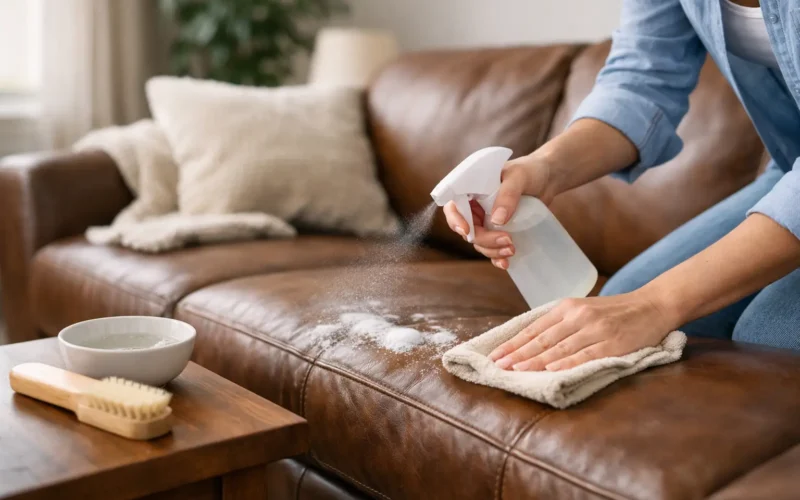
A leather couch can look clean from across the room while still holding body oils, pet hair, dust and everyday residue in its finish. Knowing how to clean leather couches safely helps preserve the colour, softness and protective coating without causing drying, streaks or cracking. The key is to use very little moisture, avoid harsh household cleaners and work gently.
Leather is durable, but it is not maintenance-free. Regular care prevents grime from becoming embedded and reduces the chance of permanent marks, particularly on light-coloured furniture or couches used by children and pets.
Identify Your Leather Before You Start
Not all leather upholstery should be cleaned in the same way. Most household couches are finished or protected leather, which has a surface coating that makes routine cleaning more straightforward. It may feel smooth, have an even colour and allow a small drop of water to sit briefly on the surface.
Aniline, semi-aniline, nubuck and suede leather need more caution. These materials can absorb moisture quickly, darken unevenly or show marks after cleaning. If your couch has a soft, natural feel, visible grain variation or no obvious protective surface, check the manufacturer’s care label before applying any cleaner.
Look for the upholstery cleaning code where possible. A code such as W generally indicates water-based cleaning methods are suitable, while S calls for solvent-based products. If there is no label, test any method on a hidden section behind a cushion or near the base of the couch. Allow it to dry completely before continuing.
What You Need for Safe Leather Cleaning
For most finished leather couches, simple supplies are best: a vacuum with a soft brush attachment, two or three clean white microfibre cloths, lukewarm water and a pH-neutral leather cleaner designed for upholstery. A quality leather conditioner may also be appropriate after cleaning, provided it suits your couch’s leather type.
Avoid coloured cloths, as dye can transfer onto pale leather. Do not use an abrasive sponge, stiff brush or rough towel. Leather finishes can be scratched more easily than many people expect.
How to Clean Leather Couches Safely Step by Step
Start by removing loose cushions and vacuuming the couch carefully. Use the soft brush attachment over the seating areas, arms, backrest and creases. Pay particular attention to seams and under cushions, where grit and pet hair collect. This matters because rubbing a damp cloth over dust can create tiny scratches in the finish.
Next, place a small amount of leather cleaner onto a clean microfibre cloth rather than directly onto the couch. The cloth should be lightly damp, never wet. Wipe one small section at a time using gentle, even strokes. Do not scrub back and forth aggressively, especially over worn areas, piping or stitching.
Use a second dry microfibre cloth to buff away any remaining moisture before moving to the next section. This helps prevent water marks and gives you a clear view of the result. Continue across the couch in manageable areas so the cleaner does not dry on the surface.
Once finished, leave the couch uncovered and allow it to air dry naturally. Keep it away from direct sunlight, heaters and reverse-cycle air-conditioning vents while it dries. Heat may cause leather to dry out or encourage a cleaner residue to set unevenly.
For routine maintenance, a light clean every few months is often enough for low-use furniture. Busy family rooms, homes with pets or pale leather couches may benefit from more frequent vacuuming and spot cleaning.
A Note on Homemade Cleaning Solutions
Mild soap and water is often suggested as a home remedy, but it can be risky if the soap is too alkaline, scented or not fully removed. Household detergents may strip protective oils or leave a dull film. If you do use a mild solution after checking the care instructions, use only a tiny amount on a barely damp cloth and wipe again with a separate cloth lightly dampened with clean water.
Vinegar, baking soda, disinfectant sprays, bleach, methylated spirits and all-purpose cleaners should not be used on leather upholstery. Even when they appear to remove a stain, they can weaken the finish, alter the colour or leave leather feeling dry and stiff.
Treating Common Marks Without Damaging the Finish
Fresh spills should be dealt with quickly. Blot liquid with a dry white cloth, starting at the outside of the spill and moving towards the centre. Do not rub, as this can spread the spill or push it deeper into the leather.
For everyday marks from hands, food or light soil, a suitable leather cleaner applied sparingly is usually the safest option. Repeat gently if needed rather than using more product or pressure.
Grease marks need patience. Blot excess oil first, then leave the area alone for a short period. On protected leather, a specialist leather cleaner may help lift the residue. On absorbent leather types, attempting a home treatment can leave a larger ring or patch, so professional advice is the safer choice.
Ink, dye transfer from dark denim, nail polish, paint and pet accidents are high-risk stains. Do not use solvent, acetone or alcohol in an attempt to remove them. These products can take colour and finish off with the stain. Contact a trained leather cleaning technician promptly, as successful treatment is more likely when the mark is fresh.
Condition Leather Only When It Needs It
Conditioning can help maintain flexibility, but more is not always better. Over-conditioning may create a greasy feel, attract dust or leave a patchy sheen. A couch that feels dry, looks dull or has been exposed to air-conditioning, sunlight or regular use may benefit from conditioning after cleaning.
Choose a conditioner made for your leather type and apply a small amount to a clean cloth. Work it in lightly and evenly, then buff away excess product. Always test first, particularly on matte, pale or older leather, as some conditioners can deepen the colour temporarily or permanently.
As a general guide, many protected leather couches need conditioning every six to 12 months. The right schedule depends on the leather, the room conditions and how heavily the couch is used.
Prevent Damage Between Cleans
The easiest way to keep leather looking good is to reduce the wear it faces every day. Keep the couch out of prolonged direct sun where possible, as ultraviolet exposure can fade colour and dry the material. Rotate loose cushions regularly so one seat does not wear faster than the others.
Wipe up spills promptly, vacuum creases regularly and take care with dark jeans, newspaper ink and heavily dyed throws on light leather. Pets can also leave oils, scratches and saliva residue, so a throw or designated pet spot may be worth considering if the couch is a favourite sleeping place.
Avoid placing leather furniture directly beside strong heat sources. In Sydney homes, this can include sunny windows, heaters and drying air from climate-control systems. Stable indoor conditions are kinder to leather than repeated heat and moisture changes.
When Professional Leather Cleaning Is the Better Option
Some problems are beyond a safe DIY clean. Call for professional help if your couch has widespread grime, heavy body-oil build-up on headrests and arms, strong odours, mould concerns, dye transfer, cracking, ink or unknown stains. Professional leather cleaning uses products and methods selected for the leather’s finish and condition, rather than a one-size-fits-all approach.
This is particularly valuable for expensive furniture, older pieces and pale leather where an unsuccessful home remedy can be more noticeable than the original mark. Sydneywide Carpet Cleaning provides specialist leather cleaning for households and businesses that need a careful, on-site result backed by experienced technicians.
A gentle routine will do more for your leather couch than an occasional heavy clean. Remove dust, deal with spills early and use products made for leather, and the couch can stay comfortable and presentable for many years.