

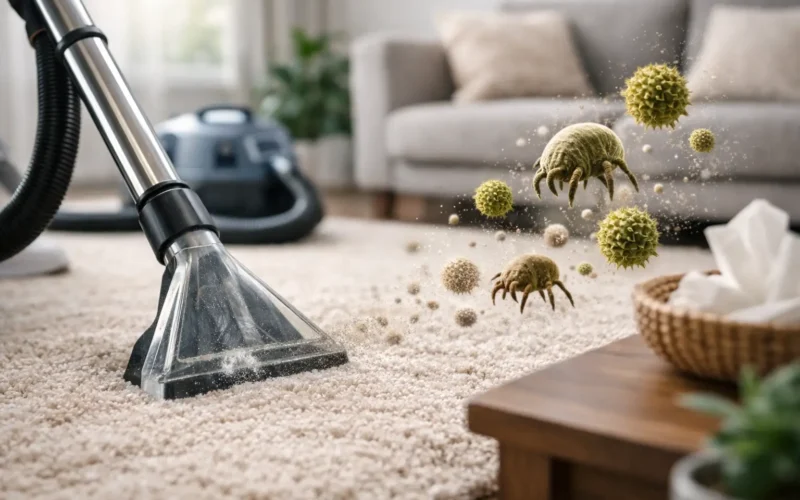
A carpet can look clean from the doorway while holding fine dust, pet dander and pollen deep around its fibres. So, can carpet cleaning remove allergens? Yes, professional carpet cleaning can significantly reduce many common allergens trapped in carpet, but the result depends on the cleaning method, the condition of the carpet and how well the home is maintained afterwards.
For families dealing with sneezing, itchy eyes, asthma triggers or pet-related allergies, regular carpet care is not just about appearance. It is part of maintaining a cleaner, healthier indoor environment.
What allergens build up in carpet?
Carpet acts like a filter. It catches particles that enter through open windows, shoes, pets, clothing and normal day-to-day movement. That can be useful because it keeps some material out of the air, but the carpet needs proper cleaning before that build-up becomes a problem.
Common carpet allergens include dust mite debris, pet dander, pollen, mould spores and fine dust. Dust mites themselves are too small to see, and it is usually their waste particles and body fragments that trigger allergy symptoms. Pet dander is also very light and can settle into carpets, rugs, upholstery and bedding even in homes that are cleaned regularly.
Sydney homes can be exposed to a changing mix of allergens throughout the year. Pollen may come in through doors and windows, while humidity, spills or poor drying after water damage can create conditions that support mould growth. Carpet does not cause these allergens, but it can become a place where they collect.
Can carpet cleaning remove allergens effectively?
Professional carpet cleaning removes a substantial amount of allergen-containing dust and debris by lifting it from deep within the carpet pile. High-powered extraction is particularly valuable because ordinary vacuuming mainly addresses surface material, while allergens can settle lower in the fibres and backing.
A professional technician will assess the carpet type, soil level and any concerns such as pet contamination, stains or moisture. The goal is not simply to make the carpet look brighter. It is to loosen embedded soil and extract it as thoroughly as possible without over-wetting or damaging the carpet.
Hot water extraction is often an effective option for allergen reduction. It uses controlled cleaning solution, agitation and powerful extraction to flush out soil, residue and fine particles. When performed correctly, the process leaves the carpet cleaner and helps reduce the allergen load that has accumulated over time.
No cleaning method can guarantee an allergen-free home. Allergens return through daily living, especially where there are pets, open windows, children playing on the floor or high foot traffic. However, scheduled professional cleaning can make a meaningful difference as part of a wider cleaning routine.
Why vacuuming alone is not always enough
Vacuuming is essential, particularly with a vacuum fitted with a HEPA-quality filter, but it has limits. A lightly used carpet may respond well to frequent vacuuming, while a carpet in a busy family home, rental property or office can hold compacted soil that standard equipment cannot fully remove.
The effectiveness of vacuuming also depends on technique. Moving quickly over the carpet or only cleaning visible areas can leave particles behind. Slow, overlapping passes are more effective, especially along skirting boards, under furniture and in entry areas.
Professional cleaning should complement routine vacuuming, not replace it. Between services, regular vacuuming prevents loose dust and dander from settling further into the carpet.
The cleaning method and drying process matter
For allergy-conscious households, effective extraction and proper drying are as important as the cleaning solution itself. Leaving a carpet too wet can create an unwanted moisture issue, particularly in poorly ventilated rooms. Experienced cleaners use appropriate equipment and techniques to achieve a thorough clean while supporting efficient drying.
The right approach varies between carpet types. Wool, synthetic and delicate carpets each have different requirements. Applying too much moisture, unsuitable chemicals or excessive agitation can affect appearance and performance. This is one reason trained, experienced technicians are worth considering when health concerns and valuable furnishings are involved.
If a carpet has been affected by flooding, a plumbing leak or significant water ingress, it needs urgent attention. Floodwater can carry contaminants, and prolonged dampness can increase the risk of mould. Flooded carpet restoration is a different process from routine maintenance cleaning and should focus on extraction, drying, assessment and safe restoration wherever possible.
When carpets may need more than a standard clean
A standard professional clean can reduce everyday allergens, but some situations call for a broader approach. If there is a strong musty smell, visible mould, repeated water damage or ongoing allergy symptoms despite cleaning, the source of the problem should be investigated.
Allergens may also be present in other soft furnishings. Upholstered lounges, mattresses, rugs, curtains and blinds can collect dust, dander and pollen. Cleaning the carpet while leaving these surfaces untreated may limit the overall benefit, especially in bedrooms and living areas where people spend the most time.
For homes with pets, regular professional carpet and upholstery cleaning helps manage fur, dander, tracked-in dirt and odours. It will not remove the fact that a pet lives in the home, but it can reduce the material that builds up in the fibres. More frequent maintenance is often sensible in homes with multiple pets or family members with known sensitivities.
How often should carpet be professionally cleaned?
There is no single schedule for every home. A low-traffic household without pets may only need professional carpet cleaning periodically, while a busy household can benefit from more regular service. The right frequency depends on who uses the space, whether shoes are worn indoors, the presence of pets, local conditions and the carpet manufacturer’s care guidance.
As a practical guide, consider more frequent cleaning if your home has:
- Pets that shed or spend time indoors
- Young children who play on carpeted floors
- Family members with allergies or asthma
- Heavy foot traffic near entrances and hallways
- Previous water damage, dampness or musty odours
Commercial spaces also need a maintenance plan matched to their use. Offices, strata common areas, childcare settings and retail premises can collect a high volume of tracked-in dust and outdoor particles. Regular professional care helps protect the carpet, support a presentable workplace and reduce the build-up that daily vacuuming misses.
Simple ways to reduce allergens between carpet cleans
The biggest improvements usually come from consistent habits rather than a single deep clean. Vacuum carpets at least weekly, and more often in high-use rooms or homes with pets. Use a machine with effective filtration, empty it carefully and clean or replace filters as recommended by the manufacturer.
Place quality mats at entrances and encourage visitors to remove shoes where practical. This reduces the pollen, dirt and fine particles carried in from outside. Wash pet bedding regularly, groom pets away from carpeted areas where possible, and clean up spills promptly to avoid moisture sitting in the fibres.
Keep indoor humidity under control, particularly in bathrooms, bedrooms and rooms with limited ventilation. If you notice damp patches, persistent odours or signs of water damage, act quickly rather than covering the issue with fragrance or waiting for it to dry on its own.
It also helps to clean the whole room, not just the floor. Dust hard surfaces with a damp cloth, vacuum upholstered furniture and wash bedding regularly. For allergy-prone households, mattress cleaning and upholstery cleaning may be worthwhile additions to carpet care because these are surfaces where people spend long periods in close contact.
Choosing professional help for allergy-focused cleaning
Look for a provider with trained technicians, suitable equipment and experience across different carpet and fabric types. Ask whether the cleaning approach is appropriate for your carpet, how drying will be managed and whether they can address related furnishings such as rugs, lounges or mattresses.
Sydneywide Carpet Cleaning provides professional soft furnishing care across metropolitan Sydney, using up-to-date equipment and trained technicians to deliver practical cleaning results for homes, rentals and workplaces. A properly maintained carpet can look better, last longer and hold far less of the dust and debris your family would rather not live with.
If allergy symptoms seem worse at home, start with the surfaces closest to everyday life. A thorough carpet clean, paired with regular vacuuming and attention to moisture, is a practical step towards a fresher and more comfortable home.