

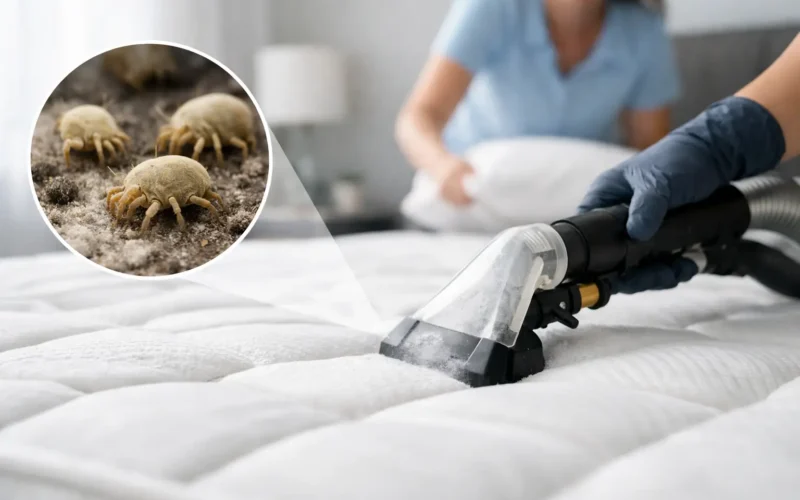
A mattress can look clean while holding a build-up of dust, shed skin, body oils and allergens below the surface. For people waking with a blocked nose, itchy eyes, coughing or allergy symptoms that seem worse in the bedroom, the question is a practical one: can mattress cleaning remove dust mites?
Professional mattress cleaning can significantly reduce dust mites, their waste particles and the food source that helps them thrive. It is not a once-and-for-all cure, however. Dust mites are a normal part of indoor environments, and they can return when a mattress is used regularly. The goal is to lower the allergen load, improve hygiene and maintain a healthier sleeping surface over time.
Can Mattress Cleaning Remove Dust Mites?
Yes, thorough mattress cleaning can remove a meaningful amount of dust mites and dust mite allergens from the surface and upper layers of a mattress. The most effective approach combines high-filtration vacuuming with a suitable professional cleaning method designed for the mattress fabric and filling.
Dust mites are microscopic creatures that feed mainly on flakes of human skin. They prefer warm, humid conditions, which makes bedding and mattresses an ideal environment. The mites themselves are not usually the main trigger. Their waste particles and broken-down body fragments can become airborne when bedding is disturbed, irritating people with asthma, eczema, hay fever or dust allergies.
A quality clean removes accumulated dust, skin cells, pet dander and other organic material. That reduces both the allergen presence and the conditions that support future mite activity. Still, no cleaning method can guarantee every mite or allergen has been removed from deep within a thick mattress. Honest results depend on the mattress type, its age, how heavily it has been used and how long it has gone between cleans.
Why Regular Vacuuming Is Not Always Enough
Vacuuming a mattress at home is a worthwhile part of routine care, particularly around seams, piping and tufts where dust gathers. But standard household vacuums can have limited suction, filtration and agitation for fine particles embedded in mattress materials. If allergens are released back into the room through poor filtration, the cleaning result may be disappointing.
Professional equipment is designed to extract fine soil and allergens more effectively while minimising unnecessary moisture. This matters because a mattress should never be left wet internally. Excess moisture can create odours, encourage mould growth and damage foam, natural fibres or internal components.
The cleaning process should also suit the mattress. A delicate pillow-top, memory foam mattress and traditional innerspring mattress do not all respond well to the same treatment. An experienced technician will assess the material, soiling and condition before selecting the appropriate method.
What a professional mattress clean can address
A professional service can help remove surface dust, skin flakes, pet hair, body oils, minor odours and allergens that have built up through normal use. It may also improve the appearance of surface marks where the fabric allows treatment.
However, mattress cleaning is not a repair service. It cannot reverse sagging, replace damaged foam, remove every old stain or correct odours caused by deep contamination, mould or extensive water damage. In those cases, replacement may be the safer option, particularly where health concerns are involved.
The Cleaning Method Matters
For dust mite control, the most useful cleaning is targeted rather than aggressive. A mattress needs strong extraction and hygienic treatment, but it also needs careful moisture control and enough drying time before it is made up again.
A typical professional process begins with detailed vacuuming using effective filtration. This lifts loose debris and fine particles from the mattress surface, seams and edges. Depending on the fabric and condition, a low-moisture cleaning or controlled hot water extraction process may then be used to flush out embedded soil and allergens. The mattress is treated with care and dried thoroughly before use.
Steam is often assumed to be the answer to every dust mite issue. Heat can be useful, but steam alone is not automatically the best choice for every mattress. Too much heat or moisture may affect glues, foam layers and delicate fabrics. A suitable method is one that balances allergen removal, material safety and drying performance.
Cleaning Helps, but Prevention Keeps Mites Lower
Mattress cleaning works best as part of a regular bedroom hygiene routine. Since people spend several hours in bed each night, even a well-cleaned mattress will gradually collect new skin cells, dust and moisture.
Wash sheets, pillowcases and washable mattress protectors regularly in the warmest temperature their care labels allow. A fully enclosed, zippered mattress protector creates a useful barrier between the mattress and new allergens. It should be washed routinely, not treated as a permanent substitute for cleaning.
Keep bedroom humidity under control, especially during humid Sydney weather or in rooms with limited ventilation. Dust mites favour moist conditions, so airing the room, using ventilation where needed and avoiding damp bedding can make a genuine difference. Letting the bed air after waking before making it can also help moisture dissipate.
Pets are another factor. If a dog or cat sleeps on the bed, dander and hair can add to the allergen load. This does not mean pets must be excluded from the bedroom, but households with pets often benefit from more frequent mattress, upholstery and carpet cleaning.
A practical mattress care routine
For most homes, vacuuming the mattress surface when changing bedding and washing bedding regularly will support day-to-day hygiene. Rotating the mattress according to the manufacturer’s instructions can also help it wear more evenly.
A professional mattress clean is worth considering every six to 12 months for general maintenance. More frequent cleaning may be sensible for allergy sufferers, homes with pets, children’s beds, rental properties, or mattresses affected by spills and heavy use. If someone in the household has severe asthma or a diagnosed dust mite allergy, follow their healthcare professional’s advice alongside cleaning measures.
Signs Your Mattress May Need Attention
A mattress does not need to look heavily stained to benefit from cleaning. Allergy symptoms that are stronger on waking, a musty smell, visible dust around seams, increased sneezing in bed or a long gap since the last clean are all reasonable prompts to assess its condition.
It is also a good idea to arrange cleaning after an illness, a spill, toilet-training accidents or when moving into a previously occupied home. In rental and property management settings, mattress hygiene can be an important part of preparing a bedroom for the next occupant.
For heavily soiled mattresses, it is better to act promptly. Fresh spills are generally easier to treat, while old contamination can move deeper into fillings and may become harder to remove safely. Avoid soaking the mattress with household products in an effort to disinfect it. The residue and moisture can create a larger problem than the original mark.
Choosing a Mattress Cleaning Service
Look for a provider with trained staff, suitable extraction equipment and experience working with different mattress materials. Ask whether their process is designed to reduce allergens, how they manage drying and whether they assess stains or odours before treatment. Clear advice about realistic results is a good sign of a professional service.
Sydneywide Carpet Cleaning provides specialist mattress cleaning as part of its wider soft furnishing care services across metropolitan Sydney. With trained technicians and up-to-date equipment, the focus is on practical hygiene results while treating the mattress safely.
A clean mattress will not make dust mites disappear forever, but it can reduce the allergens you sleep near every night. Pair professional cleaning with clean bedding, a quality protector and sensible moisture control, and your bedroom can remain a fresher, healthier place to rest.