

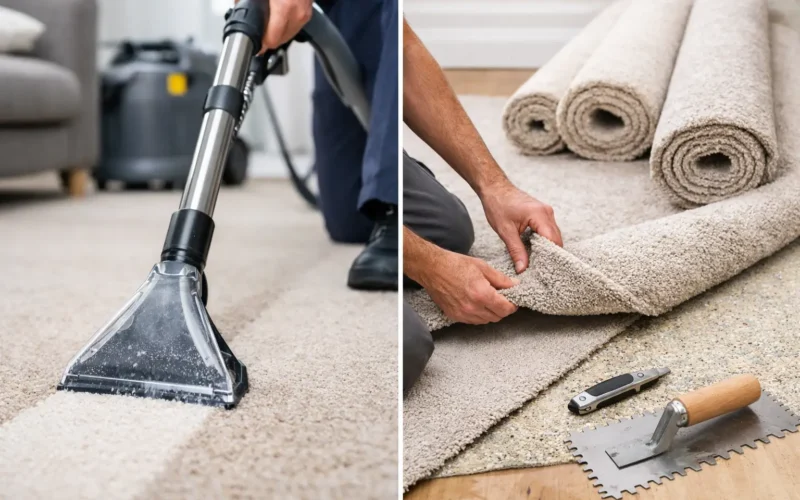
A carpet can look beyond saving after a pet accident, a red wine spill, or months of muddy foot traffic. But carpet cleaning or replacement is not always an obvious choice. Many carpets that appear worn, stained or dull can improve significantly with professional treatment, while others have reached the point where replacement is the practical option.
The right decision depends on more than what is visible on the surface. Carpet age, fibre condition, the type of staining, underlay condition, moisture exposure and the needs of the people using the space all matter. For Sydney households, rental properties and workplaces, a professional assessment can help avoid replacing carpet that is still serviceable – or repeatedly cleaning carpet that can no longer deliver a healthy, presentable result.
When Carpet Cleaning Is Usually the Better Option
Professional carpet cleaning is often the best first step when the pile remains intact and the carpet is structurally sound. Everyday soil, tracked-in grit, food spills, pet hair and body oils can settle deep into fibres, making a carpet look older than it is. Vacuuming removes loose surface debris, but it cannot always remove embedded soil or residues that affect appearance and indoor hygiene.
A qualified technician can identify the carpet fibre, inspect the affected areas and select a method suited to the material and condition. This is particularly valuable for wool, delicate blends and heavily used commercial carpet, where the wrong cleaning approach can cause avoidable damage.
Cleaning may be the sensible option when stains are relatively recent, when odours are caused by surface contamination, or when the carpet has simply lost its colour and lift through regular use. In many cases, a deep clean can restore the pile, improve the feel underfoot and reduce allergens, dust and irritants held within the fibres.
For landlords and property managers, cleaning is also a practical way to prepare a property between tenancies where the carpet is in otherwise good condition. For families, especially those with pets or young children, routine professional cleaning supports a fresher and healthier living environment while extending the useful life of the carpet.
Signs Your Carpet May Respond Well to Cleaning
Look closely at the carpet rather than judging it from the room entrance. If the fibres spring back after being pressed, the carpet is not thinning in traffic lanes and the backing is secure, there is a good chance cleaning can make a noticeable difference.
Stains also need to be considered individually. Tea, coffee, food, mud and many pet-related marks can often be treated successfully, particularly when they have not been repeatedly treated with unsuitable household products. Some stains may leave permanent colour loss or dye change, but professional cleaning can still improve the overall presentation of the carpet.
Persistent odours should not automatically mean replacement. Odours can come from soiling within the carpet, the underlay, the subfloor or a previous moisture issue. Identifying the source is the key step. Cleaning can resolve the problem when contamination is contained in the carpet fibres, but further treatment may be needed if it has travelled deeper.
When Replacement Makes More Sense
There is a point where cleaning can improve a carpet but cannot restore its condition. Replacement becomes more appropriate when the carpet has significant physical wear, widespread damage or contamination that cannot be safely or reliably removed.
Flattened traffic lanes are a common example. Carpet fibres gradually lose resilience in busy hallways, living areas, office walkways and entry points. Cleaning can remove dirt that makes these areas look worse, but it cannot rebuild fibres that are crushed, frayed or worn away.
Replacement should also be considered when the backing is failing. Signs include rippling, separation, loose edges, shedding, bald patches or a carpet that no longer sits securely. These are structural issues, not cleaning issues.
The following conditions often point towards replacement rather than another cleaning attempt:
- Extensive mould growth or long-term moisture damage
- Floodwater contamination that has affected carpet, underlay and subfloor
- Severe pet urine saturation across large areas
- Burn marks, tears, holes or widespread staining
- A carpet that is heavily worn, brittle or coming away from its backing
In these cases, cleaning may still be useful as part of a restoration or make-safe process, but it should not be presented as a permanent fix. A clear assessment protects the property and helps occupants make an informed decision.
Carpet Cleaning or Replacement After Water Damage
Water damage requires a faster decision than ordinary staining. The longer wet carpet, underlay and subfloor remain damp, the greater the risk of odours, mould growth and material deterioration. Clean water from a contained source may allow for successful restoration if extraction and drying begin promptly. Contaminated water, however, may require removal of affected materials for health and safety reasons.
It also matters how long the carpet has been wet. A carpet that has been professionally extracted, treated and dried quickly may be recoverable. One that has remained saturated for an extended period, particularly in warm or poorly ventilated conditions, can suffer backing damage and microbial growth.
Do not rely on the surface feeling dry. Moisture can remain in the underlay and at the edges of the room, where it may not be immediately visible. Professional flooded carpet restoration equipment is designed to extract moisture and support effective drying, giving the carpet its best chance of being saved where restoration is appropriate.
Consider the Carpet’s Age and Purpose
Age alone does not decide whether a carpet should be cleaned or replaced. A well-maintained quality carpet can continue to perform well for many years, while a lower-grade carpet in a busy household may show significant wear much sooner.
Think about how the room is used. A bedroom carpet with a few isolated stains may be an excellent candidate for cleaning. Carpet in a busy family lounge, a rental entryway or a commercial reception area experiences more soil and abrasion, so its condition needs to be judged more carefully.
For offices and commercial premises, appearance is only one consideration. Embedded soil can wear fibres over time, while neglected carpet can affect the impression the workplace makes on staff, visitors and clients. Planned maintenance cleaning helps preserve carpet between replacement cycles and supports a cleaner shared environment.
Avoid Making the Damage Worse
When a spill or accident happens, quick action is useful, but aggressive DIY treatment can make professional results harder to achieve. Scrubbing can spread the stain, roughen fibres and push contamination further into the pile. Too much water can leave dampness below the surface, while unsuitable chemicals may bleach or set certain stains.
Blot fresh spills with a clean white cloth, working from the outside towards the centre. Avoid saturating the carpet and keep pets and foot traffic away from the affected area where possible. For pet accidents or strong odours, do not mask the smell with fragrance products. The source needs to be treated, not covered.
If the issue is widespread, long-standing or related to water damage, arrange a professional inspection before deciding the carpet is beyond repair. This provides a realistic view of what cleaning can achieve and whether replacement is genuinely necessary.
Make the Decision Based on Condition, Not Frustration
A stained carpet can make a whole room feel tired, which is why replacement can seem like the quickest answer. Yet replacing carpet before assessing its condition may mean discarding a serviceable surface that could have been refreshed with the right equipment, methods and care.
Sydneywide Carpet Cleaning works with homeowners, renters, property managers and businesses across Sydney to assess carpet condition and deliver high-standard cleaning where it can achieve a worthwhile result. Certified, experienced technicians can identify practical treatment options and advise when damage is likely to be permanent.
The best next step is simple: assess the carpet honestly, act quickly on moisture problems and choose cleaning when the fibres, backing and hygiene condition still support it. A professional clean can often give a carpet the fresh start it needs, while replacement is best reserved for damage that cleaning cannot responsibly solve.