

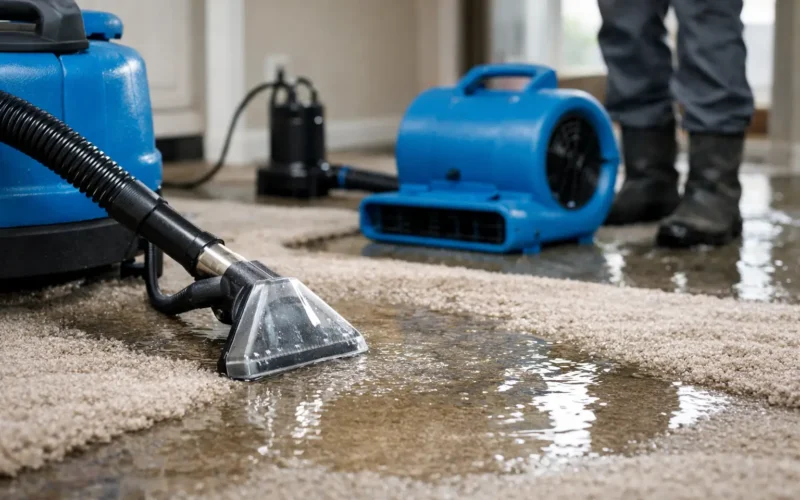
A burst flexi hose, overflowing washing machine or stormwater leak can soak a carpet far beyond what the surface suggests. Knowing how to restore waterlogged carpet quickly can limit damage to the carpet, underlay, flooring and indoor air quality. The key is not simply making it feel dry underfoot. It is removing moisture from the full carpet system and addressing the source before mould and odours take hold.
Start with safety and stop the water source
Before moving furniture or attempting to dry the area, make sure the space is safe. Turn off the water supply if a plumbing fault is involved. If water has reached power points, appliances or electrical wiring, avoid entering the area until it has been assessed by a qualified electrician.
The type of water matters just as much as the amount. Clean water from a fresh supply-line leak may allow for restoration when the response is prompt. Water from a washing machine or dishwasher is often treated more cautiously because it can contain contaminants. Water from sewage, an overflowing toilet, outdoor flooding or stormwater is unsafe and can carry bacteria and other contaminants.
Do not attempt to clean or retain carpet affected by sewage or heavily contaminated floodwater. Keep people and pets away, wear appropriate protective equipment, and arrange professional water-damage restoration. In these situations, health protection comes before saving materials.
How to restore waterlogged carpet in the first few hours
Time makes a real difference. A wet carpet can start developing musty odours and microbial growth within 24 to 48 hours, especially in Sydney’s humid conditions. Acting promptly also reduces the chance of moisture reaching skirting boards, wall linings and timber subfloors.
First, remove loose items from the affected area. Lift chairs, tables, storage boxes and other furniture off the carpet where possible. Place furniture legs on waterproof blocks or foil to prevent staining and timber damage. Do not drag heavy furniture across wet carpet, as this can stretch fibres and spread water into dry areas.
Next, extract as much water as possible. A wet-and-dry vacuum can help with a small clean-water spill, but a household vacuum cleaner must never be used on wet carpet. Towels may remove some surface moisture, but they cannot draw water from the underlay or subfloor. Press towels down firmly rather than rubbing, which can damage carpet pile and push water further through the backing.
Open windows and doors only if the outside air is drier than indoors. During wet weather, open windows may add moisture rather than remove it. Fans can improve air movement, while a dehumidifier helps draw water vapour from the air. These measures are useful for minor spills, but they are not a substitute for proper extraction when the carpet and underlay are saturated.
Check whether the underlay is wet
Carpet may look reasonably dry while the underlay remains heavily saturated. This is one of the main reasons water damage is often underestimated. Underlay behaves like a sponge, holding moisture against the carpet backing and floor for days.
If clean water has affected a small area and you can safely lift a corner of the carpet, check the underlay and the floor beneath it. A damp underlay needs targeted drying, not just fans blowing across the carpet surface. In many larger water events, the carpet needs to be carefully lifted so water can be extracted from both sides and drying equipment can reach the underlay and subfloor.
Whether underlay can be retained depends on its material, the water category, the extent of contamination and how long it has been wet. Foam underlay is particularly difficult to dry thoroughly after significant saturation. If contaminated water has entered it, replacement is generally the safer option. A trained restoration technician can assess the condition with moisture-testing equipment rather than relying on touch alone.
Use controlled drying, not just heat
It is tempting to turn up the heating or hire several fans and hope for the best. Heat can assist in some conditions, but uncontrolled heat may shrink carpet, damage backing adhesives or create humid air that slows drying. Effective restoration relies on water extraction first, then controlled airflow and dehumidification.
Professional flooded carpet restoration commonly uses high-powered extraction equipment to remove water from the carpet and underlay. Air movers circulate dry air across and beneath the carpet, while dehumidifiers remove moisture from the enclosed space. Technicians also monitor moisture levels in the carpet, underlay, walls and subfloor until the materials are properly dry.
This method matters because visible dryness is not proof of complete drying. A carpet can feel dry on top yet still contain moisture at the backing or beneath the underlay. That hidden moisture can cause persistent smells, mould growth, stains and damage to timber flooring or adjacent walls.
Clean and sanitise after clean-water damage
Once the carpet has been extracted and is drying properly, it may need professional cleaning to remove soil, residues and odours left behind by the water event. Clean-water damage can still spread dirt from shoes, furniture legs and the floor underneath the carpet.
A suitable cleaning and sanitising process should be selected according to the water source and carpet type. Wool, natural-fibre and delicate carpets need particular care, as overly wet cleaning or unsuitable products can lead to shrinkage, browning or colour bleeding. This is also why pouring strong household disinfectants onto carpet is rarely a good idea. They can discolour fibres, leave sticky residues and do little to solve moisture trapped below the surface.
For contaminated water, cleaning alone may not make the carpet safe. Professional assessment should determine whether disposal is necessary, particularly where sewage, river water or stormwater has been present.
Signs the carpet may not be fully restored
Even after a drying attempt, keep an eye on the affected area over the following days. A musty smell, dark marks along skirting boards, rippling carpet, damp patches or a cool, clammy feel may indicate moisture remains. You may also notice that doors swell, paint bubbles or timber flooring begins to cup nearby.
Mould is not always immediately visible. If there is a lingering odour, recurrent dampness or anyone in the property develops increased allergy or respiratory symptoms, arrange an inspection rather than masking the smell with fragrance products. Odour treatments cannot replace drying and proper cleaning.
Carpet may also be beyond practical restoration if it has been wet for an extended period, affected by contaminated water, delaminated from its backing, or sustained major staining. Replacing affected materials can be the most responsible decision when health or structural risks are involved.
When to call a flooded carpet restoration professional
Professional help is strongly recommended when water has soaked more than a small section of carpet, reached the underlay, entered multiple rooms, come from an unknown source, or remained in place for more than a few hours. It is especially important for apartments, rental properties, offices and commercial sites, where moisture can travel between units or affect business operations.
A qualified team can identify the water category, extract water efficiently, lift and reset carpet where appropriate, dry the building materials and document moisture readings. This is far more reliable than relying on a carpet that merely appears dry. For Sydney homes and businesses, Sydneywide Carpet Cleaning provides experienced flooded carpet restoration using up-to-date equipment and trained technicians focused on safe, practical results.
Reduce the risk next time
After the area is dry, address what caused the problem. Check appliance hoses, hot-water systems, roof drainage, window seals and plumbing connections. In high-risk areas, avoid storing absorbent items directly on carpeted floors and keep a clear path to taps or isolation valves.
If a water event happens again, take clear photos before moving items where safe to do so, stop the source, protect electrical safety and begin extraction without delay. Fast action gives carpet the best chance of recovery, but a careful assessment gives your home or workplace the best chance of staying healthy afterwards.