

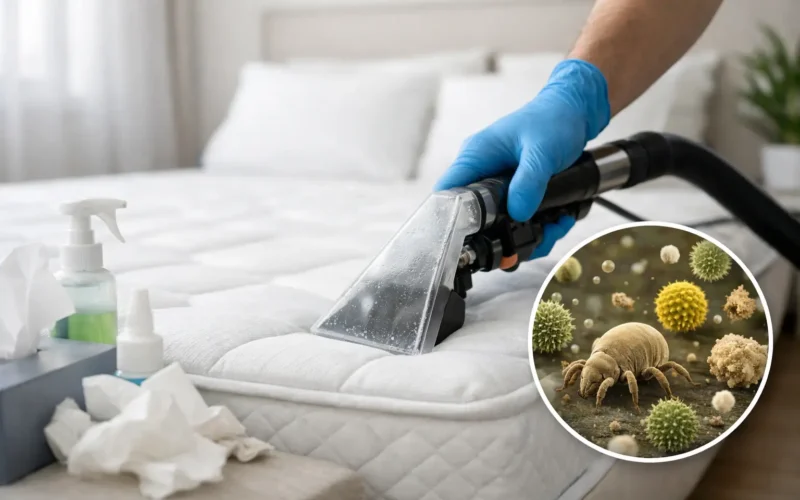
You can wash your sheets every week and still wake up congested. That is often the clue that the problem is deeper than the linen. Mattress cleaning for allergies matters because mattresses hold onto dust mites, dead skin, pet dander, moisture and everyday build-up that regular surface cleaning does not fully remove.
For many households, the mattress is one of the most overlooked soft furnishings in the home. It gets used every night, absorbs sweat and body oils, and traps fine particles over time. If anyone in the home has asthma, hay fever, eczema or ongoing morning sneezing, the mattress is worth a closer look.
Why mattresses trigger allergy symptoms
A mattress is warm, slightly humid and full of organic matter such as skin flakes. That makes it a suitable environment for dust mites. It is not the mites themselves that usually trigger the reaction, but the proteins found in their waste and body fragments. Once those allergens build up, they can become airborne with normal movement during sleep.
Pet dander adds another layer. Even if pets do not sleep on the bed, dander travels easily through a home and settles into fabric and padding. Pollen can also come in through open windows, clothing and hair. If the mattress has had spills or has been exposed to excess moisture, mould growth can become part of the problem as well.
That is why allergy symptoms often feel worse in bed or first thing in the morning. The source is close to your face for hours at a time.
What mattress cleaning for allergies should actually do
Not all mattress cleaning is equal. If the goal is allergy relief, the focus should be on reducing allergen load, improving hygiene and removing embedded soil without leaving the mattress overly wet.
A proper clean should lift dry particulate matter, address surface and subsurface soiling, and help manage odours and contaminants. The method matters. Too much moisture can create new issues, especially in thicker mattresses that take longer to dry. On the other hand, a quick vacuum over the top may remove loose debris but leave much of the embedded build-up behind.
The best approach depends on the mattress type, its condition and what is causing the reaction. A family home with pets needs a different maintenance rhythm from a guest bedroom used a few times a year. A child’s mattress with recent spills or bedwetting history may also need more careful treatment than a clean, dry adult mattress.
Signs your mattress may be making allergies worse
Some warning signs are obvious, and some are easy to dismiss. If symptoms improve when you sleep elsewhere, that is a strong indicator. The same applies if sneezing, itchy eyes, blocked sinuses or coughing are most noticeable overnight or on waking.
Visible staining is not always linked to allergies, but it does suggest the mattress has absorbed more than it should. Musty odours, dampness, an older mattress with no history of professional cleaning, or a bed used by pets all increase the likelihood of allergen build-up.
Even without visible marks, a mattress can hold a surprising amount of fine debris. That is one reason regular maintenance makes sense before symptoms become more persistent.
DIY care helps, but it has limits
There are a few practical steps households can take between professional cleans. Washing bedding in hot water, using a quality mattress protector and vacuuming the mattress surface can all help reduce everyday build-up. Keeping humidity under control in the bedroom also matters, especially in homes prone to condensation.
Sun airing can be useful in some cases, but it is not a complete solution. It may help with freshness and moisture reduction, though it will not fully remove embedded allergens. Sprinkling powders or heavily fragranced products onto a mattress is also not ideal. These can leave residue behind and may irritate sensitive airways rather than help them.
Spot cleaning spills straight away is sensible, but over-wetting the mattress is not. Home machines and general-purpose sprays can push moisture deeper into the filling if used incorrectly. Once moisture gets trapped, drying becomes slow and the risk of odour or microbial growth goes up.
When professional mattress cleaning for allergies makes more sense
If someone in the home has recurring allergy symptoms, professional cleaning is usually the more reliable option. The same applies to mattresses that have not been cleaned in years, those affected by pets, or those with visible staining and odour.
Professional equipment is designed to remove more soil and allergen material than most domestic methods can manage. Just as important, trained technicians know how to assess fabric, filling, condition and moisture risk before choosing a cleaning process. That reduces the chance of damage and helps achieve a healthier result.
For households with children, pets or asthma sufferers, routine mattress cleaning can be part of a broader home hygiene plan. It is not a medical treatment, and it will not eliminate every allergen in the room, but it can reduce one major source of exposure where you spend hours every night.
How a professional process usually works
A good mattress clean starts with inspection. This helps identify staining, wear, odours, moisture concerns and any areas needing special attention. From there, the technician selects a suitable method based on the mattress materials and level of contamination.
Dry soil removal is a key step because loose particulate matter needs to come out before deeper cleaning begins. If treatment is needed for stains, odours or hygiene concerns, that should be done with products appropriate for the mattress and the issue being treated. The goal is to clean effectively while controlling moisture and supporting safe drying times.
This is where experience makes a difference. Mattresses are not all built the same. Pillow-tops, memory foam, hybrid designs and older spring mattresses all respond differently to cleaning. A one-size-fits-all method can be too aggressive for one mattress and not effective enough for another.
Sydneywide Carpet Cleaning approaches mattress care with the same practical focus used across other soft furnishings – trained staff, up-to-date equipment and methods chosen for health-focused results rather than cosmetic improvement alone.
How often should a mattress be cleaned?
For allergy-prone households, annual professional cleaning is a sensible starting point. Some homes benefit from more frequent attention, particularly where there are pets, children, high humidity, heavy perspiration or known asthma and dust mite sensitivity.
There is no perfect schedule for every property. A spare room mattress may need far less maintenance than the main bed in a busy family home. The useful question is not just how old the mattress is, but how much use it gets and what it is exposed to.
Routine cleaning works best when paired with simple habits. Use a washable protector, wash bedding regularly, rotate the mattress if the manufacturer recommends it, and deal with spills promptly. These steps help slow down the build-up between cleans.
What professional cleaning can and cannot do
It helps to be realistic. Mattress cleaning for allergies can reduce allergen build-up, remove soiling and improve hygiene, but it cannot make an old, heavily degraded mattress brand new. If a mattress has significant structural wear, persistent mould damage or deep contamination beyond safe restoration, replacement may be the better option.
It also will not fix every cause of poor sleep. If the room has dusty curtains, dirty carpet, poor ventilation or pets frequently on soft furnishings, the mattress is only part of the picture. Still, it is a major part, and often one of the most worthwhile places to start.
For people with allergies, small reductions in exposure can make a noticeable difference over time. Better sleep often comes from improving the overall sleeping environment, not from relying on one product or one quick home remedy.
A cleaner mattress supports a healthier bedroom. If you are waking with irritation, congestion or that stale feeling no fresh sheet seems to solve, the mattress may be holding onto more than you realise. Giving it proper attention is a practical step towards a cleaner, more comfortable place to rest.