

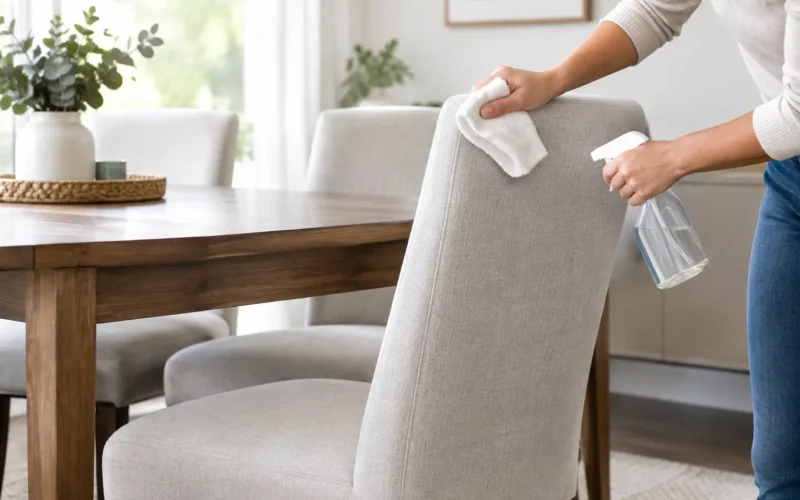
Dining chairs collect more than the occasional crumb. Fabric seats can hold food spills, body oils, pet hair, dust and everyday odours, particularly in busy family homes. Knowing how to freshen upholstered dining chairs helps keep the dining area looking cared for between professional cleans, without risking water marks, colour loss or fabric damage.
The right method depends on the chair’s fabric, construction and condition. A light refresh may only need vacuuming and careful spot treatment. Heavy soiling, lingering odours or old stains usually need professional upholstery cleaning to remove contaminants from below the surface rather than simply improving the appearance for a short time.
Start by checking the upholstery fabric
Before applying any cleaning product, look for the manufacturer’s care label under the seat or on the chair frame. The cleaning code tells you what type of product is suitable. “W” generally means water-based cleaners are appropriate, “S” indicates solvent-based cleaning, “WS” allows either method, and “X” means vacuuming or professional cleaning only.
If there is no label, take a cautious approach. Natural fibres, velvet, linen, silk blends and delicate woven fabrics can react badly to excess moisture or unsuitable detergents. Timber frames, decorative piping and buttons also need protection from water. Test any product on a small hidden area first, then allow it to dry fully before assessing the result.
How to freshen upholstered dining chairs safely
For routine maintenance, begin with dry cleaning methods before introducing moisture. Remove loose cushions where possible and use a vacuum with an upholstery attachment. Work slowly across the seat, backrest, seams and joins, where dust and crumbs tend to settle.
A soft brush attachment is useful for lifting pet hair and dry debris without pulling at the fabric. If hair is stubborn, a clean lint roller or a slightly damp rubber glove can help gather it before vacuuming. Avoid aggressive brushing, especially on chenille, velvet and loosely woven upholstery, as it can flatten or snag the pile.
Once the chair is free of loose soil, assess whether it needs a simple deodorising treatment or targeted stain removal. Treating every chair with large amounts of cleaner “just in case” often creates avoidable problems, including over-wetting and slow drying.
Use bicarbonate of soda for light odours
For dry, water-safe fabric, a light sprinkle of bicarbonate of soda can help absorb mild food or household odours. Leave it on the upholstery for several hours, ideally when the chairs are not in use, then vacuum thoroughly using the upholstery tool.
This is best for a general refresh, not a cure for deep odours caused by pet accidents, milk spills or mould. Those smells can sit in the padding beneath the fabric. Adding fragrance may mask the issue temporarily, but it does not remove the source.
Blot fresh spills straight away
Speed matters with dining chair stains. Blot a fresh spill with a clean white cloth or paper towel, working from the outside edge towards the centre. Do not rub, as rubbing pushes the spill further into the fibres and can spread the stain.
For a fabric labelled “W” or “WS”, lightly dampen a cloth with cool water and a small amount of mild upholstery-safe cleaner. Dab the affected area sparingly, then blot again with a dry cloth. Use as little moisture as possible. Saturating the foam beneath the seat may lead to water marks, odours or extended drying time.
Red wine, tomato-based sauces, coffee and greasy food need different treatment approaches. A general household cleaner is not always the answer. Some products can bleach dyes, leave a sticky residue that attracts more soil, or set a stain permanently. If a spill is old, coloured or oily, it is usually safer to stop after initial blotting and arrange professional assessment.
Avoid common DIY cleaning mistakes
The biggest mistake is using too much water. Upholstered dining chairs may look dry on top while the internal foam remains damp. This can create a musty smell and, in some cases, affect the timber frame or seat base.
Steam cleaning is also not suitable for every chair. Heat can damage delicate fibres, shrink natural materials or affect adhesives used in the upholstery. Rental machines can be effective on appropriate fabric, but they need correct solution levels, extraction strength and drying conditions. For dining chairs with buttons, piping, patterned fabric or antique frames, professional equipment and training provide a safer result.
Avoid coloured cloths, harsh scrubbing pads and untested supermarket stain removers. White cloths make it easier to see whether dye or soil is transferring, while gentle blotting helps preserve the fabric finish. Never mix cleaning chemicals, particularly products containing bleach, ammonia or strong solvents.
Dry the chairs thoroughly before use
After any damp cleaning, improve airflow around the chairs. Open windows where practical, run ceiling fans or position a fan nearby, and keep the chairs out of direct harsh sunlight. Strong sun can fade some fabrics and may cause uneven drying.
Do not replace chair covers, push chairs tightly under the table or sit on them until they are fully dry. Sitting on damp upholstery can press moisture deeper into the padding and leave marks. In humid Sydney weather, drying may take longer than expected, so a low-moisture cleaning method is often the better choice.
If you notice a musty odour after cleaning, the chairs may not have dried properly or may have had an underlying issue before cleaning began. Continued deodorising will not resolve moisture trapped in the upholstery. Professional extraction and controlled drying may be needed.
Keep dining chair upholstery fresher for longer
Small habits make a noticeable difference. Vacuum fabric chairs regularly, especially in homes with children or pets, and address spills as they happen. Rotating chairs around the table can spread wear more evenly where some seats are used more often than others.
Consider using washable chair covers for high-use periods, such as children’s meals or larger gatherings, provided the covers do not trap moisture against the upholstery. Fabric protection can also help liquids bead on the surface for longer, giving you time to blot a spill before it penetrates the fibres. It does not make upholstery stain-proof, but it can support easier maintenance.
Professional upholstery cleaning is worthwhile when chairs look dull despite vacuuming, have visible traffic marks, smell stale, or have stains that return after drying. This often means soil has settled into the fabric backing or cushioning. A trained technician can identify the fibre type, choose a suitable cleaning process and remove embedded soil with controlled moisture.
When professional upholstery cleaning is the sensible option
Call a professional sooner rather than later if the chairs have pet urine, mould, extensive food staining, water damage or delicate upholstery. These situations need more than a surface clean. The aim is to remove contamination while protecting the fabric, fillings and frame.
For households, rental properties and commercial dining areas, routine professional cleaning also supports a cleaner and healthier indoor environment. Sydneywide Carpet Cleaning provides trained upholstery care using up-to-date equipment for fabric furnishings across Sydney, with methods selected for the condition and material of each item.
A fresh dining chair should look clean, feel dry and smell neutral, not heavily perfumed. Regular vacuuming and prompt spill care will handle much of the day-to-day work, while timely professional cleaning can protect the chairs you use every day for years to come.