

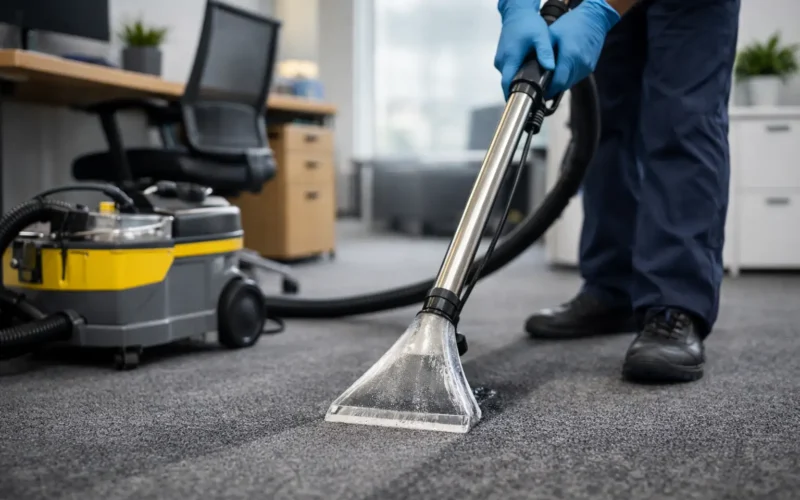
A carpet can look fine at 9 am and still be carrying yesterday’s coffee spills, tracked-in grime and the bacteria that come with heavy foot traffic. That is why knowing how to sanitise office carpets properly matters. In a busy workplace, appearance is only part of the job. Hygiene, indoor air quality and carpet life all depend on the right cleaning approach.
What sanitising office carpets really involves
When people talk about sanitising carpet, they often mean making it smell fresh or removing visible marks. In practice, sanitising is more specific. It means reducing bacteria, contaminants and embedded soil to a safer, cleaner level, not just improving how the carpet looks.
That distinction matters in offices. Reception areas, meeting rooms, corridors and workstations all collect fine dust, food residue, moisture and allergens. If the carpet is only vacuumed on the surface, those contaminants remain in the pile and backing. Over time, that can affect hygiene standards, odour control and the overall condition of the carpet.
How to sanitise office carpets step by step
The right method depends on carpet fibre, level of soiling, traffic load and whether there are spills, stains or moisture issues. Still, the general process stays fairly consistent.
Start with a proper inspection
Before any cleaning begins, inspect the carpet closely. Look for stained areas, high-traffic lanes, food and drink spills, signs of mould risk, odours and any sections that may have been affected by water ingress. Office carpets do not wear evenly, so one area may need more treatment than another.
Inspection also helps avoid the wrong chemistry or cleaning method. Some commercial carpets respond well to hot water extraction, while others may need a low-moisture approach to control drying times. A one-size-fits-all method is rarely the best option in an occupied office.
Remove dry soil first
Dry vacuuming is not a small step before the real clean. It is one of the most important parts of the process. Sand, grit, dust and loose debris sit deep in carpet fibres and act like abrasives under foot traffic. If they are left in place, wet cleaning can turn that soil into muddy residue.
A commercial-grade vacuum with strong suction and suitable filtration is the standard here. Extra passes are usually needed in entry points, under desks, near break areas and along walkways. In offices with heavy daily use, this stage can remove a surprising amount of material before any sanitising solution is applied.
Pre-treat traffic areas and spots
Once loose soil is removed, pre-treatment helps break down built-up grime, oily residue and marks. This is especially useful in office settings where carpets collect body oils from chair movement, food residue around desks and tracked-in pollution from outside.
Spot treatment should be targeted, not excessive. Different stains respond to different products, and over-wetting can create problems of its own. If a carpet has recurring spill areas, it is worth treating those sections separately rather than assuming the main clean will solve everything.
Use the right deep-cleaning method
If you are looking at how to sanitise office carpets effectively, the cleaning method matters as much as the cleaning agent. For many commercial carpets, hot water extraction is the most thorough option. It flushes out suspended soil, residues and contaminants while providing a deeper hygienic clean than surface treatments alone.
That said, low-moisture encapsulation or bonnet cleaning can suit some office environments where rapid turnaround is essential. These methods can improve presentation and help with routine maintenance, but they may not always deliver the same deep soil removal as extraction. It depends on the carpet condition and what the site needs most – appearance improvement, faster drying, or deeper sanitation.
Apply sanitising treatment where appropriate
Sanitising products should be used with care and according to the carpet manufacturer’s guidance. More chemical does not mean a better result. In fact, over-application can leave residue that attracts more soil later.
A professional sanitising treatment is generally selected based on the office environment, fibre type and contamination level. In workplaces where hygiene is a priority, such as medical consulting spaces, childcare settings or shared offices with high staff density, this step can be especially useful. The goal is to reduce microbial load while preserving the carpet.
Dry the carpet quickly
Fast drying is essential after sanitising. Damp carpet can lead to odours, resoiling and, in worst cases, microbial growth in the backing or underlay. Good airflow, air movers and controlled moisture use all help reduce that risk.
This is one reason professional equipment makes a difference. Strong extraction leaves less moisture behind, which shortens downtime and supports a cleaner result. In office settings, drying time also affects safety, access and business continuity.
Common mistakes that stop carpets from becoming truly hygienic
A carpet can be cleaned regularly and still not be properly sanitised. One common problem is relying on deodorising powders or off-the-shelf sprays. These may mask odours for a short time, but they do not remove the source of contamination.
Another issue is over-wetting. When too much water is used without enough extraction power, moisture can remain below the surface. That creates a better environment for unpleasant smells and possible mould activity.
There is also the problem of infrequent deep cleaning. Daily vacuuming helps, but it does not replace scheduled restorative cleaning. Offices with staff movement, visitors and shared amenities usually need more than surface maintenance to stay in good condition.
How often should office carpets be sanitised?
There is no single timetable that suits every workplace. A small private office with limited foot traffic will not need the same cleaning schedule as a busy call centre or a commercial tenancy with constant public access.
As a general guide, high-traffic office areas benefit from routine maintenance cleaning throughout the year, with deeper sanitising scheduled based on use, season and site conditions. Entryways, corridors and lunch areas usually need attention more often than boardrooms or low-use offices.
If your workplace has allergy concerns, food service areas, frequent spills or wet weather traffic, the need increases. In Sydney offices, rain events can quickly turn carpets into collection points for mud, moisture and pollutants brought in from outside. In those cases, acting early is usually better than waiting for visible deterioration.
Why professional carpet sanitising is usually the safer option
Office carpets are a significant asset, and replacing them early because of poor maintenance is avoidable. Professional cleaning does more than improve appearance. It helps extend carpet life, supports a healthier indoor environment and reduces the risk of residues, odours and fibre damage.
A trained technician will identify the carpet type, choose a suitable method and use equipment designed for proper soil and moisture recovery. That matters in commercial settings where shortcuts often create longer-term problems. DIY machines can help with small incidents, but they are rarely enough for full sanitising in a busy office.
This is also where standards and experience count. Certified operators understand fibre behaviour, cleaning chemistry and drying control. For office managers and property managers, that means fewer surprises and a more dependable result.
Practical ways to keep carpets cleaner between services
Even the best deep clean will not stay that way if the office has no maintenance plan. A few simple measures can make a noticeable difference. Entry matting reduces the amount of dirt brought inside. Prompt spill response stops stains from setting. Regular vacuuming with commercial equipment helps remove dry particulates before they settle deeper into the pile.
It also helps to pay attention to problem zones. Under desk chairs, near kitchenettes, at lift entries and around reception desks, carpet wear and contamination build up faster. Rotating attention to those areas keeps the whole space in better condition.
For larger workplaces, it is worth having a documented carpet care schedule rather than waiting until the carpet looks dirty. By that stage, hygiene and fibre condition have usually already slipped.
When office carpet sanitising becomes urgent
Some situations should not wait for the next scheduled clean. Flooding, roof leaks, plumbing overflows and repeated spill contamination need fast attention. Water-affected carpet is not just a cleaning issue. It can become a hygiene and restoration issue very quickly.
Strong odours, persistent staining and signs of dampness also deserve prompt assessment. If carpets stay wet too long or contamination is left untreated, the problem can spread below the visible surface. In those cases, proper extraction, sanitising and drying are all part of the solution.
A clean-looking office sends the right message, but a properly sanitised carpet does more than that. It supports a healthier workplace, protects the carpet investment and helps your office feel cared for from the ground up. If your carpets are carrying more traffic than your current routine can handle, it may be time to treat them like the high-use surface they are.