

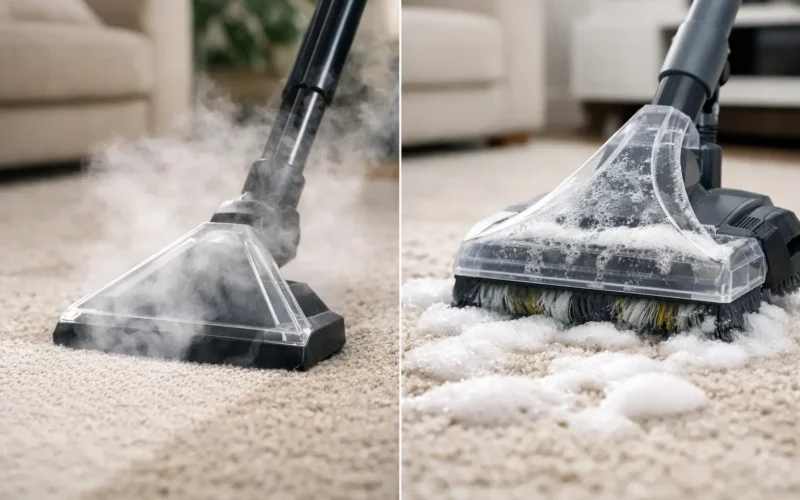
A carpet can look clean at first glance and still hold a fair amount of dust, residue, allergens and oily soil deep in the pile. That is why the question of steam cleaning vs shampooing carpets comes up so often. Both methods are designed to improve appearance, but they work very differently and the right choice depends on the carpet, the level of soiling and what result you actually need.
For most homes and commercial spaces, the real issue is not just how the carpet looks when the technician leaves. It is how clean it is underneath, how quickly it dries, and whether any residue is left behind to attract more soil. Those details matter if you are managing a family home, preparing a rental property, maintaining an office, or trying to keep carpets in better condition over time.
Steam cleaning vs shampooing carpets: what is the difference?
Steam cleaning, more accurately called hot water extraction, uses heated water and professional cleaning solutions to loosen soil from carpet fibres and then extract it out with powerful suction. Despite the name, it is not simply blasting steam into the carpet. The key part of the process is the rinse and extraction, which removes suspended dirt, contaminants and much of the moisture as it goes.
Shampooing carpets is an older cleaning method that relies more heavily on detergent and agitation. A foaming or shampoo-based product is worked into the carpet with a machine, then the carpet is scrubbed to lift soil. In some cases the residue is extracted afterwards, but traditional shampooing can leave more product behind than hot water extraction.
That difference matters because carpet does not just get dirty from dry dust. It also collects oils from shoes, food spills, pet accidents, body oils and airborne particles. If a cleaning method leaves detergent in the fibres, the carpet can look acceptable in the short term but start resoiling faster.
Why steam cleaning is usually the preferred method
In professional carpet care, steam cleaning is generally the preferred option for routine deep cleaning. It is widely recommended because it does more than improve the surface appearance. It flushes out embedded soil and extracts it from the carpet rather than simply moving it around.
This makes it a strong choice for family homes, properties with pets, and workplaces with regular foot traffic. It is also better suited to health-focused cleaning because the extraction process can remove allergens, dust and other contaminants trapped below the surface.
Another advantage is residue control. When performed correctly with modern equipment, steam cleaning leaves far less detergent behind than shampooing. That usually means a cleaner finish and a lower chance of the carpet attracting fresh dirt too quickly.
Drying time is another practical factor. People often assume shampooing dries faster because it can seem lighter on water, but that is not always how it plays out. A proper hot water extraction system uses strong suction to remove moisture during the clean, while shampooing may leave damp foam and detergent in the pile. Actual drying time depends on airflow, humidity, carpet type and soil level, but professional steam cleaning often gives a more predictable result.
When shampooing carpets may still have a role
Shampooing is not automatically wrong. In some situations, it can still be useful, particularly for heavily soiled carpets that need strong agitation to break up built-up grime. It may also be used as part of a broader treatment plan where a carpet has not been maintained for a long period.
That said, shampooing works best when handled carefully and followed by proper extraction or rinsing steps. If it is used as a quick cosmetic clean without thorough removal of product, it can create more problems than it solves. Sticky residue, uneven results and faster resoiling are the usual concerns.
For that reason, shampooing tends to be less suitable as a standard maintenance method for most modern carpets. It is more of a selective treatment approach than the default answer.
Which method is better for stains, odours and pets?
This is where the condition of the carpet matters more than the label on the machine. Steam cleaning is generally more effective for deep odours, tracked-in soil and contamination caused by pets because it can flush and extract material from the carpet and, to some extent, from the backing. For homes with children or pets, that deeper clean is often what people are really looking for.
Shampooing may help improve the appearance of some stained areas, especially where heavy scrubbing lifts surface grime. But appearance and sanitising are not the same thing. A stain can lighten while residues and odours remain below.
Pet accidents are a good example. If urine has penetrated beyond the fibres, surface shampooing is rarely enough on its own. It may mask the issue briefly, but unless the contamination is properly treated and extracted, the smell can return. The same applies to food spills, drink spills and traffic lane build-up in living rooms, hallways and office areas.
Carpet type changes the answer
Not every carpet should be treated the same way. Fibre type, construction, age and existing wear all affect the safest and most effective cleaning method. Synthetic carpets generally respond well to professional hot water extraction, while some delicate wool or speciality carpets need a more tailored approach.
This is one reason professional assessment matters. A trained technician should identify fibre type, check for pre-existing damage, test for colourfastness where needed and choose the right chemistry and method for the carpet. The goal is not to force every job into one process. It is to clean the carpet thoroughly without causing shrinkage, distortion, browning or over-wetting.
In commercial settings, maintenance schedules also influence the choice. Office carpets often benefit from regular professional cleaning before soil becomes heavily impacted. That helps preserve appearance and extend usable life, rather than waiting until the carpet looks obviously dirty and requires a more aggressive treatment.
Steam cleaning vs shampooing carpets in rental and property management
For rental properties and managed buildings, results need to be dependable. Property managers and landlords are usually looking for a cleaning method that delivers a visibly fresh finish, supports hygiene standards and helps carpets present well for inspections or changeovers.
Steam cleaning is often the safer recommendation because it provides a more complete clean and leaves less residue behind. That can be especially helpful in high-turnover properties where carpets have seen varied use and stains may not all be visible at first glance.
Shampooing can sometimes make a carpet look brighter initially, but if residue remains, the improvement may not last. In a property that needs to stay presentable, long-term cleanliness matters more than a short-lived surface result.
What a professional service does differently
The biggest difference is not just steam cleaning versus shampooing. It is professional cleaning versus a one-size-fits-all approach. Qualified operators use the correct equipment, suitable cleaning agents, controlled water pressure and strong extraction systems. They also understand how to adjust the process for traffic lanes, spot treatments, pet issues and delicate fibres.
That level of care reduces the risk of over-wetting and residue build-up. It also gives a better chance of achieving a genuinely clean carpet rather than a temporary visual lift. Businesses such as Sydneywide Carpet Cleaning focus on this kind of standards-based approach because the method only works properly when the operator knows how to apply it.
So which one should you choose?
If you want a deep clean, better soil removal and a method that supports healthier indoor conditions, steam cleaning is usually the stronger option. It suits most residential and commercial carpets, especially where regular maintenance, pets, family use or higher foot traffic are part of the picture.
Shampooing still has a place in selected cases, particularly where heavy agitation is needed for severe build-up, but it is not usually the first choice for ongoing carpet maintenance. The trade-off is that it can leave more residue and may not deliver the same level of extraction.
The better question is often not which method sounds stronger, but which method is right for the carpet in front of you. Carpet condition, fibre type, stain history and drying requirements all matter. A professional assessment can save guesswork and help you choose a method that gives a cleaner result without unnecessary wear.
A good carpet clean should do more than freshen the room for a day or two. It should leave the fibres cleaner, the indoor environment healthier, and the carpet in better shape for whatever comes next.