

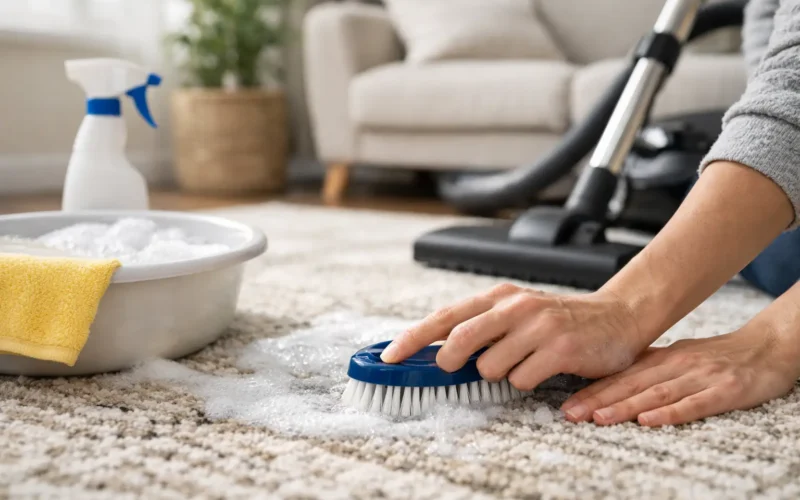
A rug can make a room feel finished, but it also collects more than most people realise. Dust, grit, food crumbs, pet hair and tracked-in soil settle deep into the fibres, and the best way to clean rugs depends on what the rug is made of, how soiled it is and whether you are dealing with a spill, odour or general wear.
Treat every rug the same and you can cause real damage. Some respond well to careful vacuuming and spot cleaning. Others can shrink, bleed colour or lose their texture if they are over-wet or scrubbed too hard. That is why a good result starts with the right method, not the strongest product.
The best way to clean rugs starts with the fibre
Before you reach for any cleaning solution, check the rug’s material and construction. Wool rugs, cotton rugs, synthetic rugs, flatweaves and delicate handmade pieces all behave differently under moisture and agitation.
Synthetic rugs are usually the most forgiving. They tend to handle routine cleaning well and are often suitable for light spot treatment at home. Wool rugs need more care. They hold soil deeply, can absorb a lot of moisture and may develop browning or distortion if cleaned incorrectly. Natural fibre rugs such as jute and sisal are even more sensitive, as too much water can stain or weaken them.
Construction matters too. A tufted rug, a shag pile and a tightly woven flat rug each trap soil in different ways. Fringes can also be a problem area because they soil quickly and can be damaged by aggressive cleaning.
If you are unsure what you have, the safest approach is to avoid soaking the rug and avoid strong supermarket detergents. A gentle method is usually the better starting point.
What to do for routine rug cleaning
For most households, the best day-to-day cleaning method is thorough vacuuming. It removes the dry soil that cuts into fibres over time and makes the rug look dull. In homes with pets, children or high foot traffic, this matters even more.
Vacuum slowly and in overlapping passes. For loop pile or delicate rugs, skip aggressive rotating brush settings if your vacuum has them, as they can pull fibres or create fuzzing. Vacuum both sides where practical. Soil often settles through the pile and sits underneath, especially on larger rugs placed over hard floors.
Taking the rug outside for a shake can help with smaller lightweight pieces, but it is not a substitute for vacuuming. Fine dust and embedded grit stay behind unless they are properly extracted.
For homes that stay busy, routine vacuuming is what keeps a rug from becoming a restoration job later. It does not replace deep cleaning, but it extends the time between major cleans and helps preserve appearance.
How to handle spills without making them worse
Fresh spills are where many rugs are damaged. The first reaction is often to scrub hard or pour on too much product. Both can spread the stain, drive it deeper or affect the dye.
Blot the spill straight away with a clean white cloth or paper towel. Press firmly, but do not rub. Work from the outside of the spill towards the centre so it does not spread. If the spill is thick, lift off the excess first with a spoon or blunt edge before blotting.
For many common spills, a small amount of water can help, but use it sparingly. Damp, not soaked, is the goal. If you use a cleaning solution, test it first in an inconspicuous area. Even mild products can affect colour or leave a residue that attracts more soil.
Odours are another issue. A rug that smells after a spill often still contains residue below the surface. Surface treatment may improve it briefly, but if the contamination has reached the backing or underlay, deeper cleaning is usually needed.
The best way to clean rugs with stains and odours
When a rug has set stains, pet accidents or a lingering smell, home methods become less reliable. You may improve the appearance on top while leaving contamination in the base of the rug. That is why stain removal is not just about what you can see.
Pet urine is a good example. It can travel through the pile into the backing and sometimes into the floor underneath. If it is not properly treated, the odour can return, especially in humid conditions. The same goes for food spills, drink stains and muddy traffic areas that have built up over time.
The best way to clean rugs in these cases is usually a professional clean matched to the rug’s fibre and condition. Proper cleaning equipment can flush out embedded soil and contamination more effectively than a spray bottle and towel. Just as importantly, trained technicians know when low-moisture cleaning is safer than wet cleaning and when a delicate rug needs specialised treatment.
That matters because the wrong method can leave a rug over-wet, stiff, patchy or prone to rapid resoiling.
When DIY cleaning is enough and when it is not
There is a place for DIY care. Light maintenance, quick response to spills and regular vacuuming are all sensible parts of looking after a rug. If the rug is synthetic, lightly soiled and colourfast, careful home spot cleaning can be effective.
But there is a line between maintenance and deep cleaning. If the rug looks flat, feels gritty after vacuuming, smells musty, has repeated staining or has not been professionally cleaned in a long time, home efforts are unlikely to deliver a complete result.
Delicate, valuable or sentimental rugs also deserve more caution. A handmade wool rug, a pale area rug in a formal living space or a rug with unstable dyes can be permanently affected by trial-and-error cleaning. In those cases, the safer choice is to have it assessed properly before any strong treatment is applied.
For landlords, property managers and commercial spaces, this is also a standards issue. Rugs in reception areas, offices and furnished rentals often carry heavier use, and visible marks are only part of the problem. Built-up soil and allergens affect presentation and hygiene, not just appearance.
Common mistakes that shorten a rug’s life
A lot of rug damage comes from good intentions. One of the most common mistakes is using too much water. Rugs do not dry as quickly as hard surfaces, and trapped moisture can lead to odour, browning, mould risk or backing damage.
Another mistake is overusing detergent. If a product is not thoroughly removed, it leaves residue behind. That residue grabs new soil quickly, so the rug starts looking dirty again sooner than expected.
Scrubbing is another problem. Heavy agitation can distort the pile, spread dye or rough up the fibres, especially on wool and decorative rugs. Steam mops and general floor cleaners are also poor choices for many rugs because they are not designed with rug fibres and backing materials in mind.
Even deodorising powders can create issues if they are overapplied or not fully removed. They may mask odours temporarily without addressing what is causing them.
How often rugs should be professionally cleaned
There is no single schedule that suits every rug. A rug in a quiet formal room will not need the same attention as one in the family room or under the dining table.
As a general guide, rugs in average households benefit from professional cleaning at regular intervals, with more frequent cleaning for homes with pets, young children, allergy concerns or heavy foot traffic. Commercial settings often need a shorter maintenance cycle because presentation and hygiene standards are higher and the wear is more constant.
The key is not to wait until the rug looks obviously dirty. By that point, there is often a lot of embedded soil already wearing down the fibres. Preventive cleaning helps maintain both appearance and lifespan.
Choosing the right cleaning approach
The best result usually comes from matching the cleaning method to the rug rather than forcing the rug to fit a single method. Some need low-moisture cleaning. Some need deep flushing and extraction. Some need careful stain treatment first. Some should not be cleaned aggressively on-site at all.
That is where experience makes a difference. A trained cleaner will consider fibre type, dye stability, soil level, staining, odour and drying conditions before deciding how to proceed. For households and businesses alike, that reduces the risk of damage and improves the quality of the result.
At Sydneywide Carpet Cleaning, that practical approach matters because rug cleaning is not just about making a floor covering look fresher for a few days. It is about removing the soil and contaminants that affect health, presentation and the life of the rug itself.
If you remember one thing, make it this: the best rug cleaning method is the one that cleans thoroughly without stressing the fibres. That usually starts with regular vacuuming, quick spill response and knowing when a professional clean is the smarter move.