

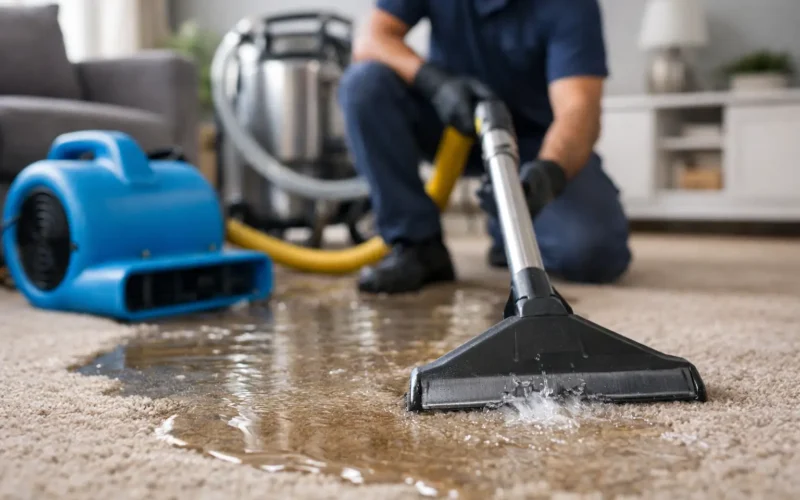
Water on carpet rarely stays a surface problem for long. A burst pipe, overflowing bathroom, roof leak or stormwater entry can soak through the carpet pile, underlay and into the subfloor within minutes. That is why same day flood response matters. The faster wet carpets are assessed, extracted and dried, the better the chance of preventing lasting damage, musty odours and unhealthy indoor conditions.
When people first see standing water, the instinct is often to grab towels, open a few windows and hope it dries out. That can help with a very minor spill, but flooded carpet is a different situation. Water travels further than it looks, underlay holds moisture for longer than most people expect, and damp soft furnishings can become a problem even after the visible surface seems dry.
Why same day flood response matters
Flood damage gets harder to manage with every hour that passes. Carpet fibres can often be cleaned and restored, but the real issue is what sits beneath them. Underlay acts like a sponge, timber and concrete subfloors can retain moisture, and skirting boards may start absorbing water at the edges. In commercial settings, trapped moisture can also disrupt business operations and create safety risks.
A same day flood response is designed to reduce that chain reaction. The first goal is not simply to remove visible water. It is to identify how far the moisture has spread, then start controlled extraction and drying as quickly as possible. This gives the carpet and surrounding materials the best chance of recovery.
Timing also affects hygiene. Clean water from a fresh plumbing issue is one thing. Water from outside entry, sewage backups or overflowing drains is another. In those cases, the contamination risk changes the restoration process and may affect what can be safely saved. A trained technician can make that call early instead of leaving the property owner to guess.
What to do before help arrives
The first priority is safety. If water is near power points, appliances or loose electrical leads, keep clear of the area until it is safe. If the source is still active, such as a leaking appliance hose or overflowing internal fixture, stop the water if you can do so safely.
Once the area is safe, move portable items off the wet carpet. Chairs, rugs, small tables, shoes, toys and soft furnishings should be relocated to a dry area. If heavy furniture cannot be moved, avoid dragging it across the carpet because that can damage the pile and spread contamination. Aluminium foil or protective blocks under furniture legs may help reduce staining or timber bleed if the items must stay in place temporarily.
Try not to walk repeatedly through the wet area. Foot traffic pushes water deeper into the underlay and can carry moisture into adjacent rooms. If possible, take a few photos for records before major clean-up begins. Then leave the drying decisions to professionals with the right equipment and moisture testing methods.
What professional same day flood response involves
A proper flood response starts with assessment, not guesswork. Technicians inspect the affected rooms, identify the likely water source, check how far the moisture has migrated and determine the best restoration approach. This step matters because not every flooded carpet should be treated the same way.
High-powered water extraction usually comes next. Domestic wet vacs can help with small surface water, but they are not designed for broader water intrusion through carpet and underlay. Professional extraction equipment removes a much greater volume, which shortens drying time and reduces the risk of secondary damage.
After extraction, the drying process needs to be controlled and monitored. Air movers, dehumidifiers and other specialist equipment are used to draw moisture out of the carpet, underlay and surrounding materials. In some cases, sections may need to be lifted so trapped moisture underneath can be dealt with properly. That decision depends on the extent of the flooding, the type of carpet installation and the condition of the underlay.
Sanitising and deodorising may also be required, especially where the water source is not considered clean. This is about more than smell. Wet carpet can quickly develop conditions that encourage microbial growth, and once odours set into the underlay or subfloor, they become much harder to remove.
Wet carpet is not always the only issue
One of the most common problems after a flood event is assuming the carpet is the only material affected. In reality, water often reaches nearby upholstery, rugs, curtains, mattresses or fabric partitions, particularly in bedrooms, living areas and offices. If those items are left damp, they can hold odours and contribute to ongoing moisture problems indoors.
Walls and skirting can also show delayed signs of damage. Paint bubbling, swollen trims or a musty smell a day or two later often point to residual moisture that was never fully addressed. This is why flood restoration needs a whole-room view rather than a quick surface clean.
Can flooded carpet always be saved?
Sometimes yes, sometimes no. It depends on the water source, how long the carpet has been wet, the type of carpet and underlay, and whether contamination is present. A clean water incident discovered quickly may allow for successful restoration if extraction and drying begin promptly. A heavily contaminated flood, or carpet left wet for too long, may have a less favourable outcome.
The same applies to underlay. Even if carpet fibres appear recoverable, underlay may lose its structure or retain contamination and odour. In those situations, replacing the underlay may be the more sensible option while still restoring the carpet where possible. The value of professional assessment is that you get a practical recommendation based on condition, not assumptions.
Why equipment and training make a difference
Flood restoration is not the same as routine carpet cleaning. It requires different equipment, moisture detection methods and a clear understanding of drying standards. If the job is rushed or handled with the wrong setup, the carpet may feel dry on top while moisture remains underneath.
That hidden moisture is where many longer-term problems start. Mould growth, persistent odours, discolouration and fibre deterioration often come from incomplete drying rather than the original water event alone. Certified training matters here because the technician needs to know how to assess the material, classify the water risk and monitor drying progress properly.
Modern extraction and drying equipment also speeds up the process. That does not mean every job is finished in a few hours. It means the response starts quickly and the drying plan is set up correctly from the outset, which gives the best chance of protecting the carpet and indoor environment.
For homes, speed protects more than appearance
In a household, flood response is often about getting life back to normal as quickly as possible. Wet carpet affects comfort straight away, but the bigger concern is what it can mean for hygiene and health if left too long. Families with children, older residents or pets usually want the area made safe and dry without delay.
There is also the issue of asset preservation. Carpet, rugs and upholstered furniture are significant household items, and quick action can improve the chance of restoring them rather than letting avoidable damage set in. Even when the flood looks confined to one room, moisture can spread beyond what is immediately visible.
For businesses, delay can create wider disruption
Commercial spaces face a different kind of pressure. Wet carpet in an office, retail space, hotel or shared facility can interrupt operations, create slip hazards and affect staff or customer comfort. In these environments, a same day flood response is as much about business continuity as restoration.
The right response helps contain the affected area, start drying promptly and reduce the risk of ongoing odour or moisture issues in adjoining spaces. For property managers and facility teams, having experienced technicians handle the work also means clearer reporting on what has been affected and what still needs monitoring.
Choosing the right help after a flood
Not every cleaning provider handles flood restoration to the same standard. For urgent water damage, it makes sense to look for trained technicians, proper extraction and drying equipment, and proven experience with both residential and commercial jobs. Broad service capability also helps because flood events can affect more than carpet alone.
Sydneywide Carpet Cleaning responds to these situations with the same focus that matters most in an emergency – act quickly, assess properly and dry the area thoroughly. That combination is what gives carpets and soft furnishings the best chance of recovery.
If your carpet has been flooded, the biggest mistake is waiting to see whether it will sort itself out. Wet fibres, damp underlay and hidden moisture rarely improve on their own. Early action is usually the difference between a manageable restoration job and a much bigger problem a day later.