

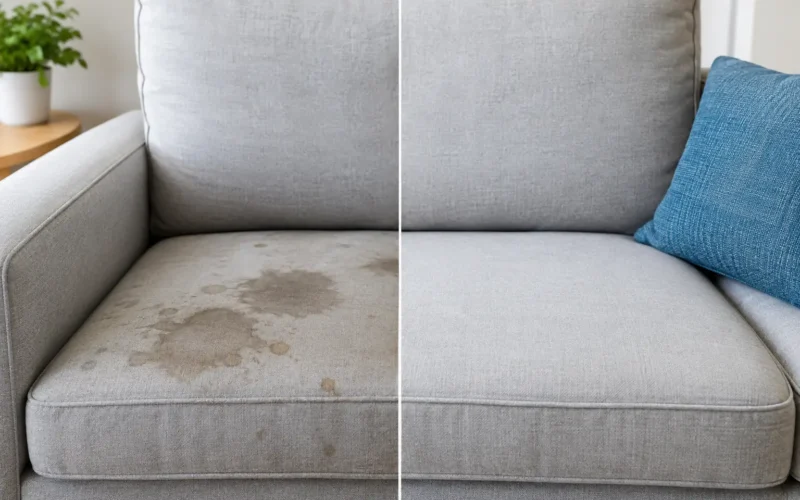
A fabric lounge can look beyond saving after a spilled coffee, muddy paw prints or a child’s snack mishap. Yet upholstery stain removal before and after results often show just how much can be recovered when the fabric, stain and cleaning method are assessed properly. The key is not simply making a mark less visible. It is removing as much soil and residue as the fibres safely allow, without causing colour loss, shrinkage or water marks.
For Sydney homes, rental properties and workplaces, professionally cleaned upholstery can make a real difference to the appearance, hygiene and usable life of sofas, armchairs, dining chairs and office seating. Results vary, but the right process gives stained furniture its best chance of looking fresh again.
What upholstery stain removal before and after really shows
The most impressive before-and-after photos usually reveal more than one cleaned stain. Upholstered furniture collects a broad layer of everyday contamination: body oils on armrests and headrests, airborne dust, pet hair, food particles and residues from previous spot-cleaning attempts. As this soil builds up, fabric can appear dull or darker than its original colour.
A professional clean lifts this embedded soil as well as treating visible spots. That is why a pale fabric sofa may look brighter across the whole surface after cleaning, not just in the area where a stain was present. On darker upholstery, the result is often clearer definition in the fabric colour and a cleaner, more even finish.
However, a strong result does not always mean every mark disappears completely. Some stains have permanently altered the dye or fibres, particularly if they have been sitting for a long time. A reliable cleaner should set realistic expectations and explain what can be safely improved before starting work.
Why some stains respond better than others
The outcome depends on the stain itself, how long it has been there and the type of upholstery fabric. Fresh food and drink spills are often easier to remove than a stain that has dried, oxidised or been repeatedly rubbed into the fabric.
Water-based stains, such as many soft drinks, tea, coffee, juice and washable food spills, may respond very well when treated with the correct solution. Oil-based marks, including cosmetics, cooking grease and some pet-related stains, require different treatment because water alone will not break down the oily residue.
Pet accidents can be more complex. The visible mark may be removable, but odour can remain if contamination has travelled through the upholstery into the cushion filling. In these cases, targeted treatment needs to address both the surface fabric and the affected material underneath.
Ink, red wine, rust, paint, hair dye and bleach damage are among the stains that require careful assessment. Bleach is not technically a removable stain because it strips colour from the fabric. Cleaning can remove residue around it, but restoring colour may require a specialist repair process or may not be practical.
The fabric matters as much as the stain
There is no single cleaning method suitable for every lounge. Cotton, linen, wool, velvet, microfibre, synthetic blends and delicate natural fibres all react differently to moisture, agitation and cleaning solutions. Care labels offer useful guidance, but they are only the starting point.
A trained upholstery cleaner checks fibre type, colour fastness, construction and previous cleaning damage before selecting a method. Some pieces respond well to hot water extraction, while others need low-moisture cleaning or specialised solvent-based treatment. Over-wetting a natural-fibre lounge can lead to shrinkage, browning or long drying times. Using harsh chemicals can fade colour or leave behind a sticky residue that attracts new soil.
This is one reason supermarket spot cleaners can produce disappointing before-and-after results. A product may seem to work initially, then leave a pale ring, stiff patch or reappearing stain after the fabric dries. The wrong product can also set a stain deeper into the fibres.
What happens during professional stain treatment
Effective upholstery cleaning starts with inspection rather than immediate scrubbing. The cleaner identifies the fabric, notes problem areas and considers whether the stain is likely to be water-based, oil-based, protein-based or a combination of several contaminants.
Loose dry soil is removed first. This matters because applying moisture to dusty upholstery can turn surface dirt into muddy residue. Suitable pre-treatment is then applied to stained areas and worked in carefully where needed. The goal is to loosen the stain without damaging the weave or pushing contamination further into the cushioning.
The upholstery is then cleaned using the method best suited to the fabric. Controlled extraction can flush out suspended soil and cleaning residue, while low-moisture methods may be preferred for delicate fabrics or furniture that needs a faster drying time. Any remaining marks are reassessed after cleaning, as some stains become easier to identify once the surrounding fabric is clean.
Professional equipment helps achieve a more even result because it provides controlled solution application, agitation and soil recovery. It also reduces the risk of leaving the furniture excessively wet. Good airflow and appropriate drying conditions are still important, so cushions should not be used until they are fully dry.
Before you try to remove a stain at home
Fast action is useful, but panic cleaning can make a spill harder to remove. If a fresh stain occurs, blot it gently with a clean, white absorbent cloth. Start at the outer edge and work towards the centre so the spill does not spread. Avoid rubbing, as this can damage fibres and push the stain deeper.
Do not soak the area, use coloured cloths or apply several household products at once. Dishwashing liquid, vinegar, bicarbonate of soda and supermarket sprays are often suggested as general solutions, but upholstery is not a one-size-fits-all surface. Mixing products can leave residue, create a water mark or interfere with later professional treatment.
If you use a fabric-safe spot cleaner, test it first in a hidden area and follow the product directions exactly. Stop if you notice colour transfer, texture changes or spreading. For a significant spill, a delicate fabric or a stain with a strong odour, arranging professional help promptly is generally the safer choice.
Common mistakes that reduce before-and-after results
Waiting too long is one of the main reasons stains become difficult to remove. Heat, sunlight and everyday use can cause certain stains to set, while old cleaning residues can bind dirt to the fabric.
Over-scrubbing is another common issue. It may lift a little colour from the surface, but it can also roughen the fabric pile, distort the weave and create a visibly worn patch. Steam machines hired for home use can be risky when used on the wrong fabric or when too much moisture is applied.
It is also worth remembering that a stain can be gone while a shadow remains. This may be caused by permanent dye change, fabric wear, fading from sunlight or a difference between the cleaned area and the surrounding soiled fabric. Cleaning the full item, rather than only one small spot, often provides the most natural and even appearance.
When upholstery cleaning is worth arranging
Visible stains are a clear reason to act, but furniture does not need to look heavily marked before it benefits from professional care. Regular upholstery cleaning helps reduce built-up oils, allergens, dust and odours that settle into the fabric over time. This is particularly valuable in homes with children, pets or allergy concerns, as well as in busy offices, waiting areas and rental properties.
High-use sofas and armchairs often need attention sooner than occasional seating. Light-coloured upholstery may show marks more quickly, while darker fabrics can hold a surprising amount of soil before it becomes obvious. A professional assessment can help determine the right treatment approach without placing unnecessary stress on the material.
Sydneywide Carpet Cleaning provides trained, on-site upholstery cleaning for residential and commercial furniture across Sydney. With more than 15 years of experience and up-to-date equipment, the focus is on safe cleaning methods, visible improvement and healthier soft furnishings.
A cleaner lounge starts with realistic expectations
The best upholstery stain removal before and after outcome is one that improves the appearance of the furniture while protecting the fabric for continued use. Some stains vanish completely; others lighten substantially but leave a trace because the damage is permanent. What matters is using a method that gives the upholstery its best chance of recovery rather than risking further damage with guesswork.
If your lounge, dining chairs or office seating are looking tired, stained or carrying unwanted odours, early professional treatment can make a noticeable difference and help you enjoy the furniture for longer.